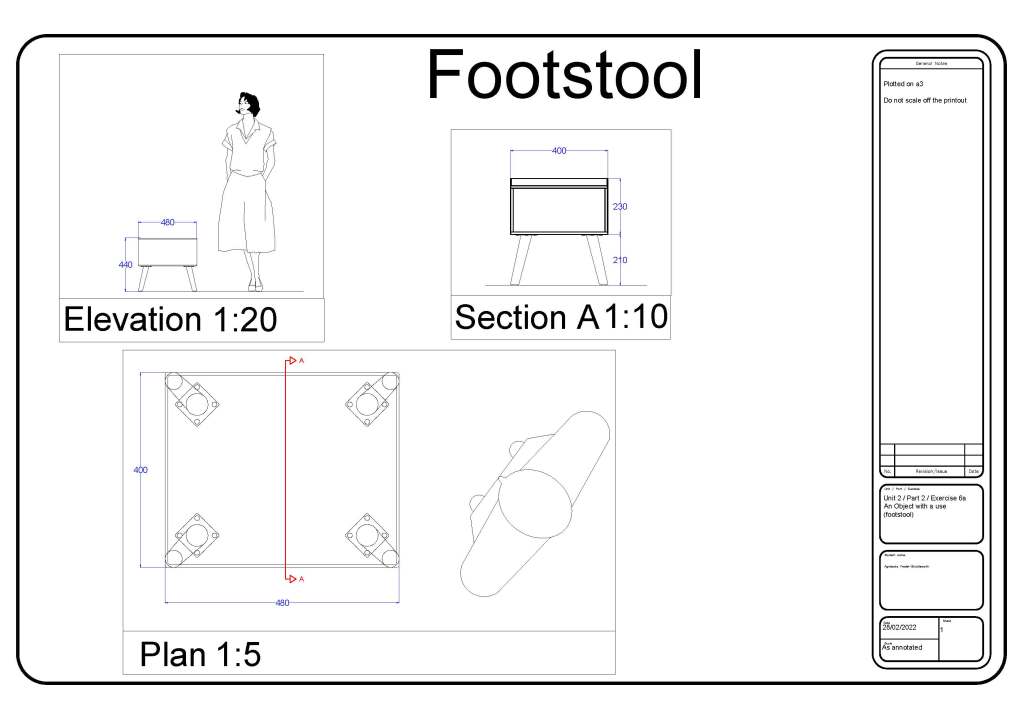
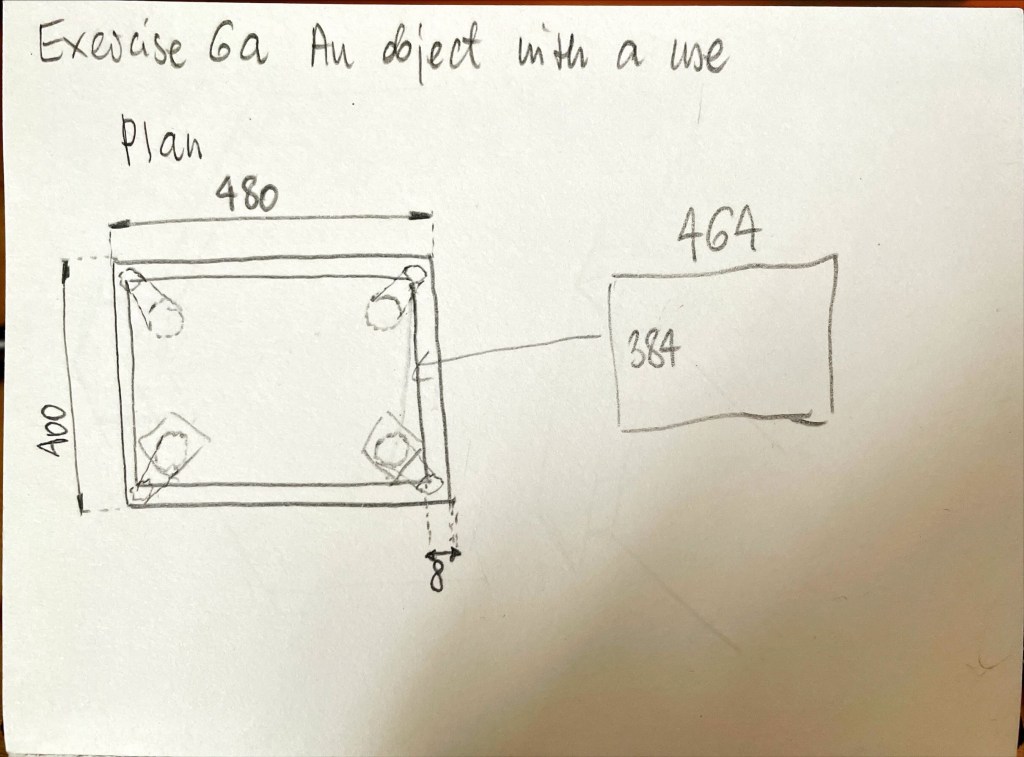
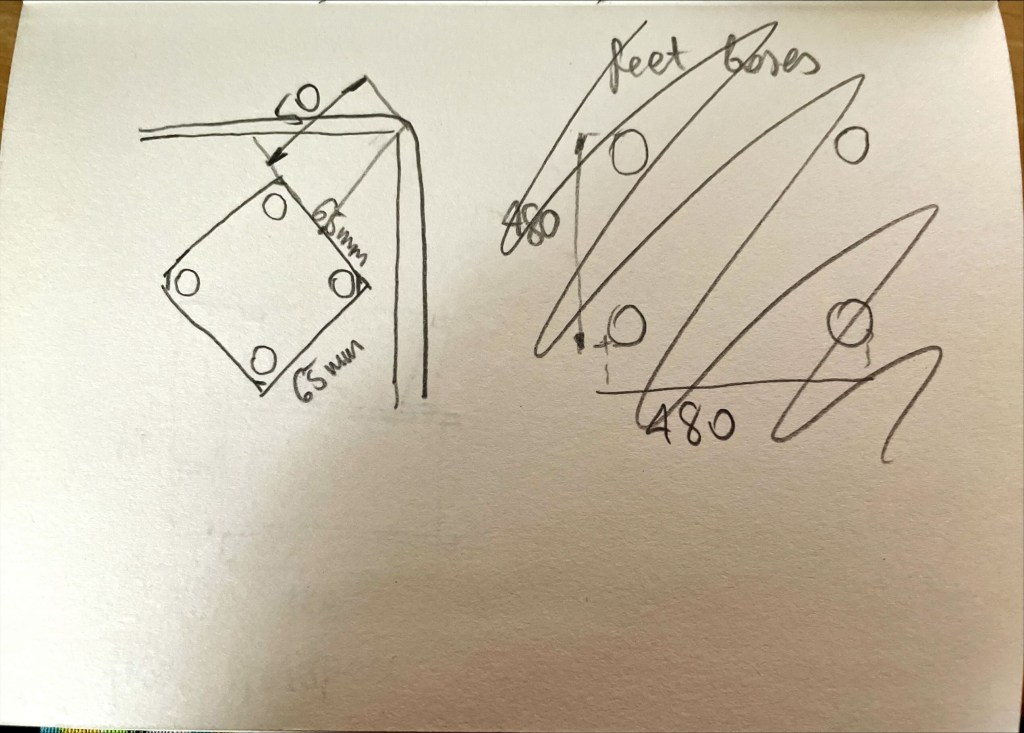
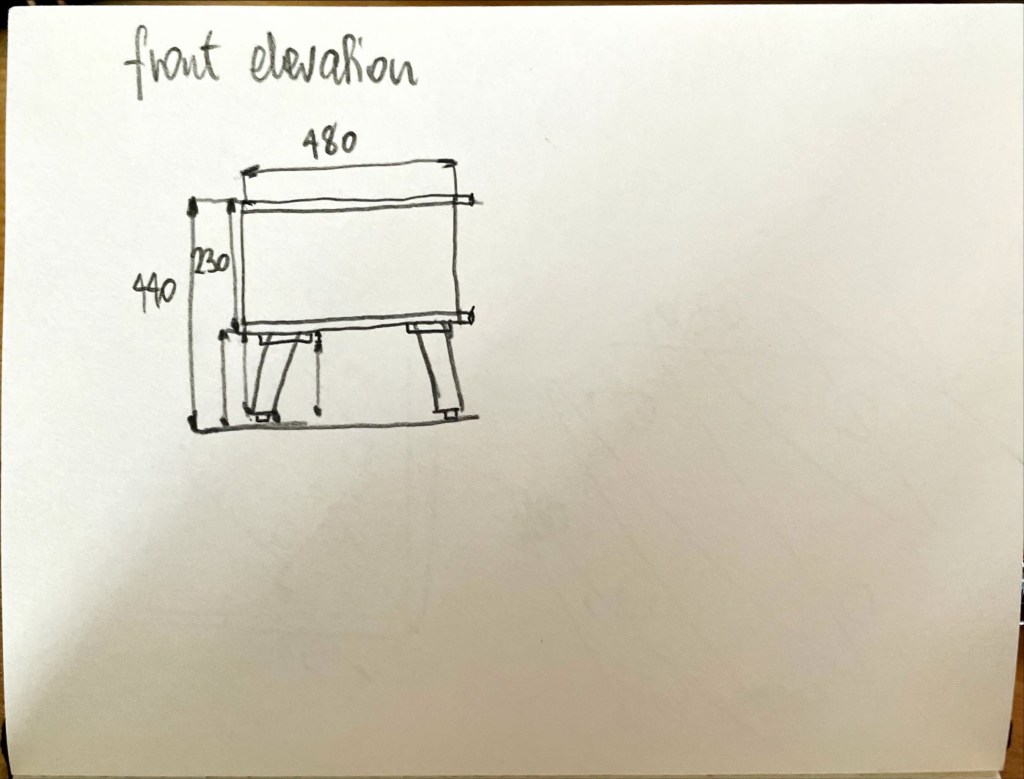
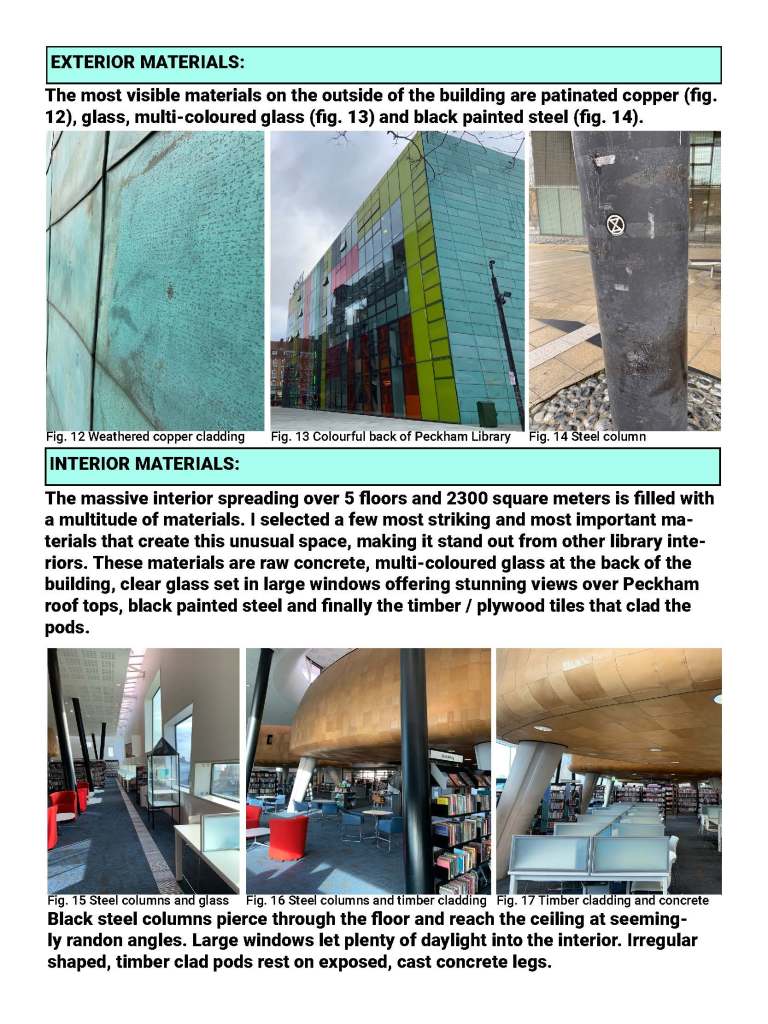
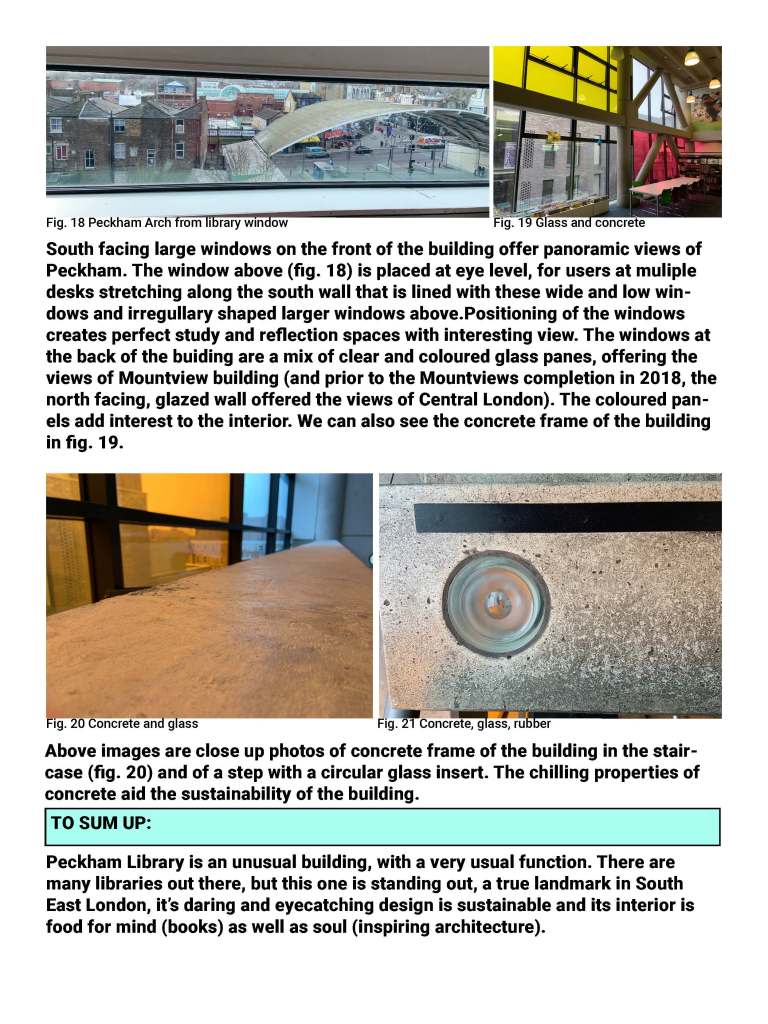
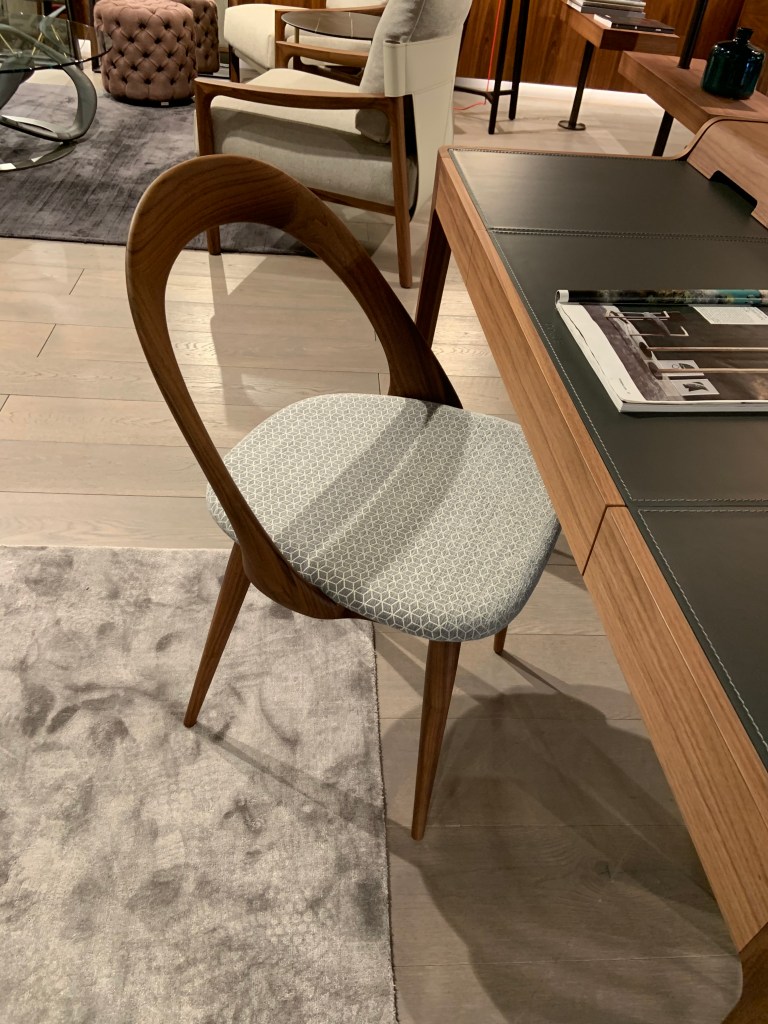
My chosen object is a footstool. It has wooden legs and structure. The seat park is upholstered in grey fabric and foam. The elements are held together with metal screws. The overall dimensions are 480mm long by 400mm wide by 440mm high.
It can be used as a footrest or a seat. In my house it is usually either a footrest or a cat bed.
Reflection:
I decided to make a drawing in CAD, as I felt I needed to practice it some more. Plotting proved difficult again but with some help of online tutorials I got over it. Next exercise should go a little faster as scaling the objects will be at a touch of a button. I enjoyed measuring the object and all its elements. Section was a bit challenging as I don’t actually know what this footstool would look like sliced in half, I had to employ my imagination and use my common sense.
Here is my CAD drawing in PDF, so finer details can be seen.
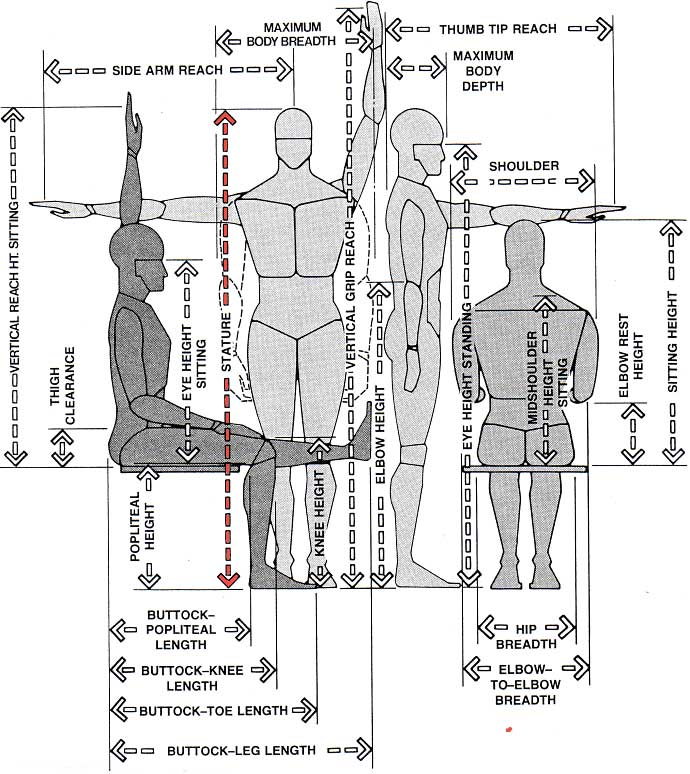
How do you think ergonomic and anthropometric design, and scale, have been explored in the 2013 project Kroppsrom (Corporeal room) at the National Museum of Architecture by Atelier Oslo? Reflect on your responses to the project in your learning log.
I think the designers explored the anthropometric data of the average human figure and designed the space around them. One of the resources mentioned that the space was supposed to make people move in a way they would not expect, and create the experience through the activity, as well as simple, peaceful and gently lit interior.
I imagine Atelier Oslo drew the human figures as pictured in the data images and made the space flow from one set of dimensions to another and so on. I can sort of see this process in my imagination, but it is quite hard to describe it, but I’ll try anyway. A 3D animation of an opening being created in the solid mass. The solid mass is surrounding (and filling) the human forms being carved out. As the corridors and caverns are created, the human figures remain – they aren’t carved out with the solid mass that they are contained within. As if the figures are in a different layer to the mass. The whole process is smooth and flows easily.
Fig. 1 Body measurements
Considering the process of creation of such an interesting, unusual space is a great activity. I wonder If I am at least a little bit correct in my guessing on how the designers idea started. Thinking about it got my imagination going. I often wonder about hows and whys, it was an enjoyable exercise.
I received feedback from my tutor and would like to take a moment to reflect on it.
I received a ‘well done’ for thorough research, variety of examples, my skills are improving and will be useful throughout my studies. It was helpful that I chose to upload some photos of my notebook and sketchbook.
According to my tutor my mind maps showed understanding, ordered my knowledge and also communicated clearly my thought process. I improved my communication and presentation techniques both handwritten and digital. My tutor recommended to continue experimenting with them to gradually develop my own graphic style. I was pleased to learn that my tutor thinks mind mapping became my personal strength, once I overcame that barrier.
I am very pleased my tutor appreciated my observations of similarities of vortexes at Bloomberg and Reichstag buildings.
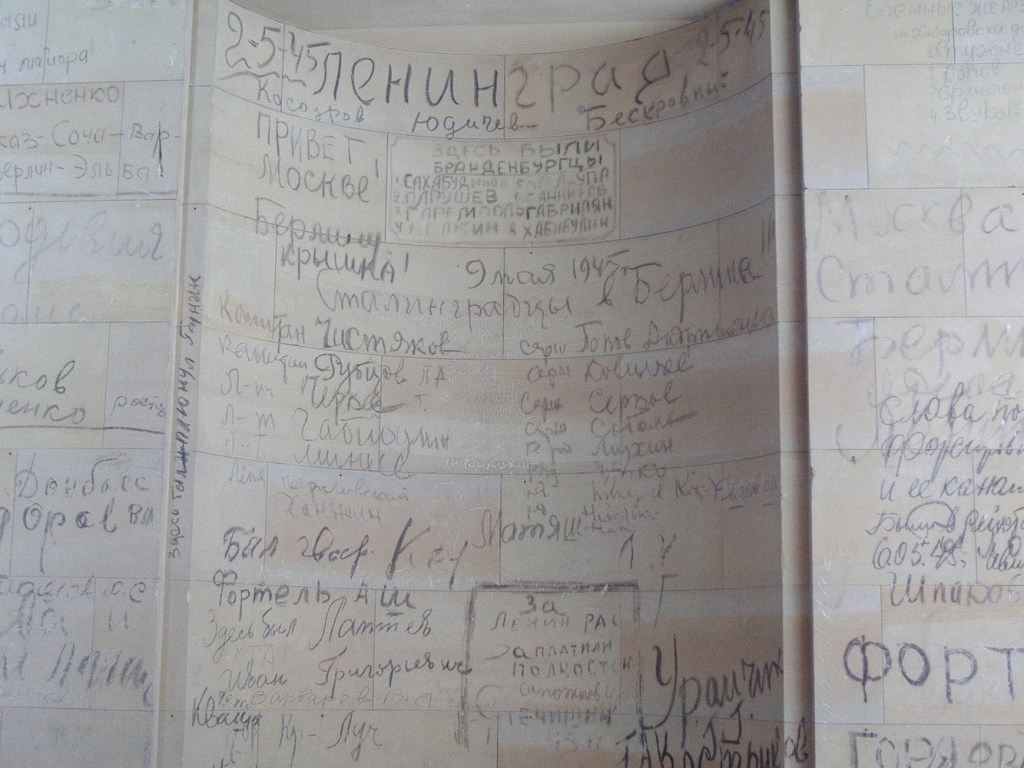
I should have included more information on Soviet Graffiti in Reichstag Building.
My tutor suggested that in future I should first search for information, and only after for relevant images.
I was told again to qualify big statements and give credible source for that information.
My choice of descriptive words in materials exercises got praised as a good skill for designer to have – I shall continue describing in that creative way.
I should form my own opinions based on information gathered, for example which architects are displaying truth to materials ethos.
Starting on using InDesign software was also noticed, I can see the InDesign uploads have better quality than other software I used beforehand. In my future InDesign work I shall leave a bit more break between elements, and should see magazines etc for guidance.
I should attempt to draw as well as take photos as drawing and sketching of details will make me notice them. Also the more I draw, the more confidence I will gain, which will create good drawings.
In future (if there is another exercise similar) I should create a drawn map of the place with materials pasted in specific locations. That idea is brilliant, it would be sort of floor plan/ collage.
It’s also good that I completed some study visits (sadly all I had coming up soon have been postponed for the time being).
I should pay attention to titles on my work, to make sure everyone knows what it is.
All in all, I’m pleased with the encouraging and constructive feedback I received, praising and setting me in a right direction.
Spend some time looking through all the information you’ve collated about the site. Decide which sketches, diagrams, pictures, maps etc. that you have made and collected are the most effective at visually communicating the key physical (geographical, material etc) and non-physical (historical, social, cultural etc) aspects of the site. Use PowerPoint, InDesign or similar to compile a visual presentation document that summarises your research. Include notes and annotations to support the images. Consider your audience. Does the information make sense to someone other than you? Is there a clear narrative? Your presentation does not have to include every detail about the site but should touch on the most significant and interesting information from each of the exercises in Project 3. It should be set up using an A3 page size and should be no more than 5 pages long.
Reflection on assignment 2:
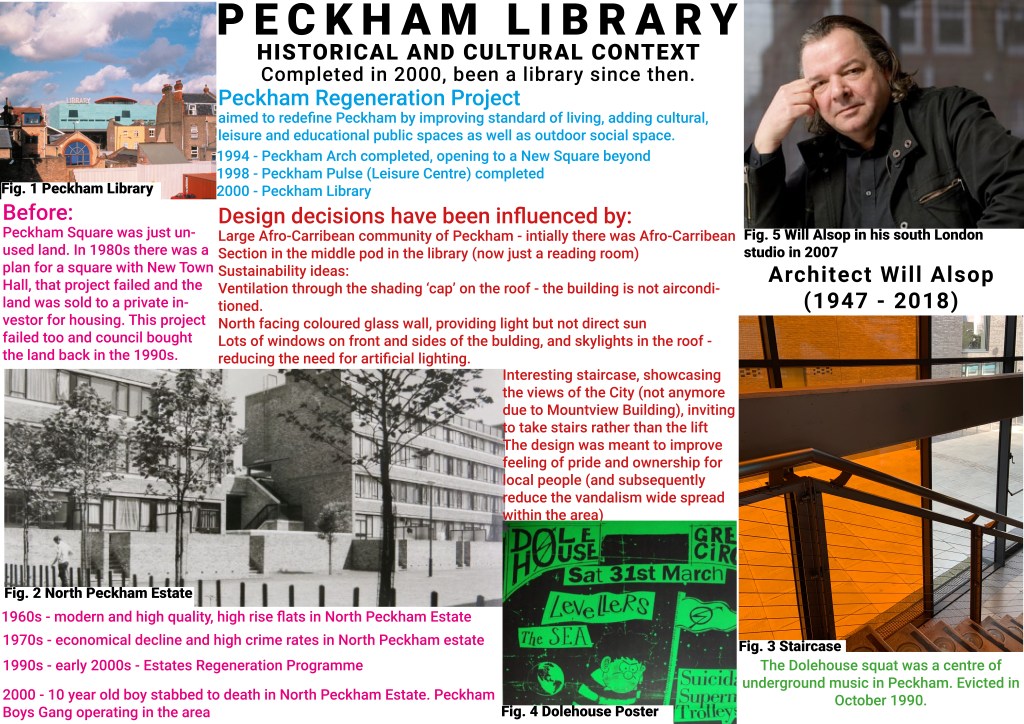
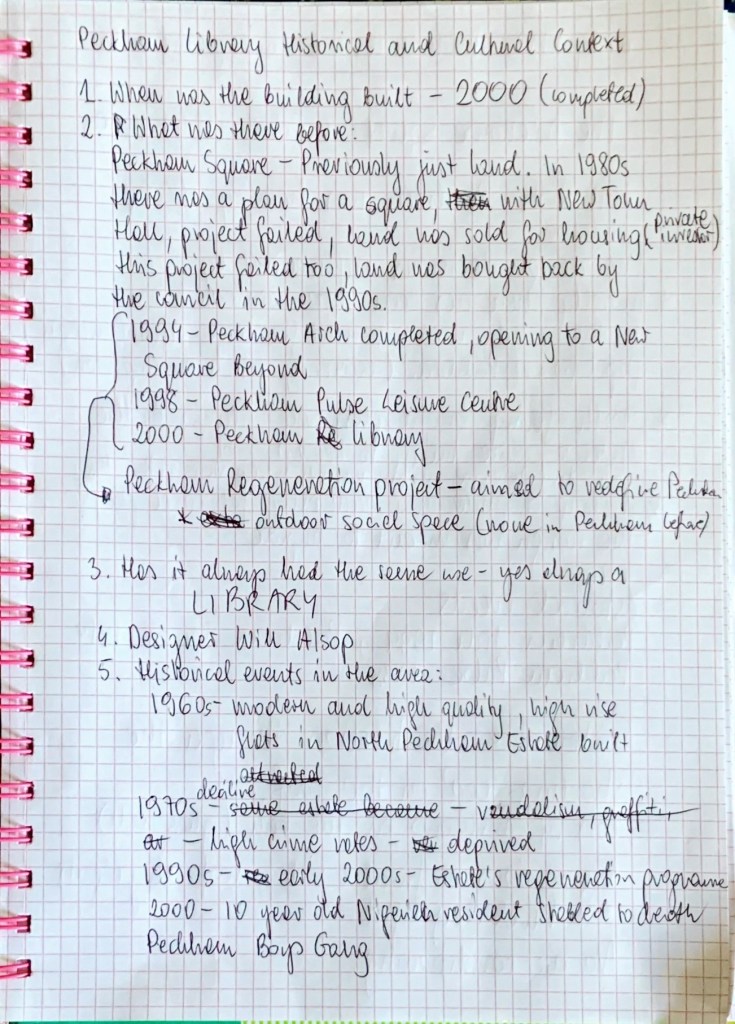
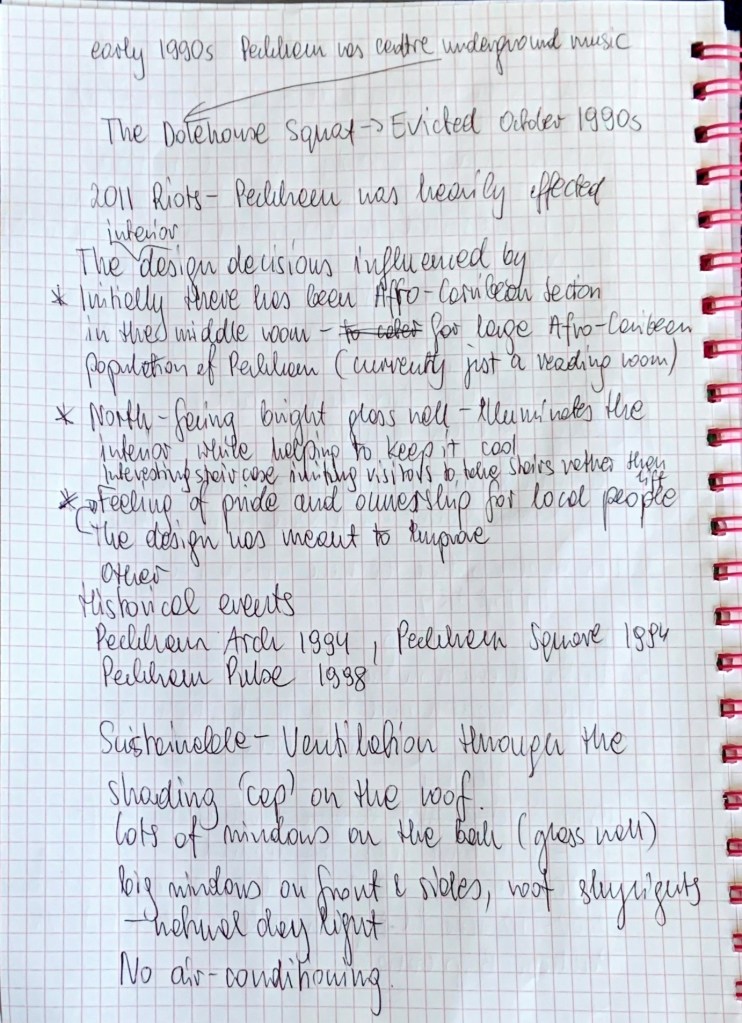
I found the task of collating all gathered information easy and enjoyable. I discovered that I memorised a lot of information about the site while completing prior exercises. The only information I needed to re – visit were the ‘number’ facts such as dates and square meters. The rest of information I just noted down from my memory on paper and typed it out later. Like in precedent research on Reichstag building I discovered again that it is impossible to apply set categories to contexts as they all mix and intertwine with one another for example historical will always mix with cultural, and both are mixed with geographical context. Information about sites must have fluid categories as one affects another. I found the process of researching Peckham Library valuable, I learnt how to select the materials that have impact on the users. I learnt and practiced selecting relevant information to include in my assignment. In my future projects I probably won’t concentrate on all materials so much, but select the ones that I feel are important. For example if I were to work on renovation project of Peckham Library I would concentrate first on the bits I would like to keep like the pods, the coloured glass and windows in general, the exposed concrete and steel. The rest of materials like the carpets, paints on the walls, furniture, work surfaces etc could be changed, without affecting the architectural style. I used indesign software to create my presentation and again I found it to be invaluable tool for presenting gathered information in a professional way with high resolution result. I hope my work is easy to understand for someone who learns about Peckham Library for the first time.
List of illustrations:
Fig. 1 Shuttleworth, A (2020) Peckham Library west side. [Photograph] In possession of: the author: Epsom
Fig. 2 Shuttleworth, A (2020) Peckham Library north side. [Photograph] In possession of: the author: Epsom
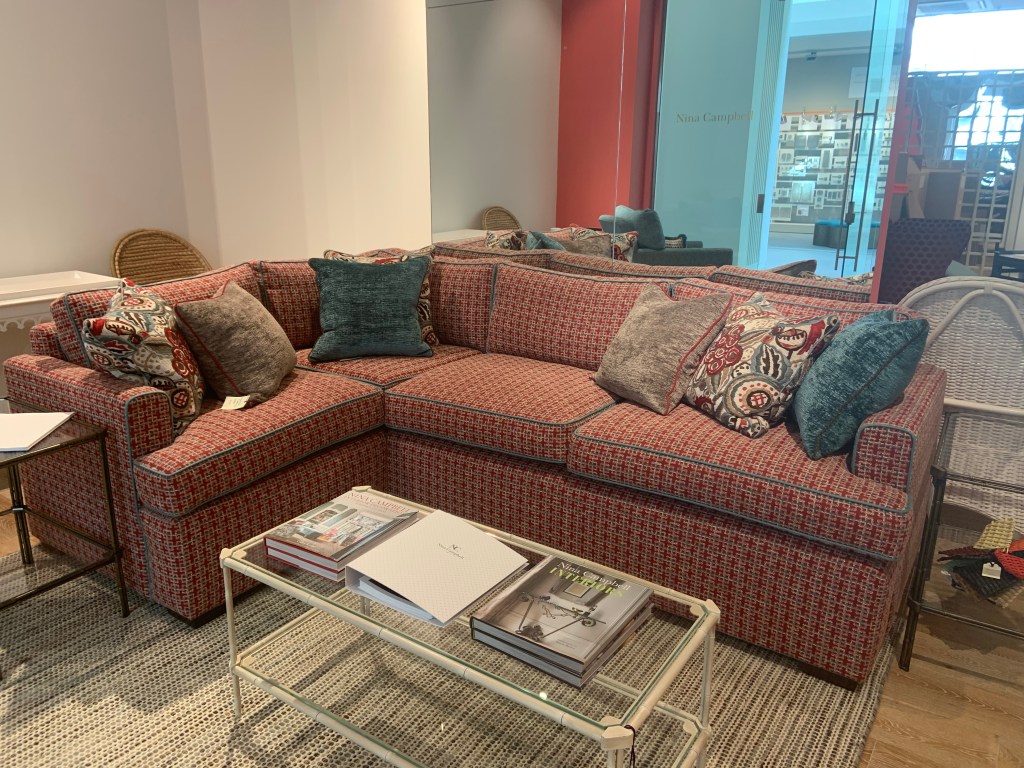
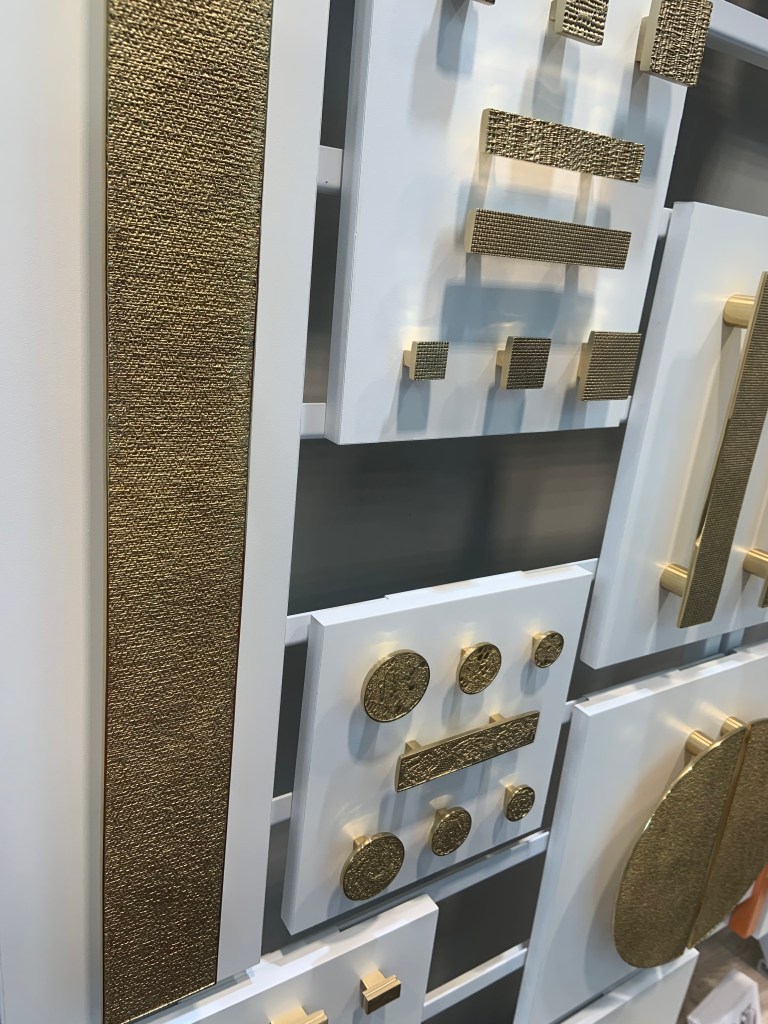
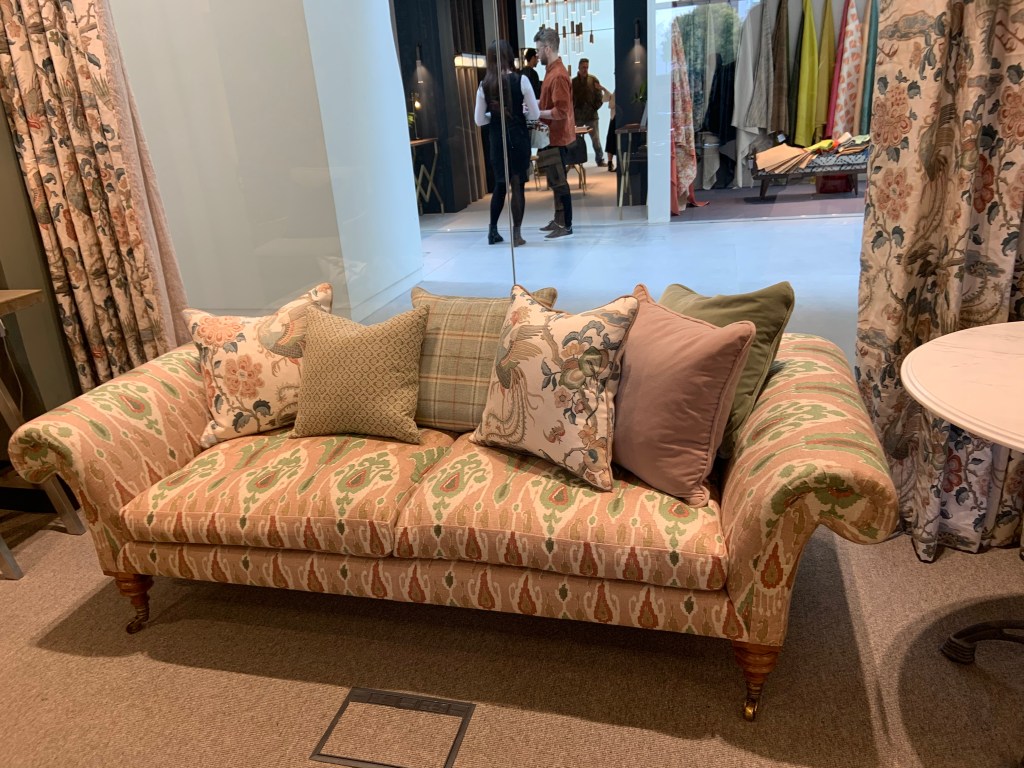
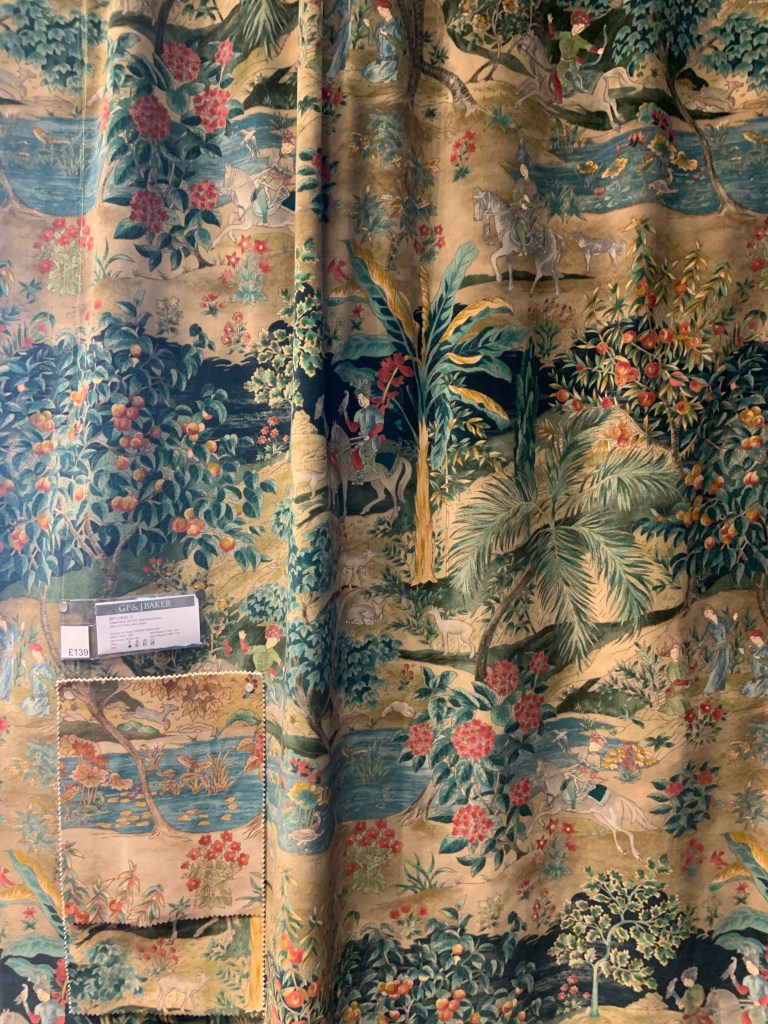
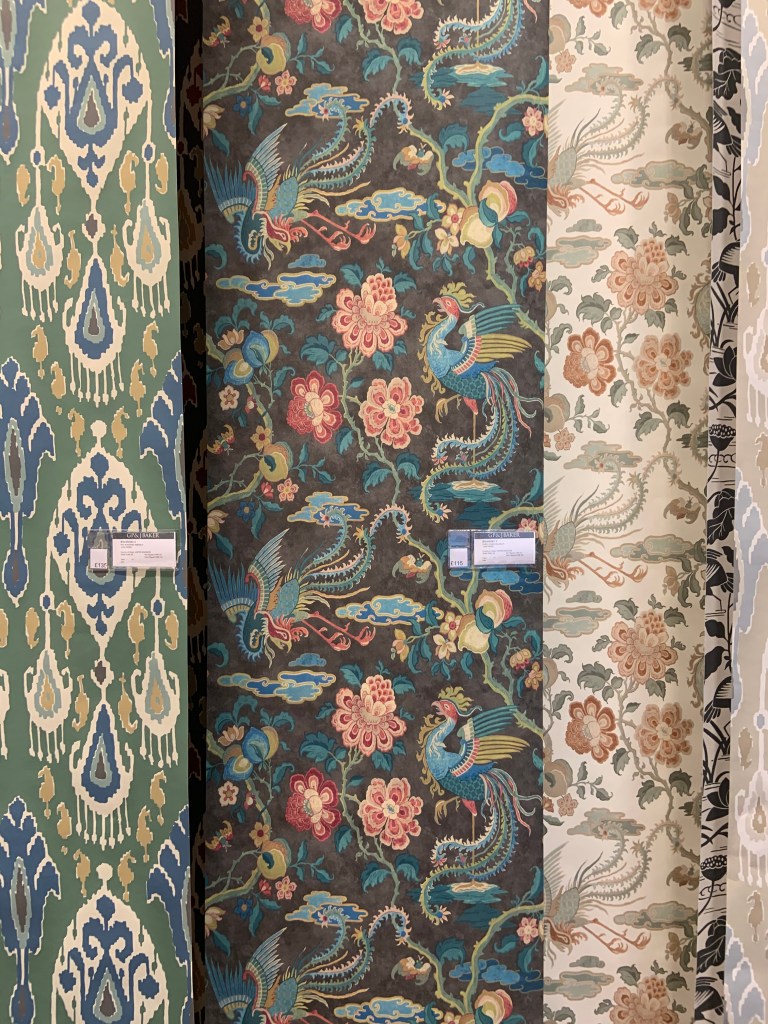
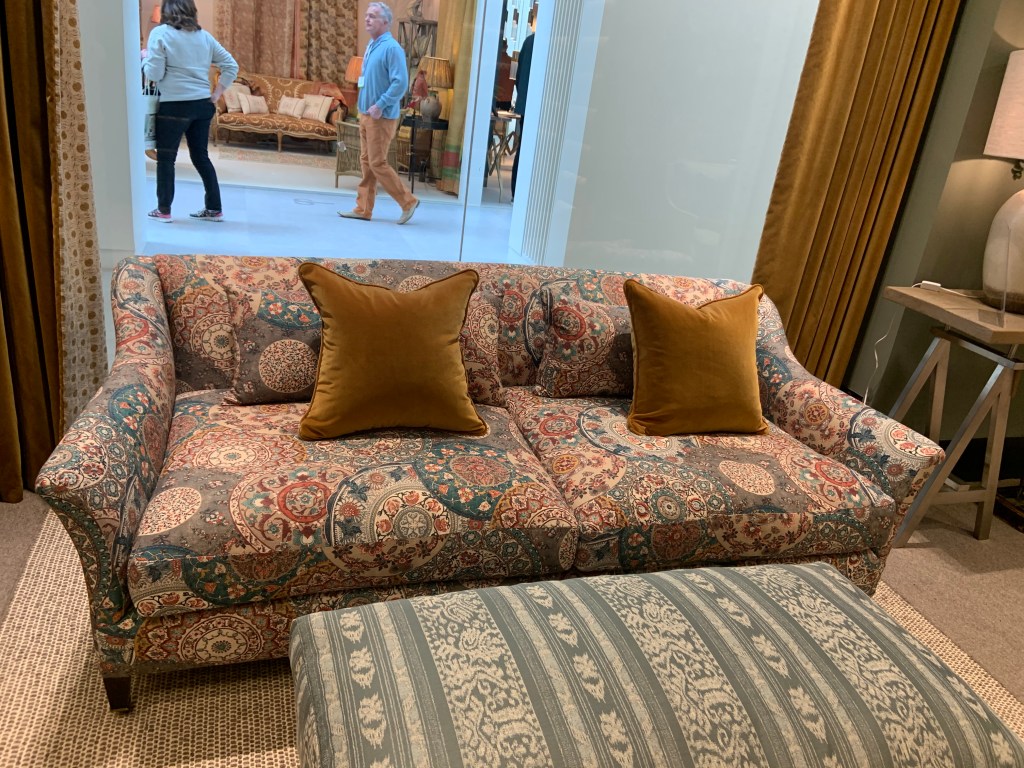
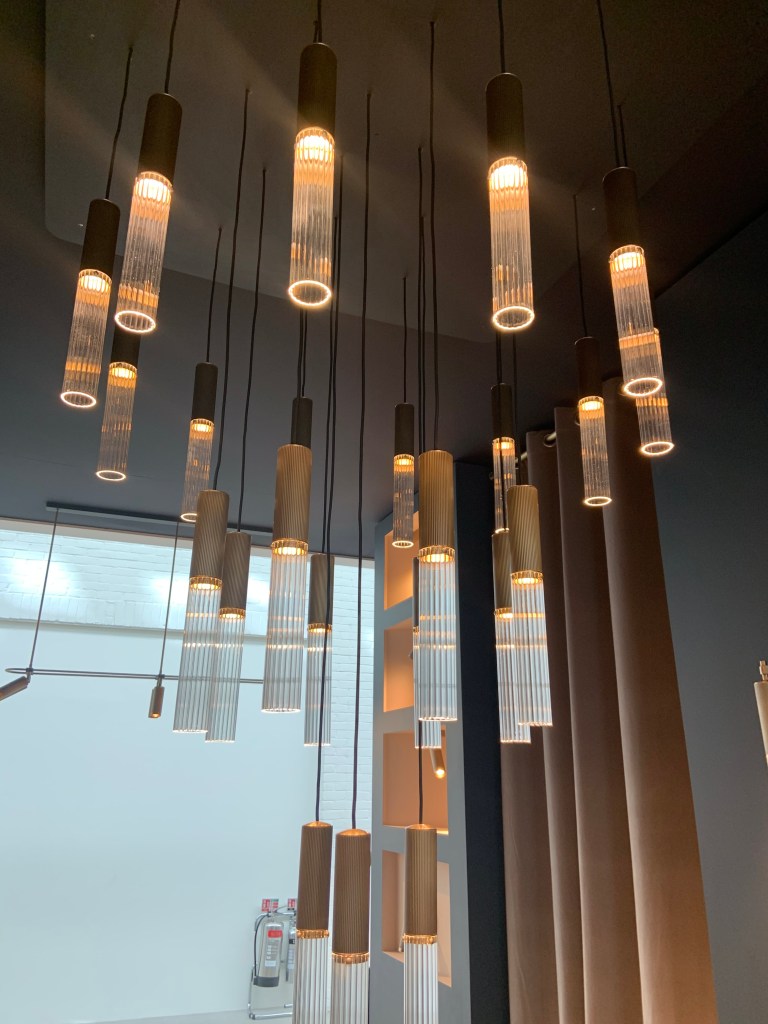
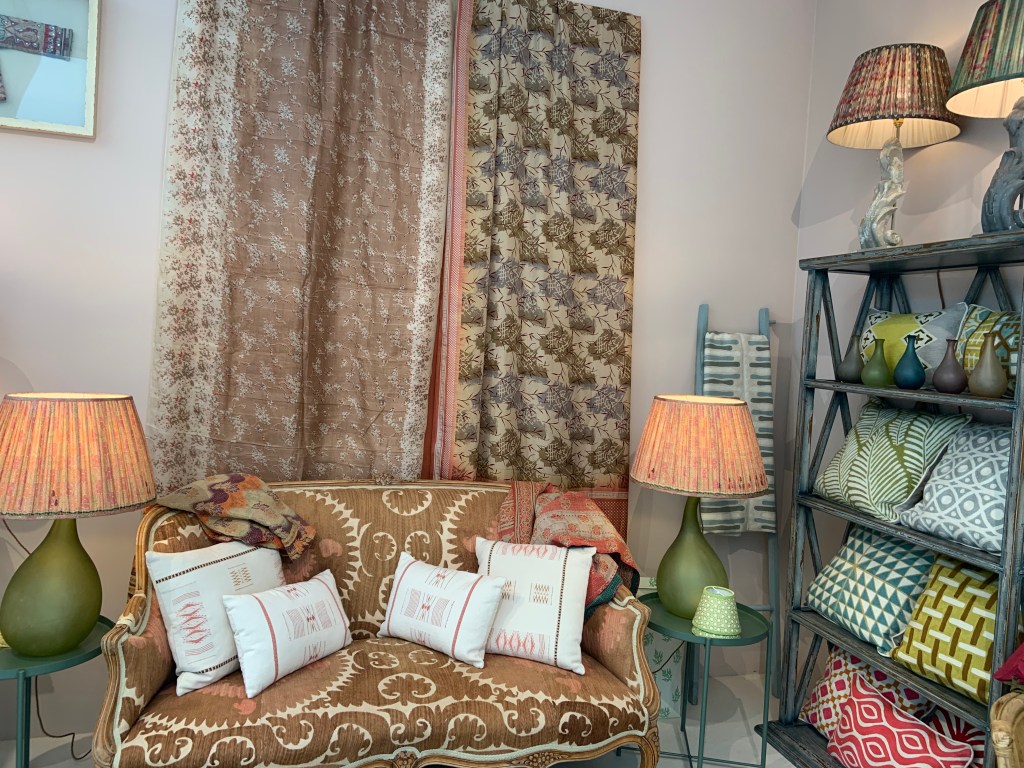
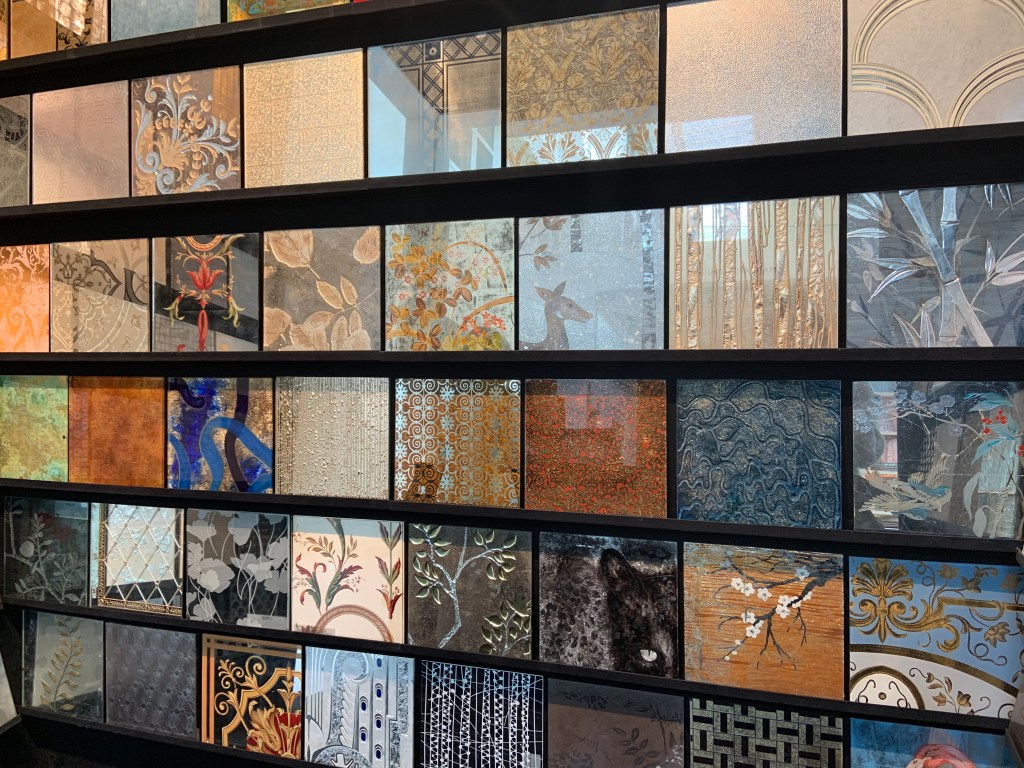
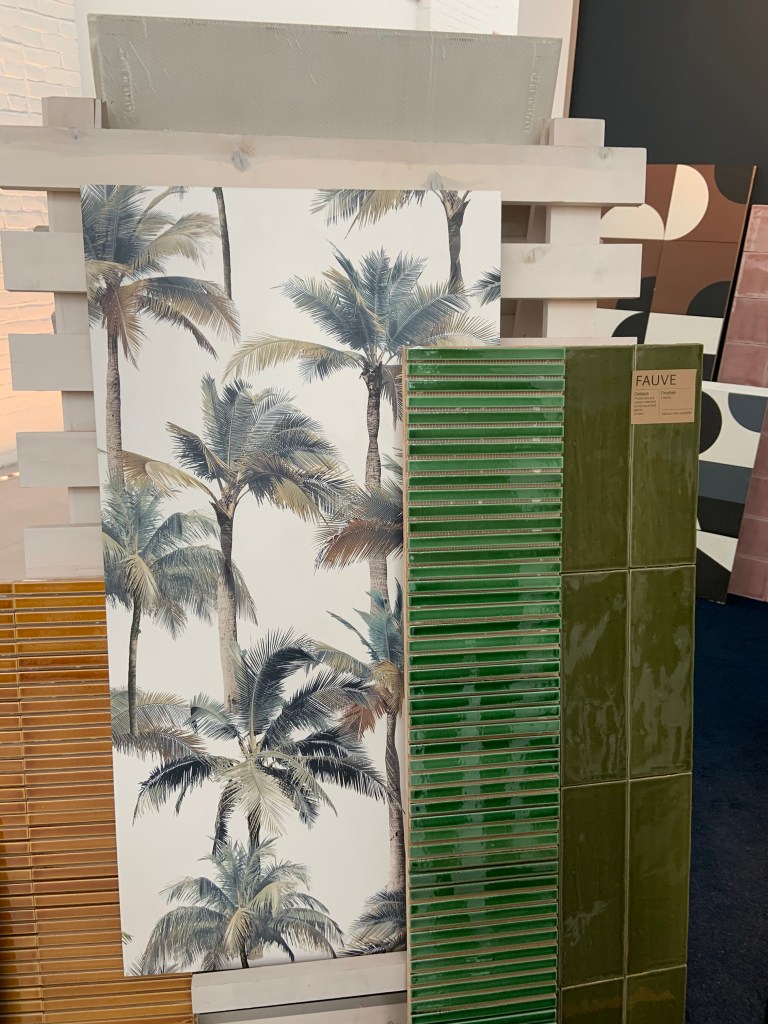
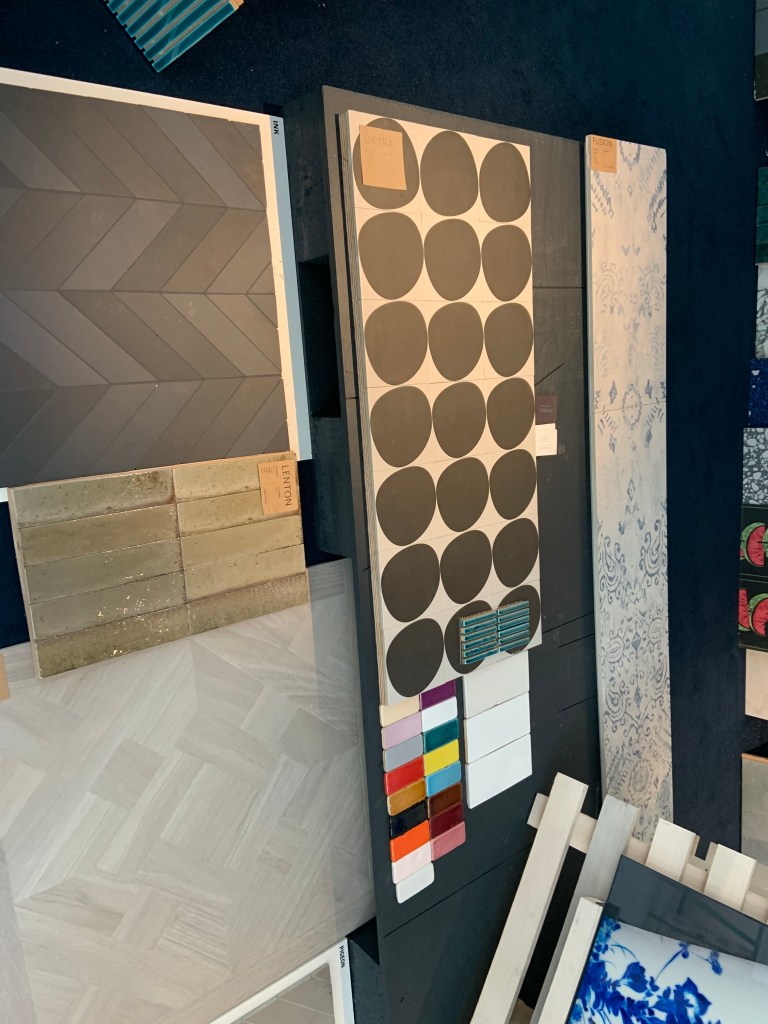
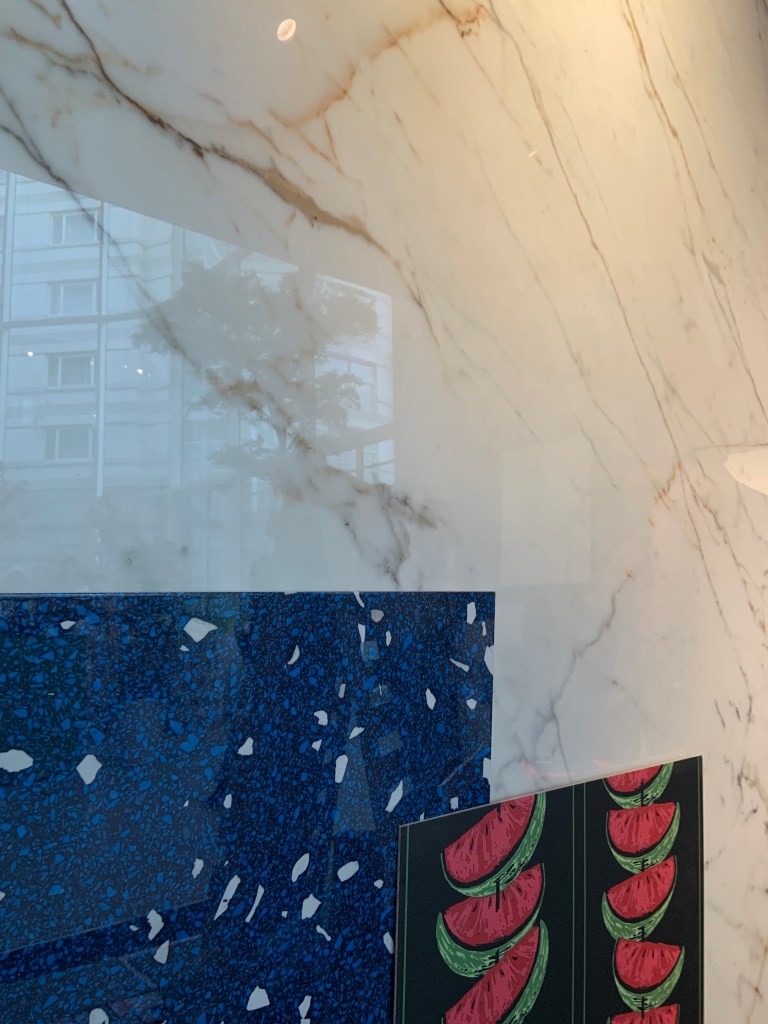
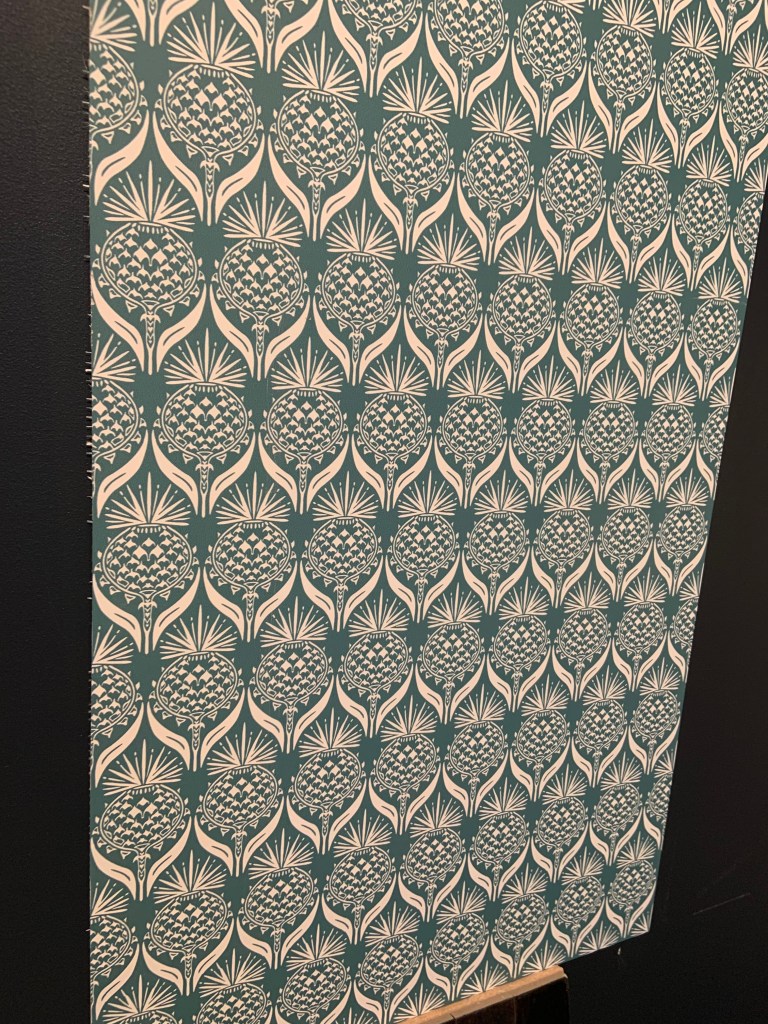
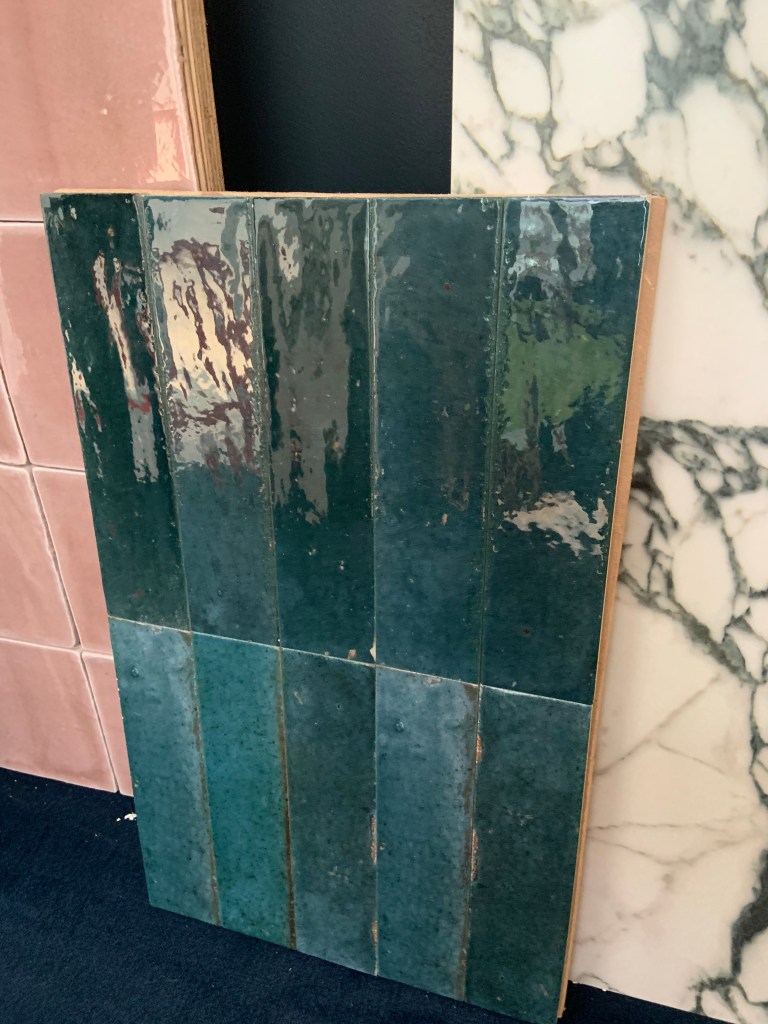
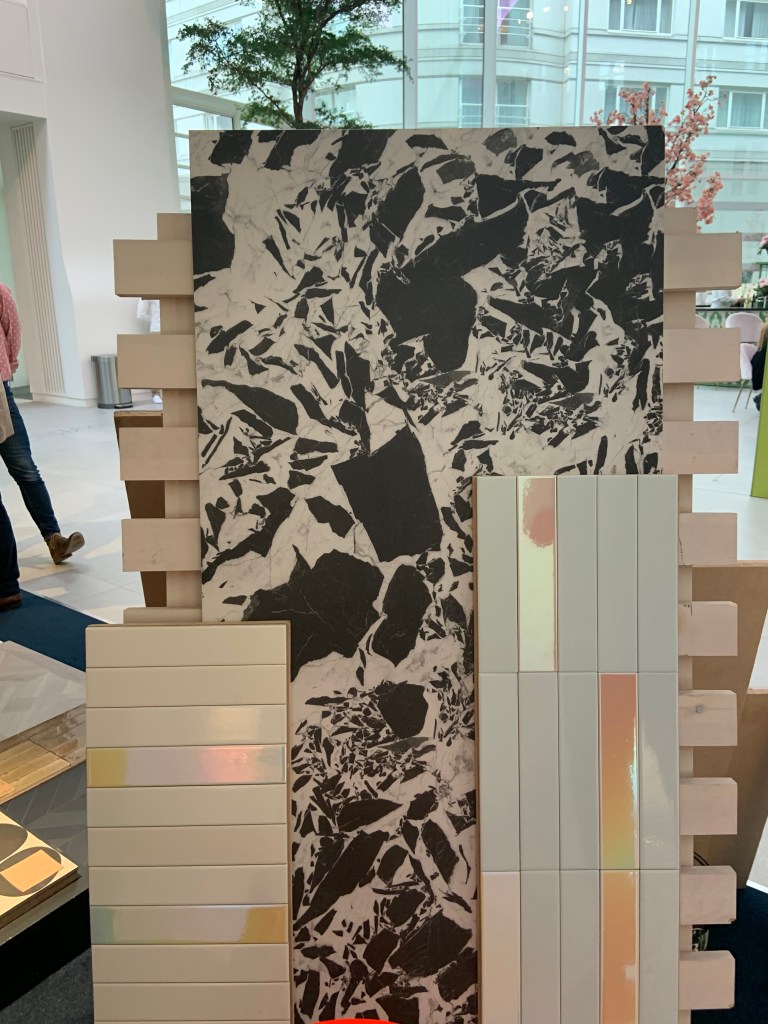
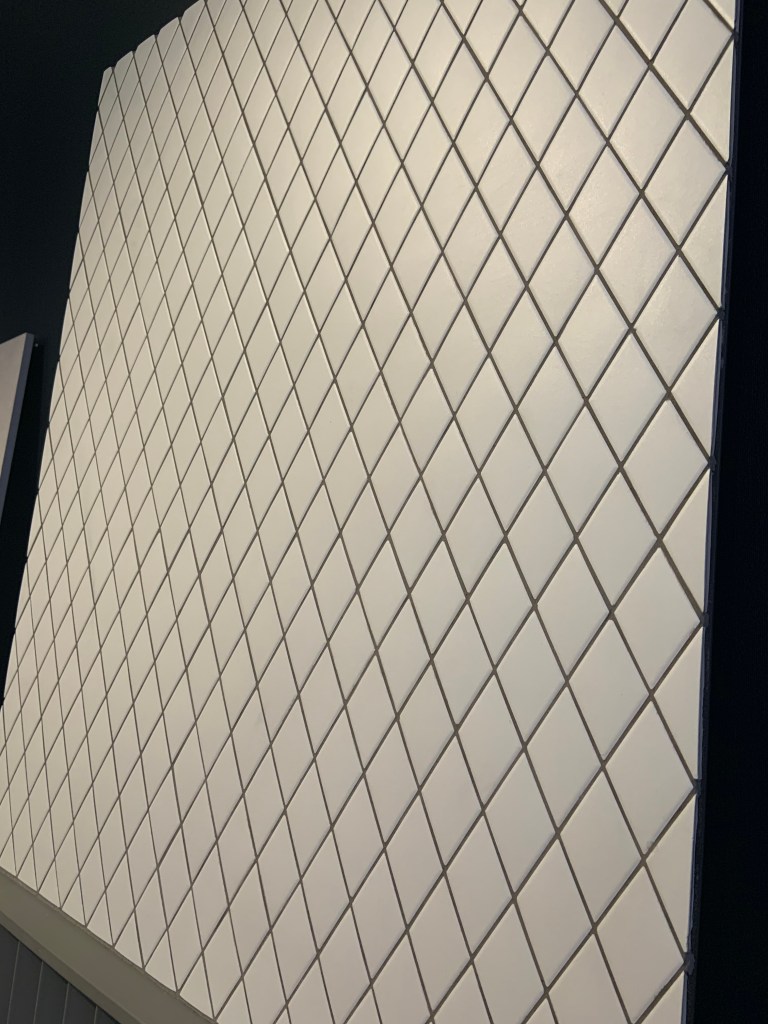
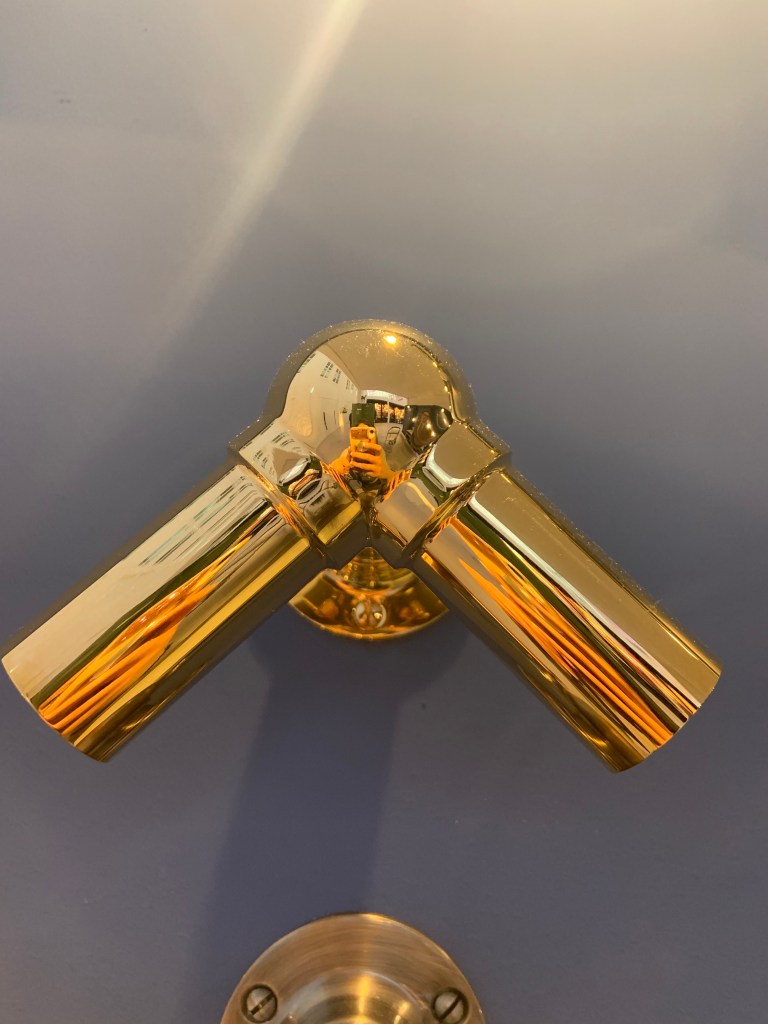
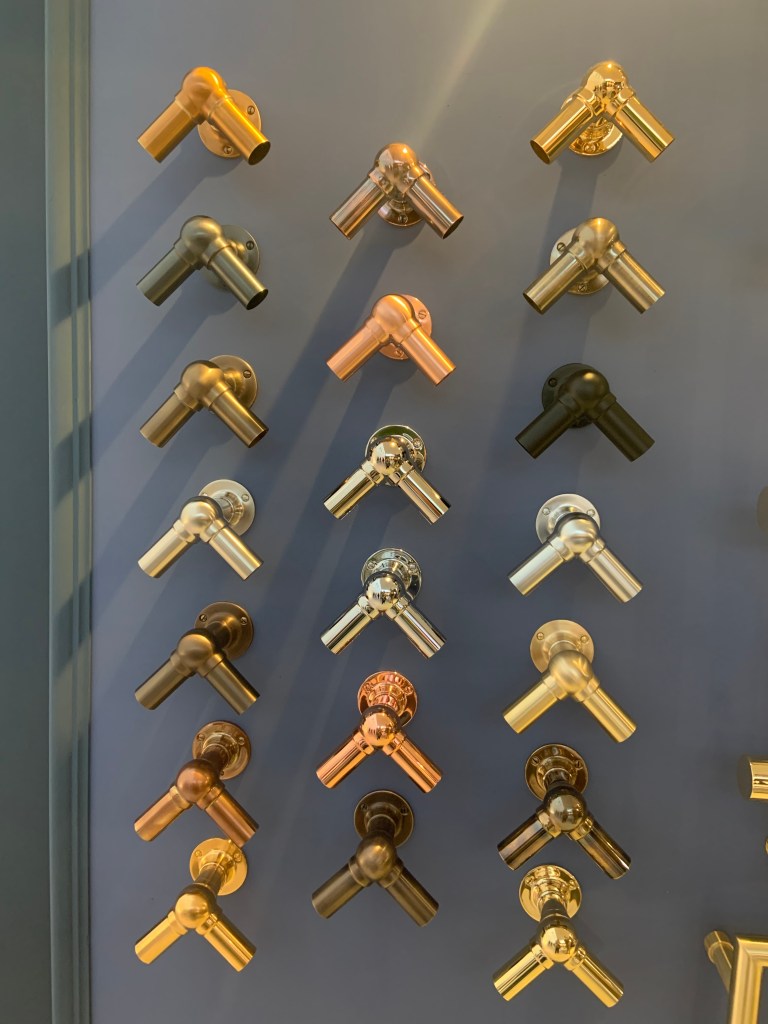
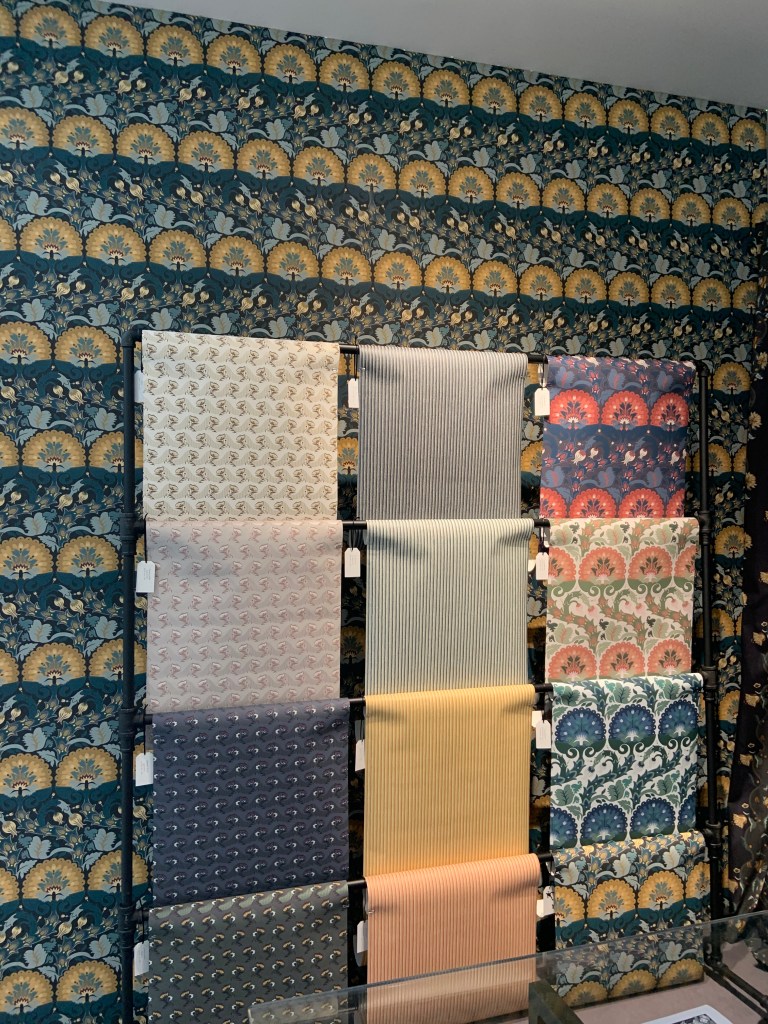
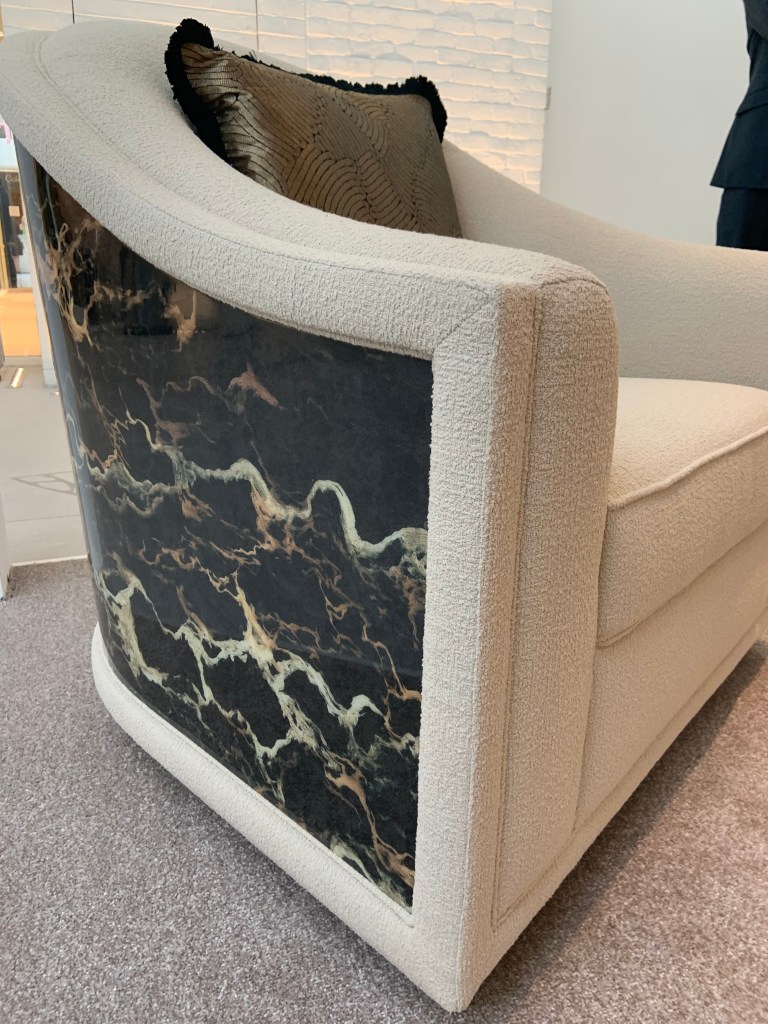
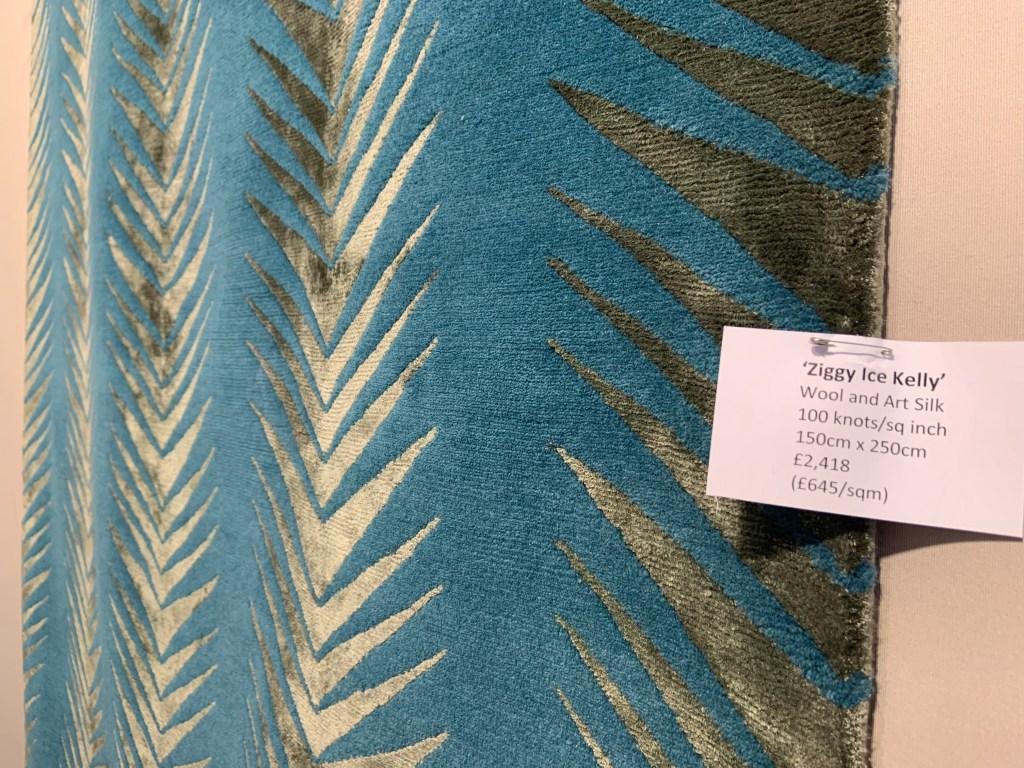
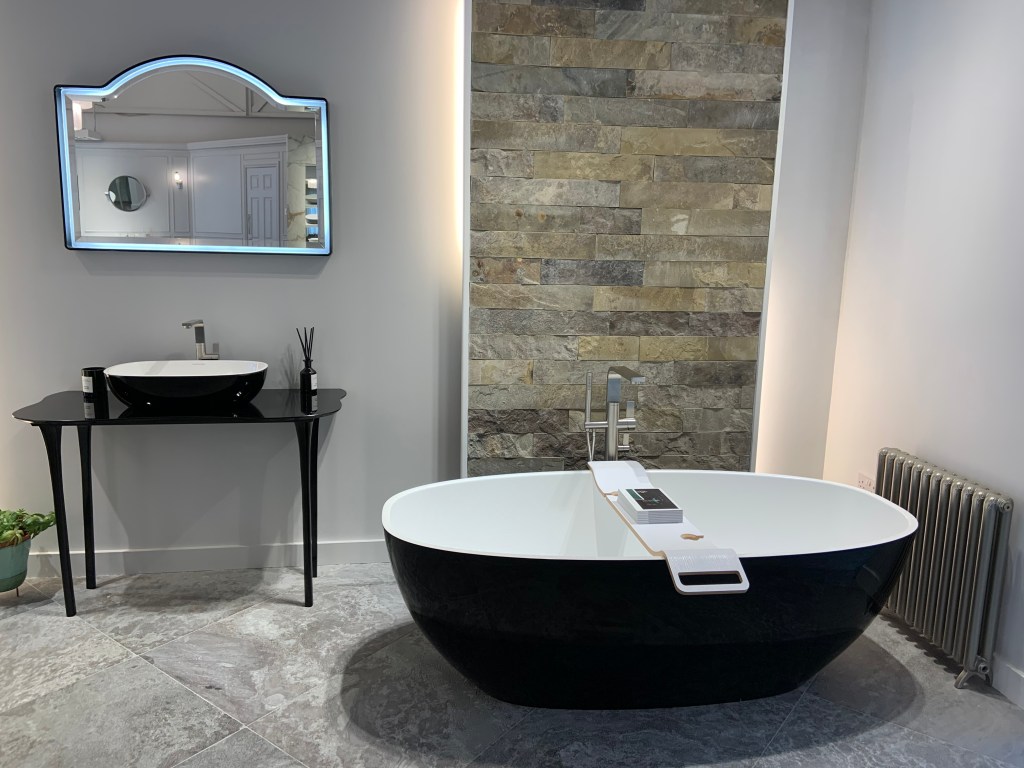
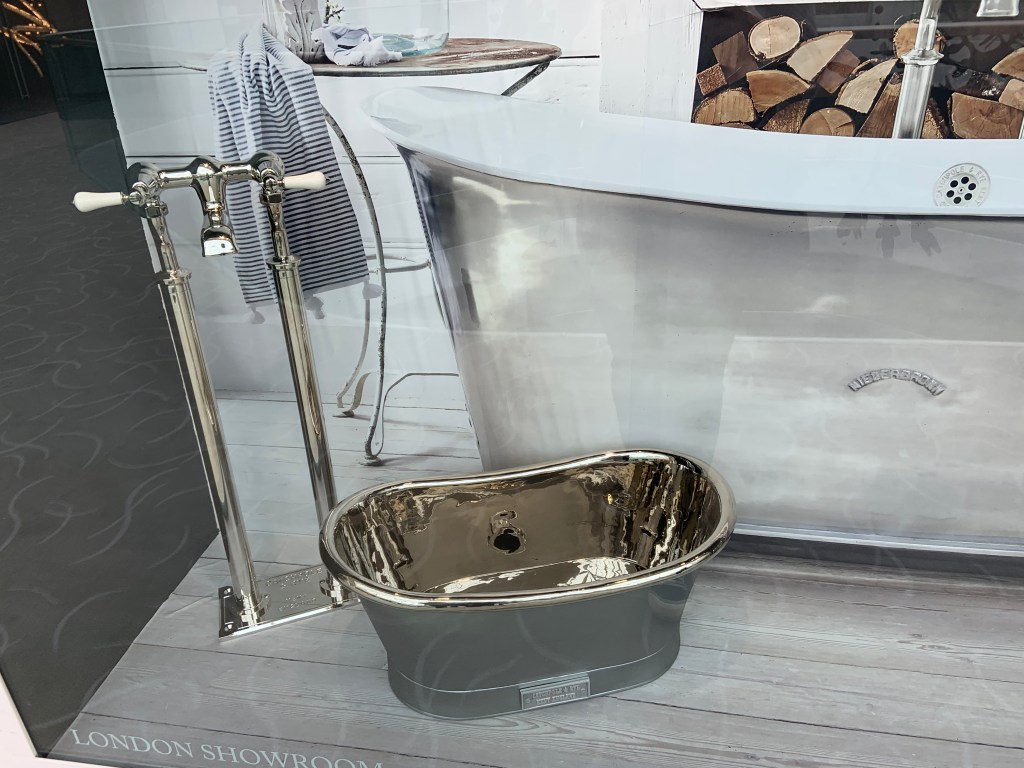
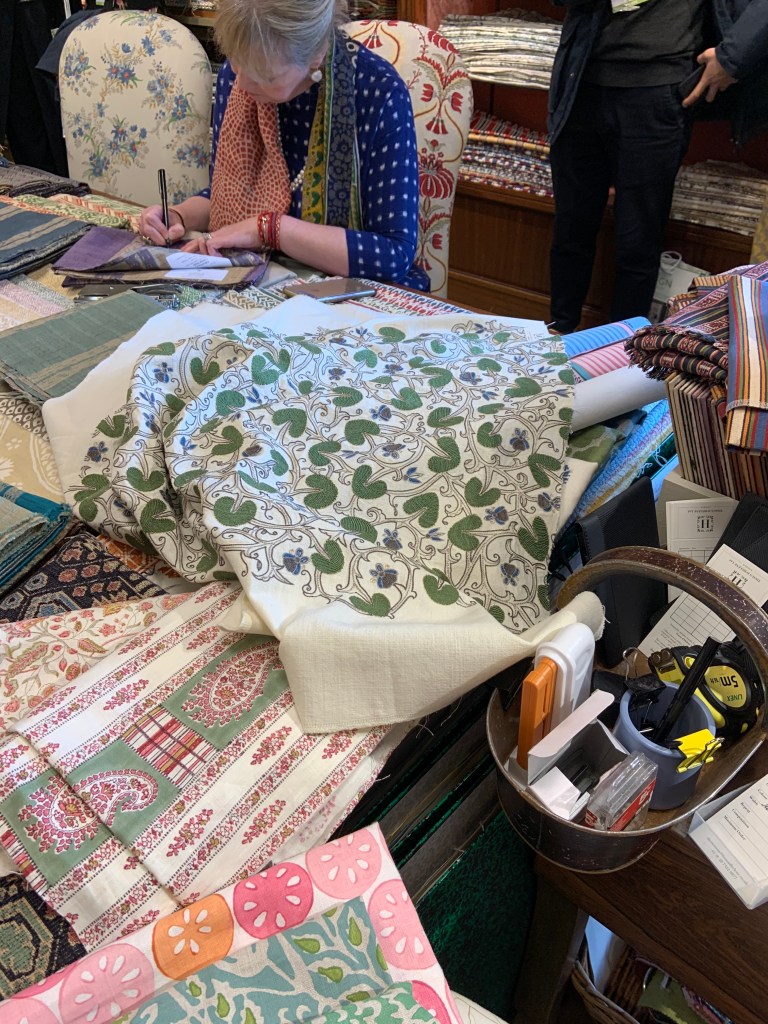
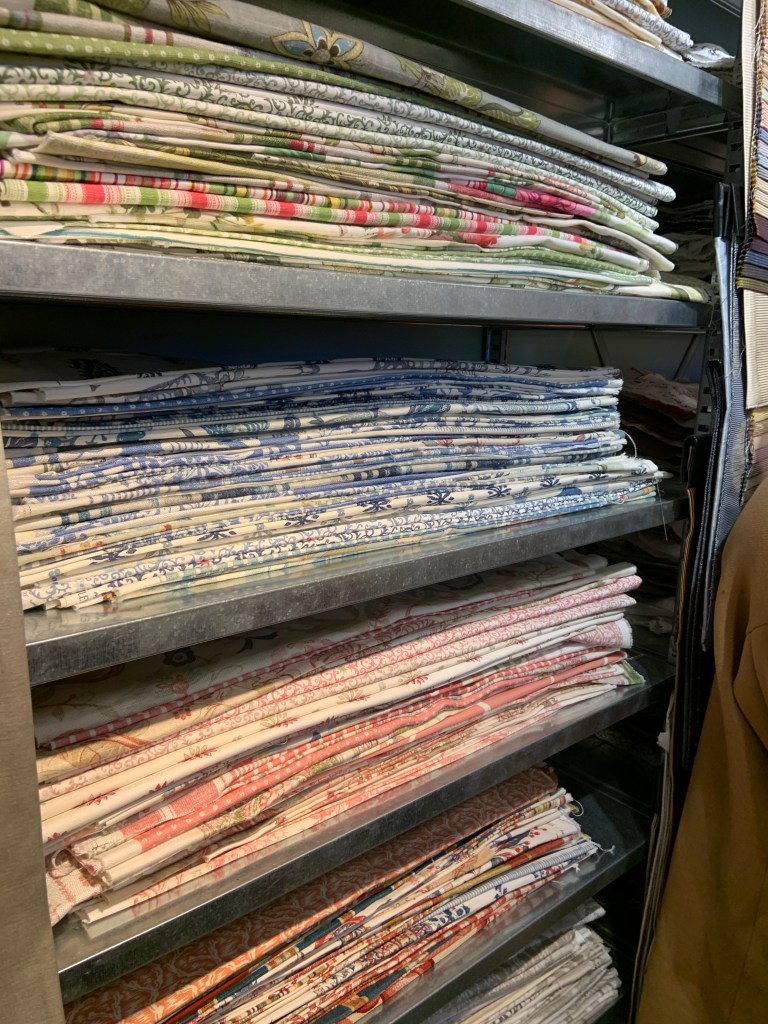
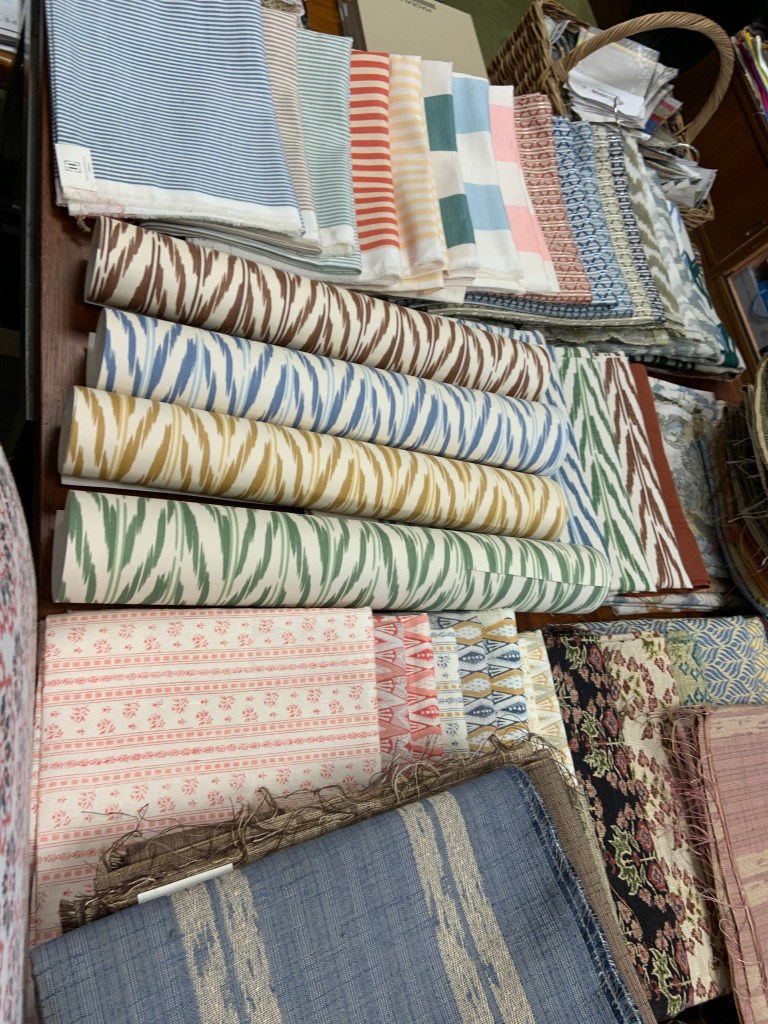
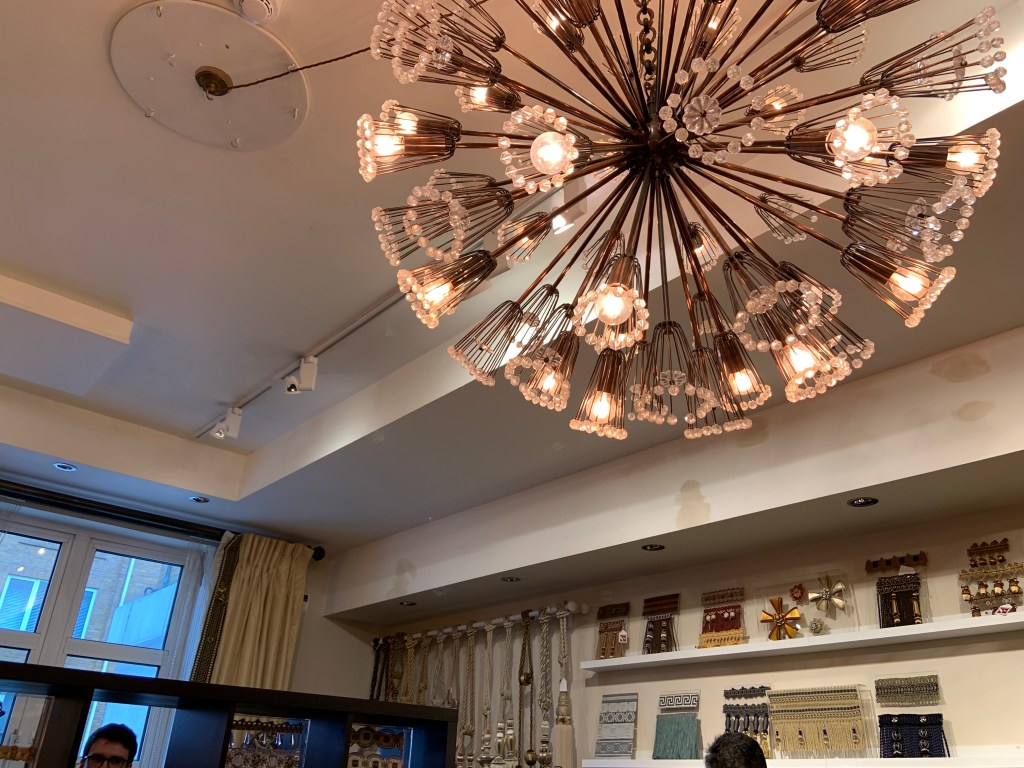
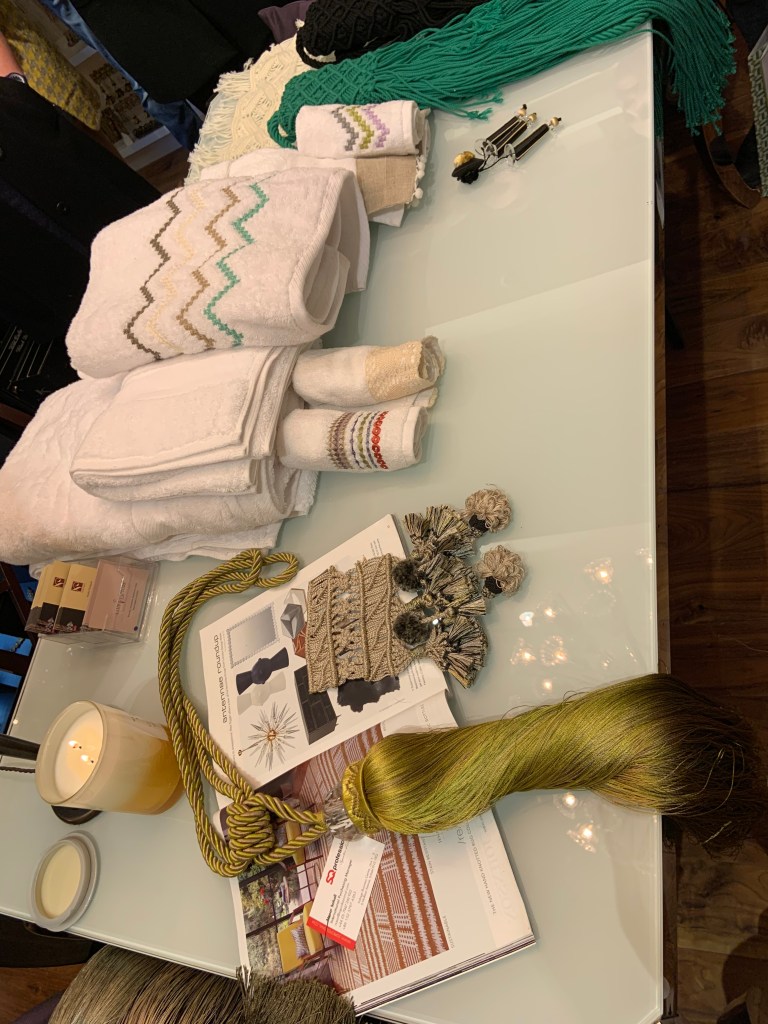
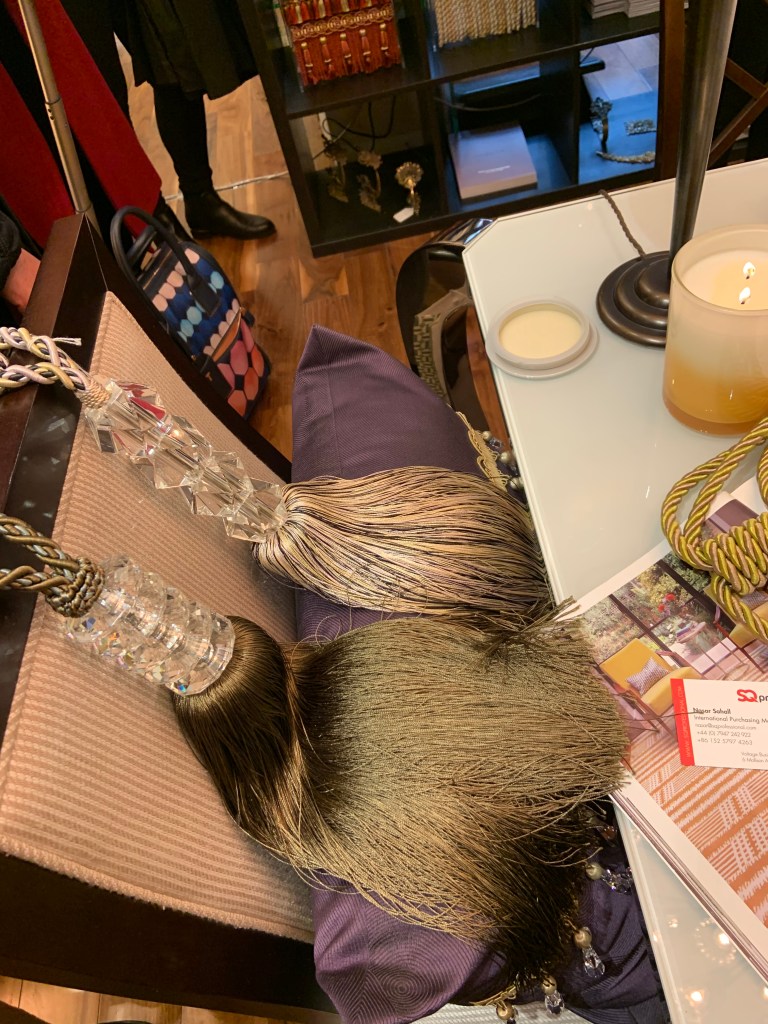
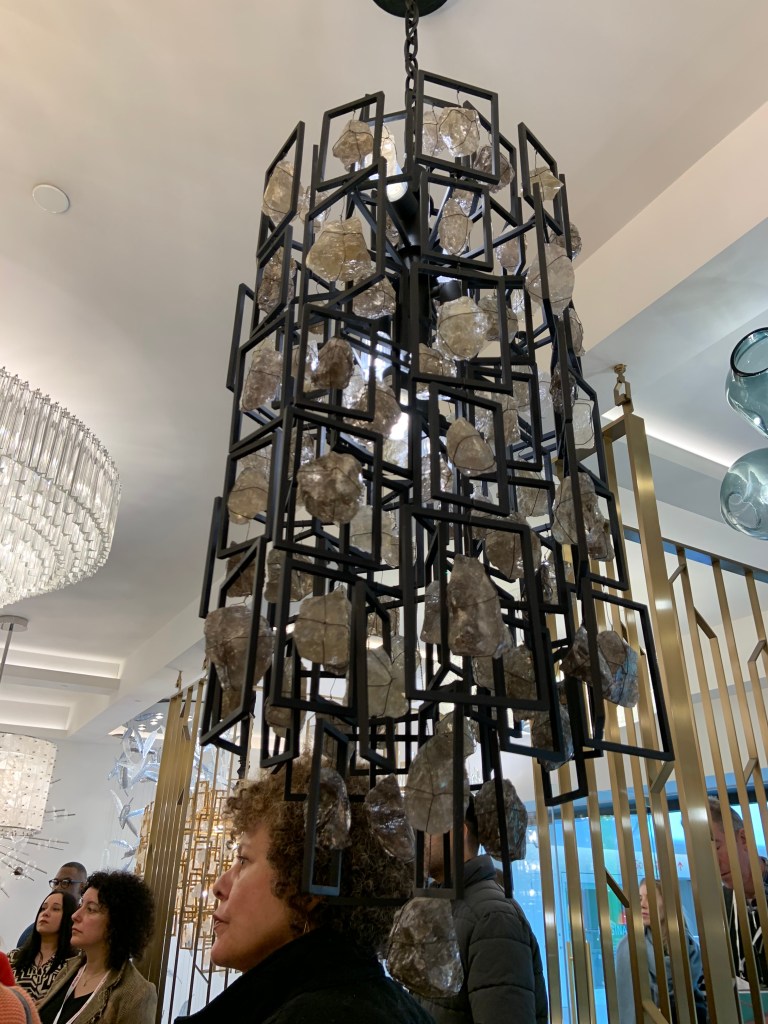
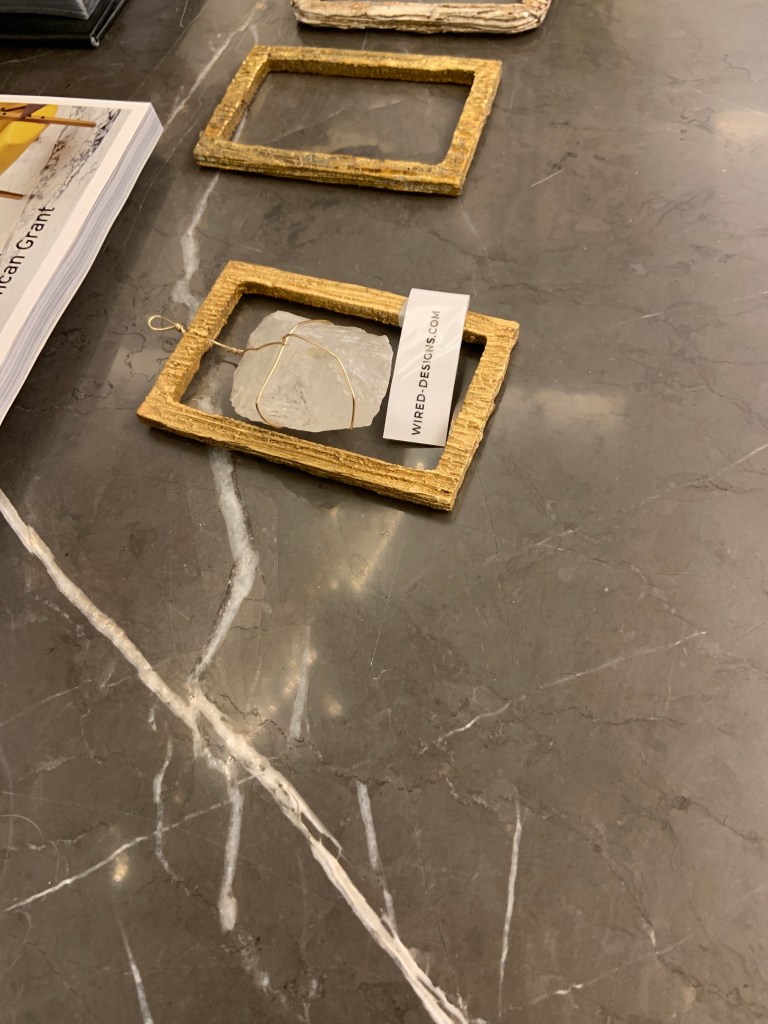
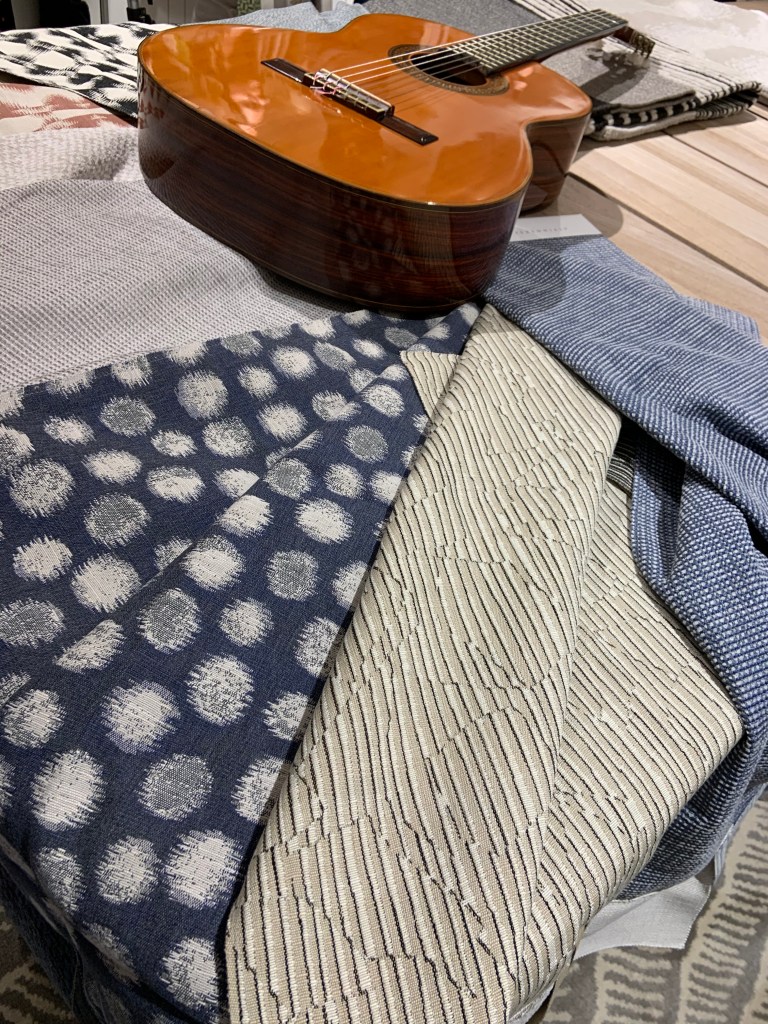
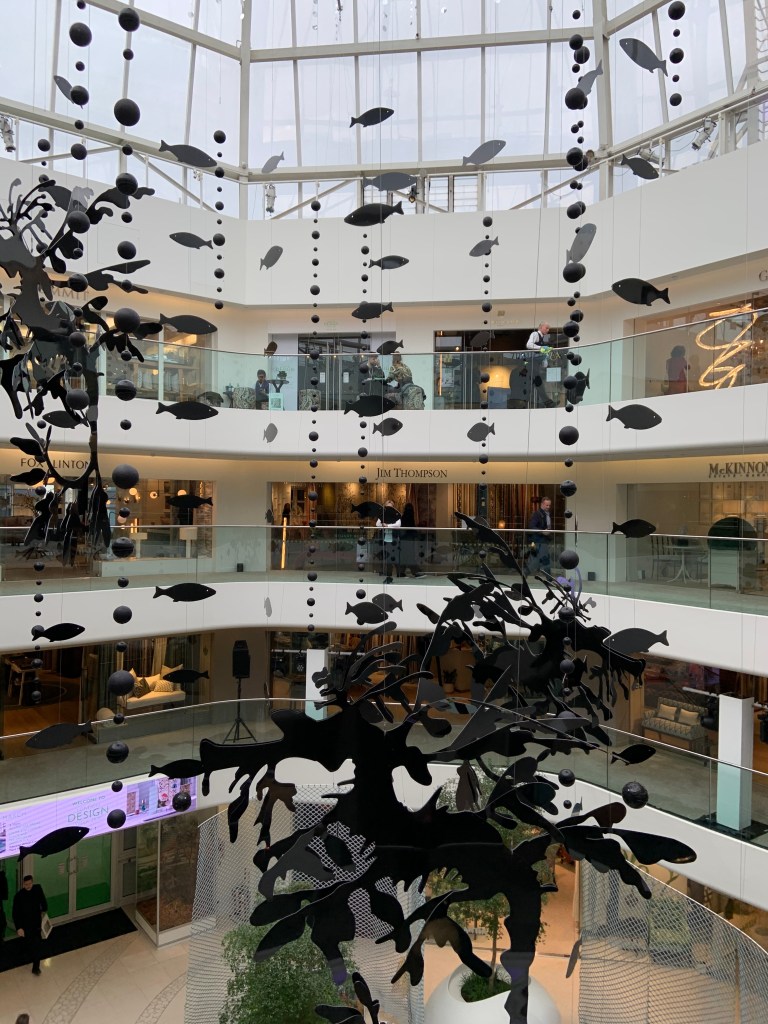
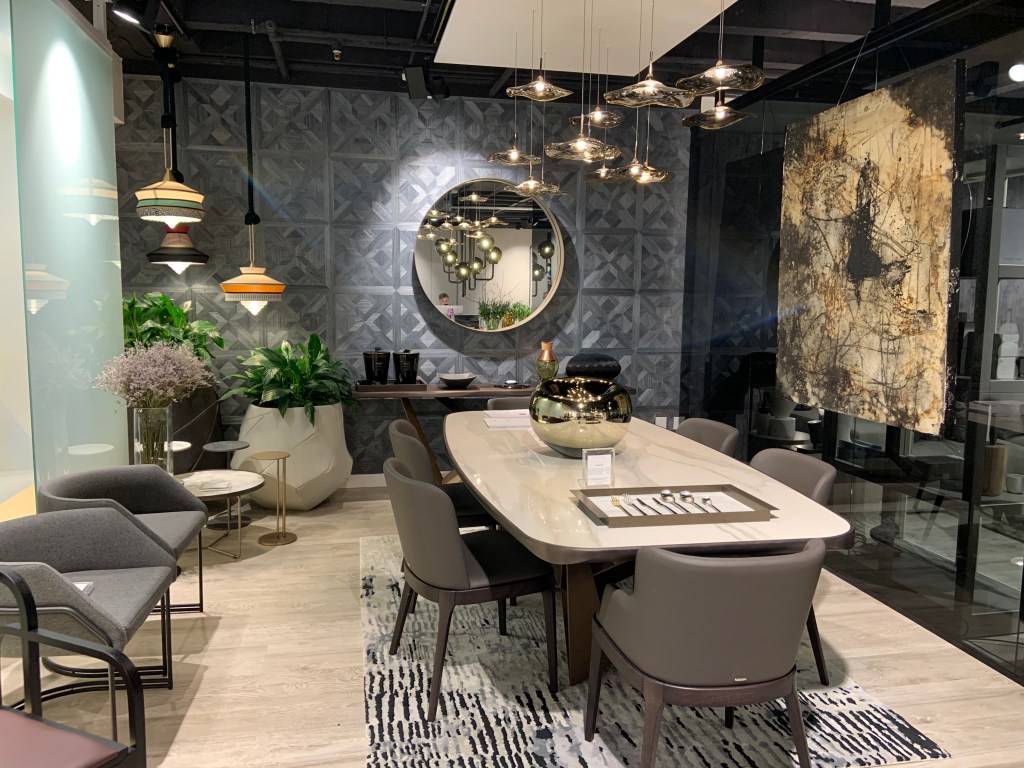
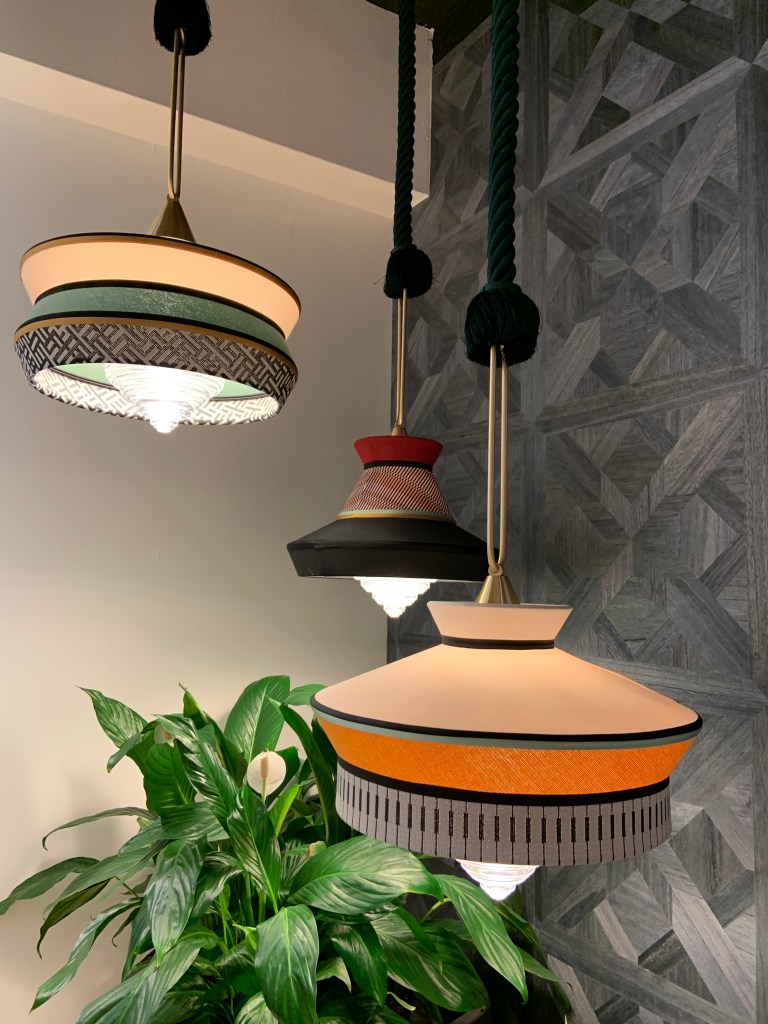
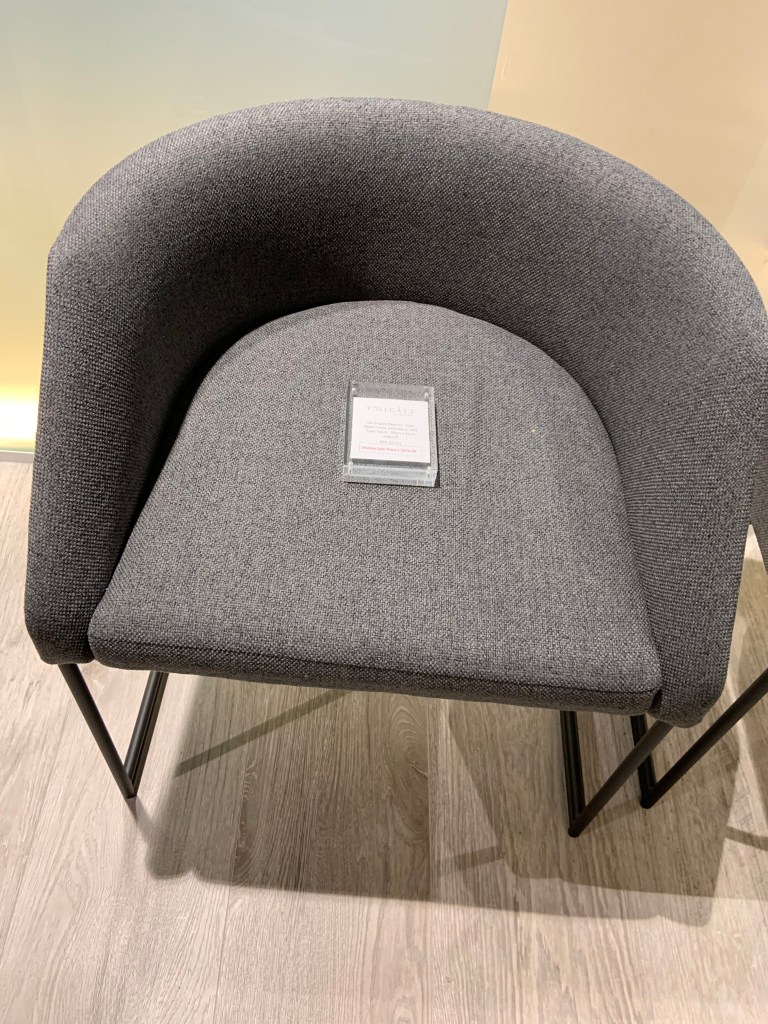
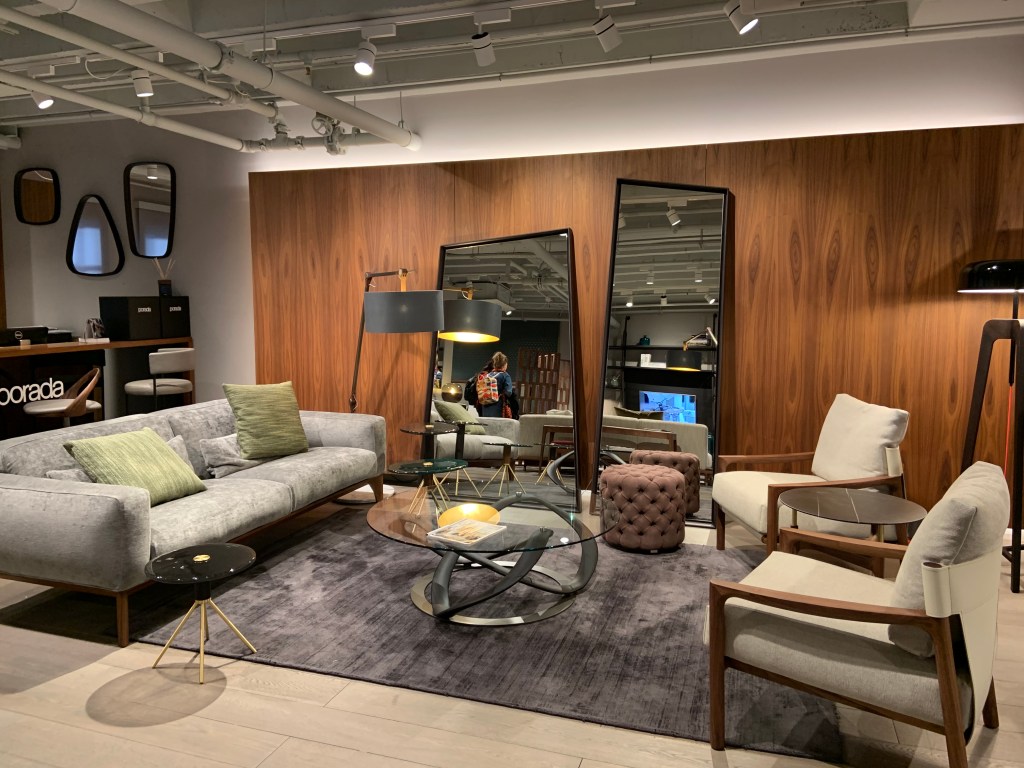
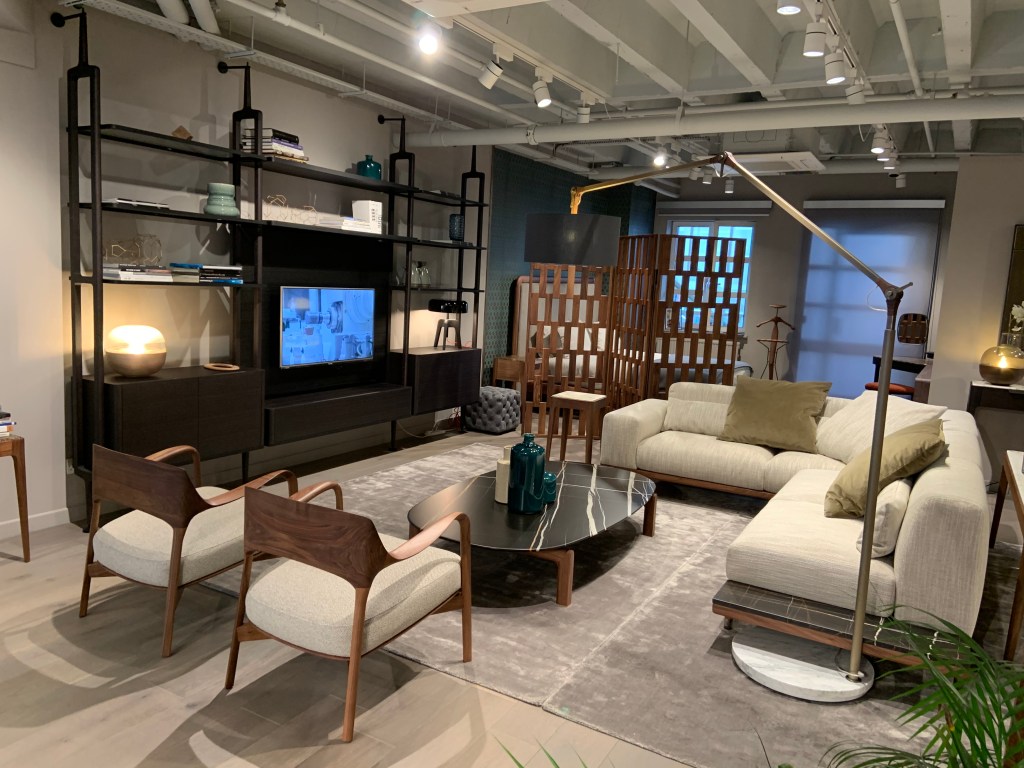
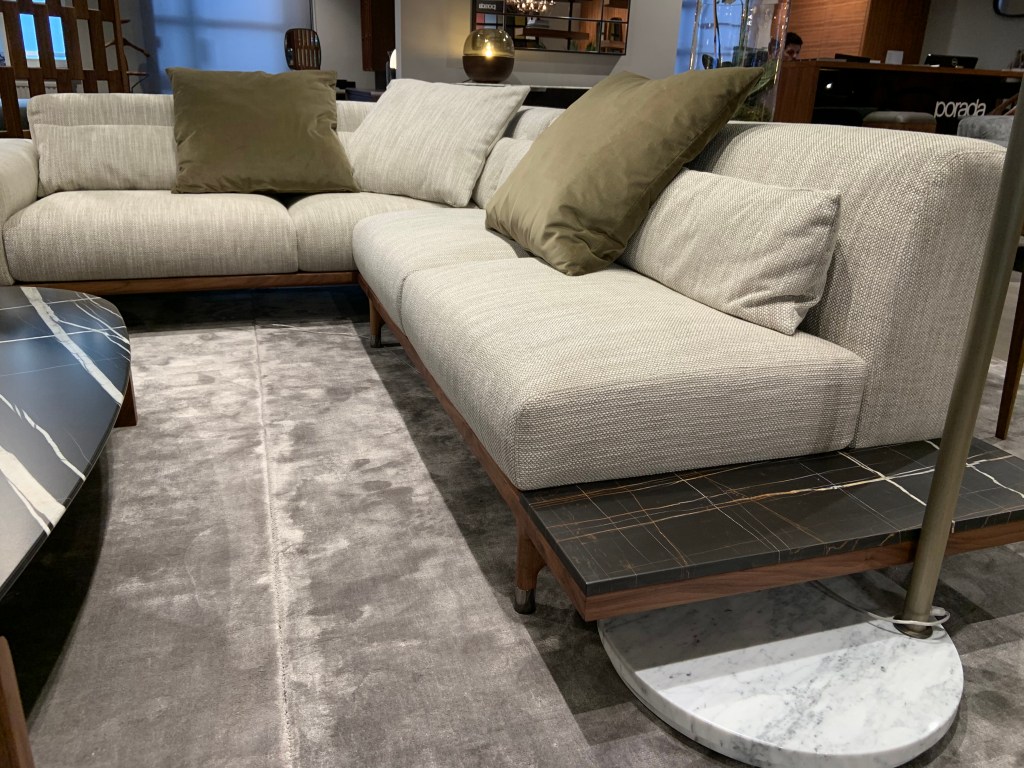
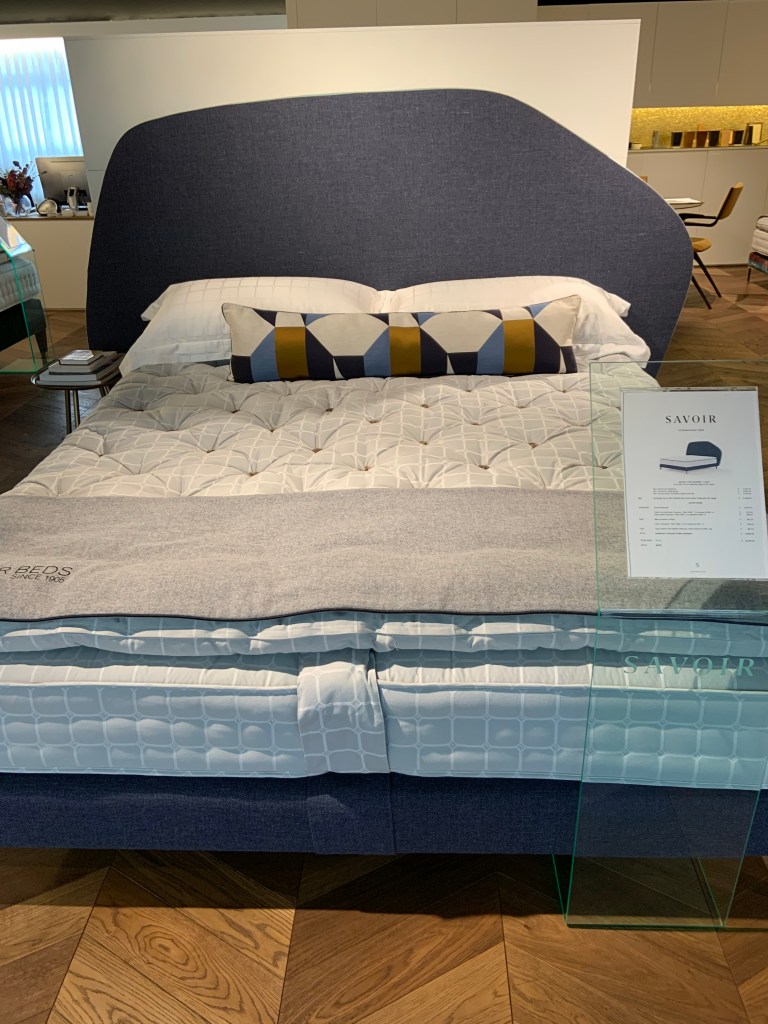
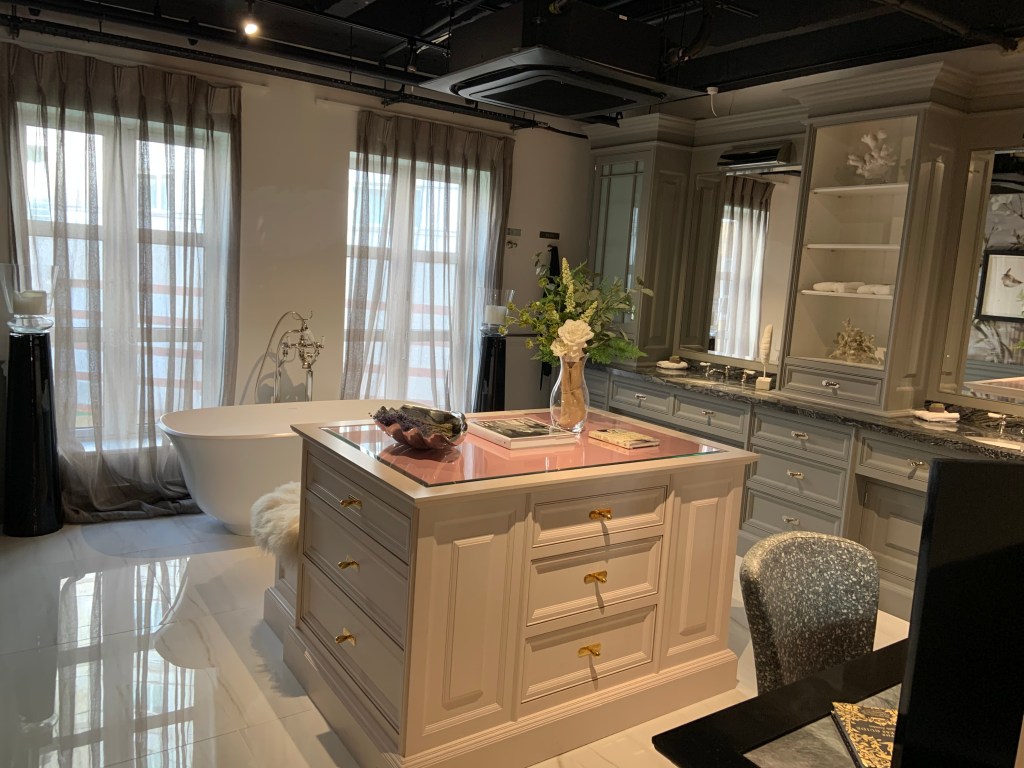
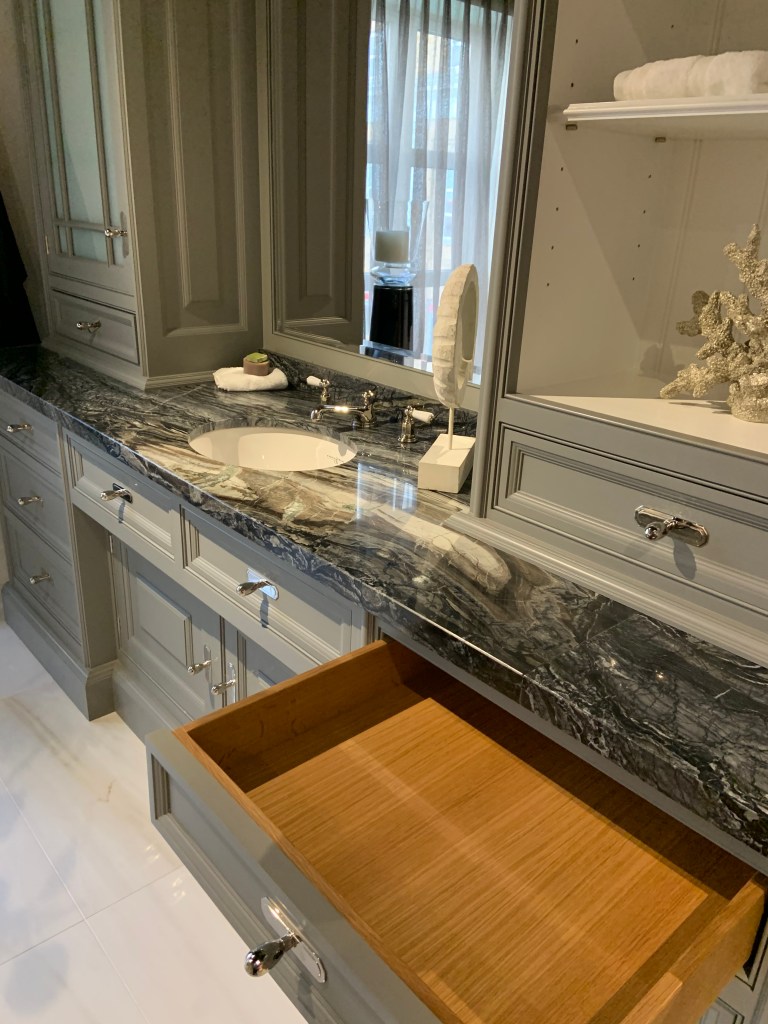
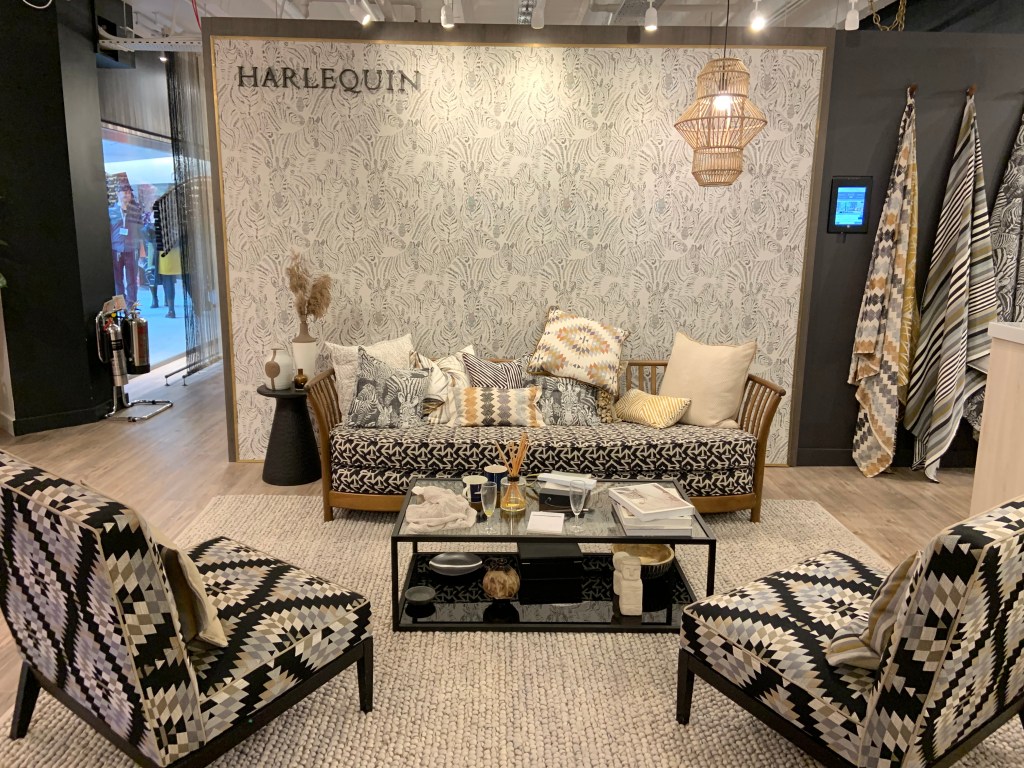
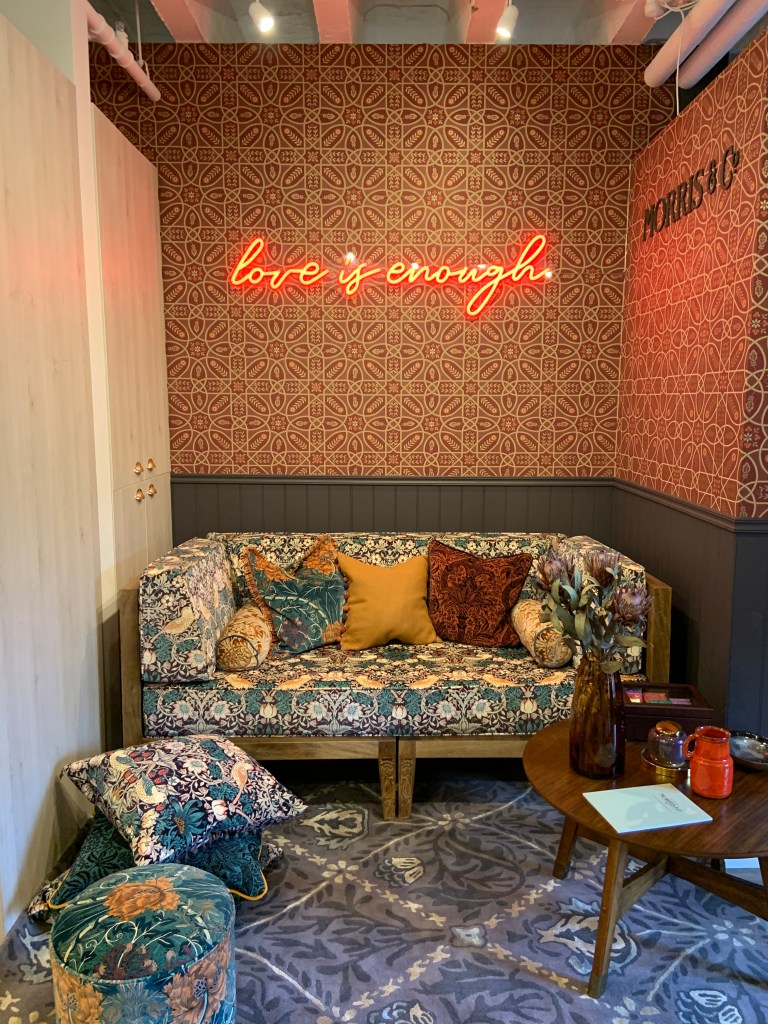
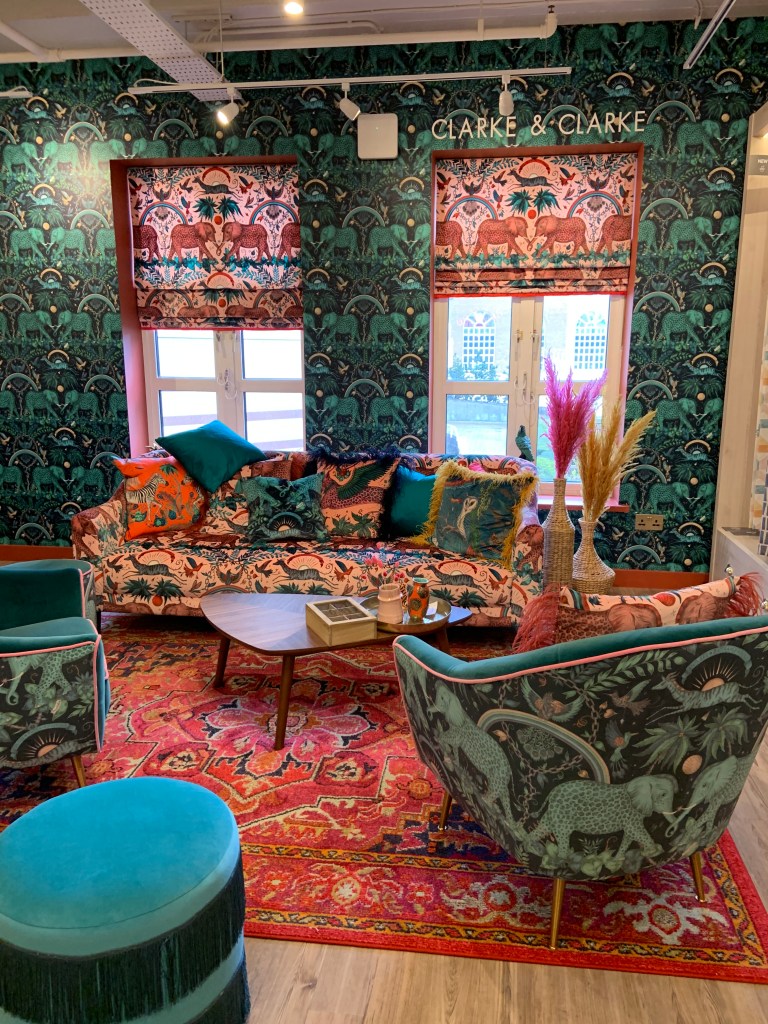
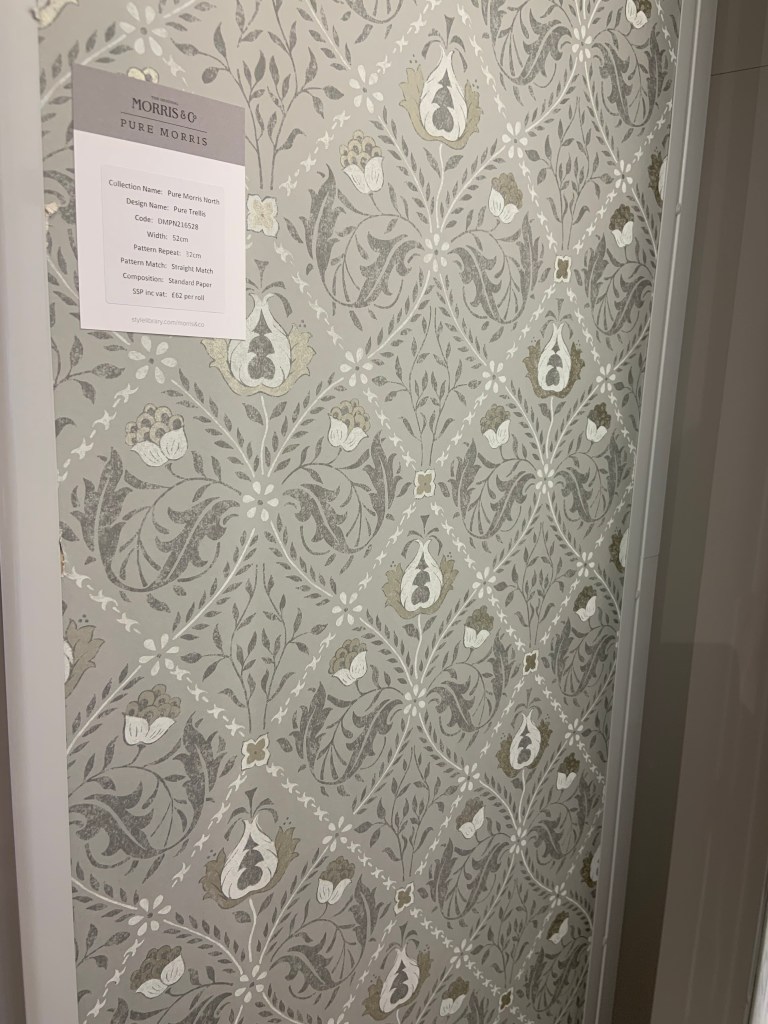
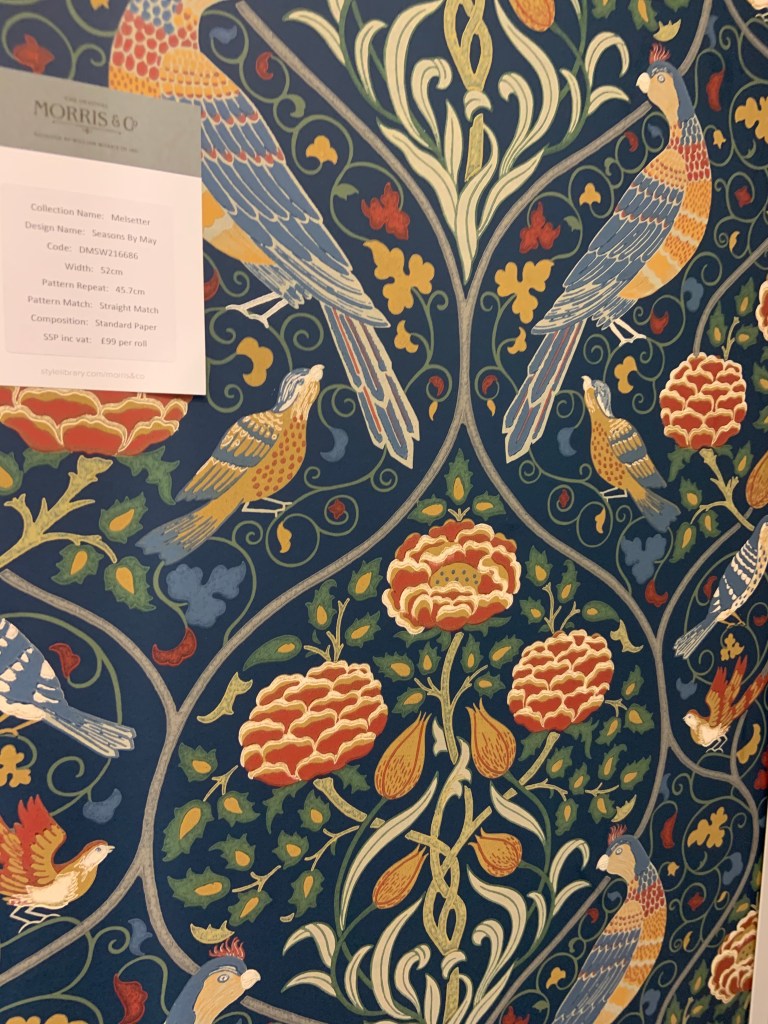
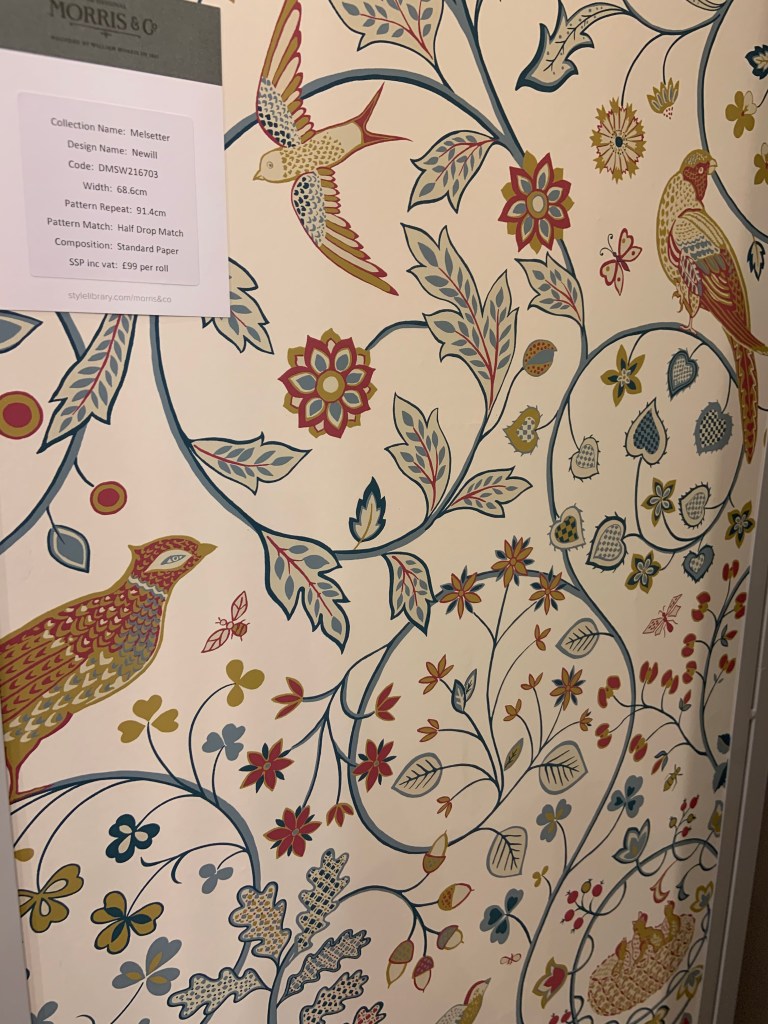
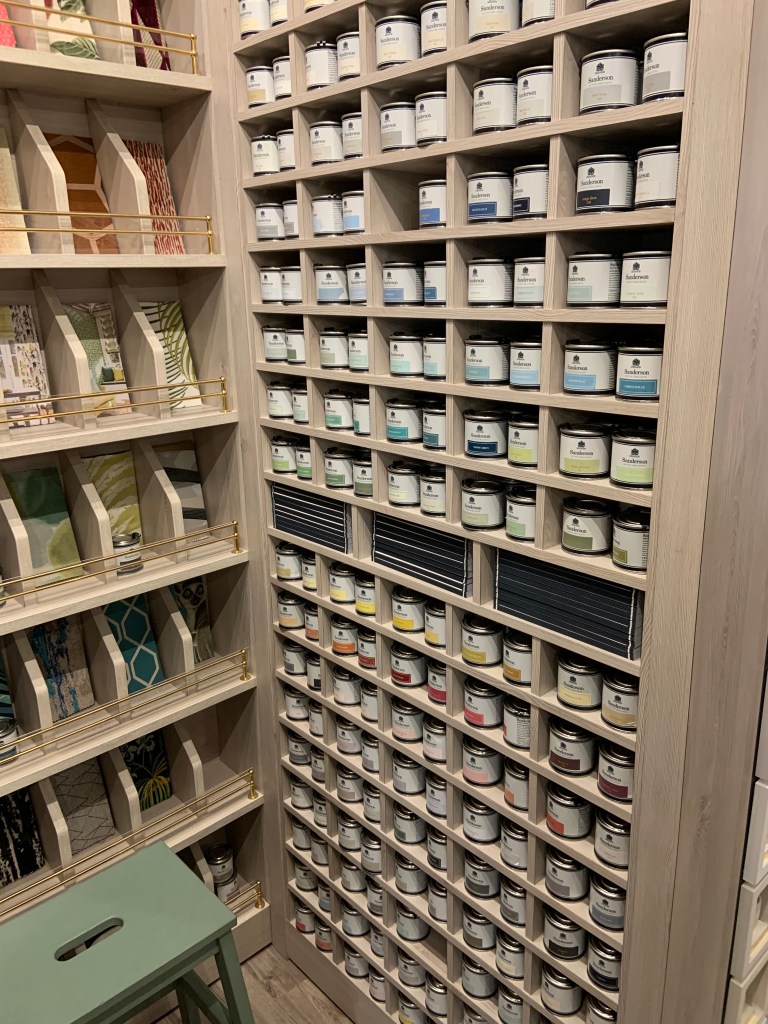
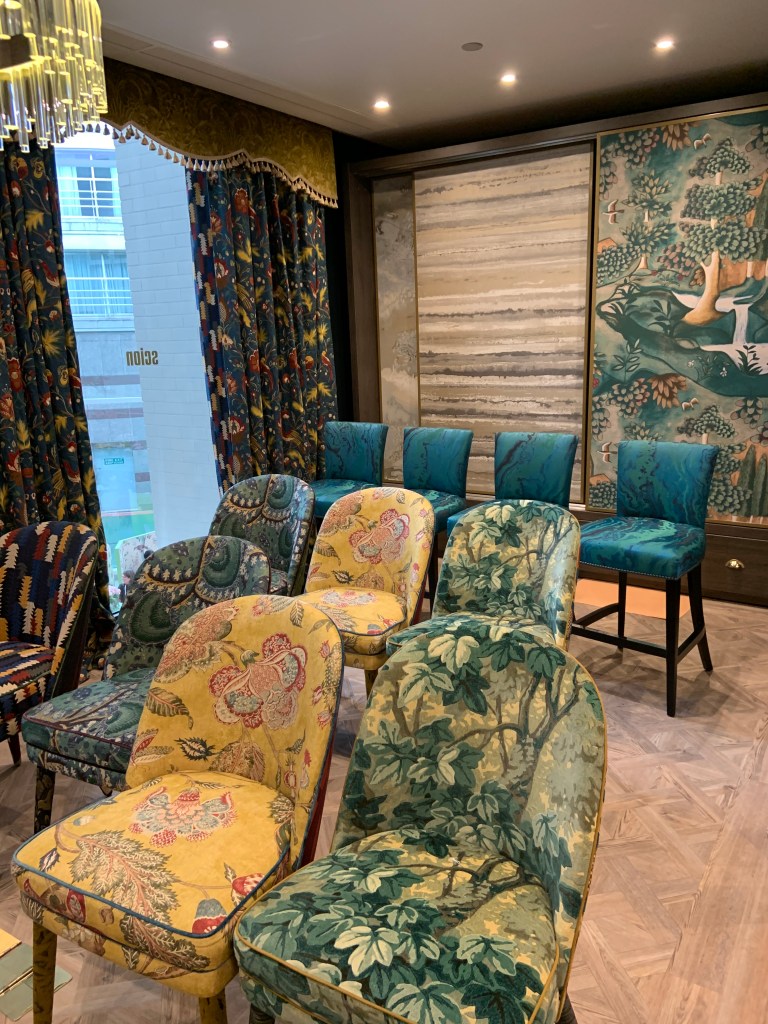
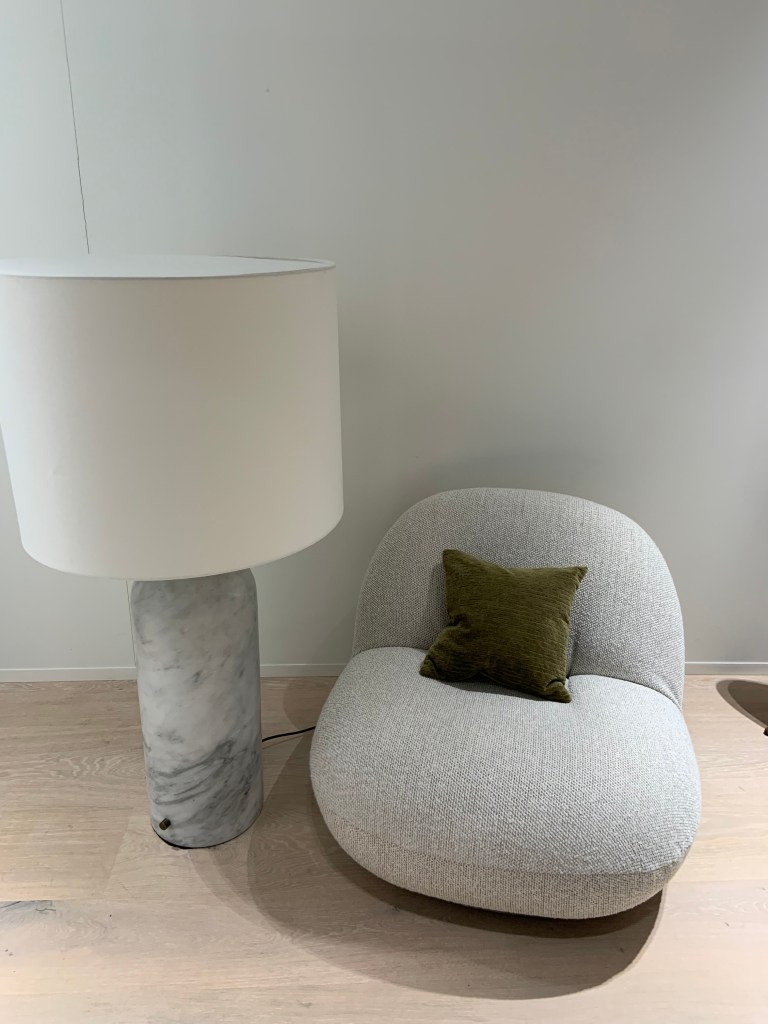
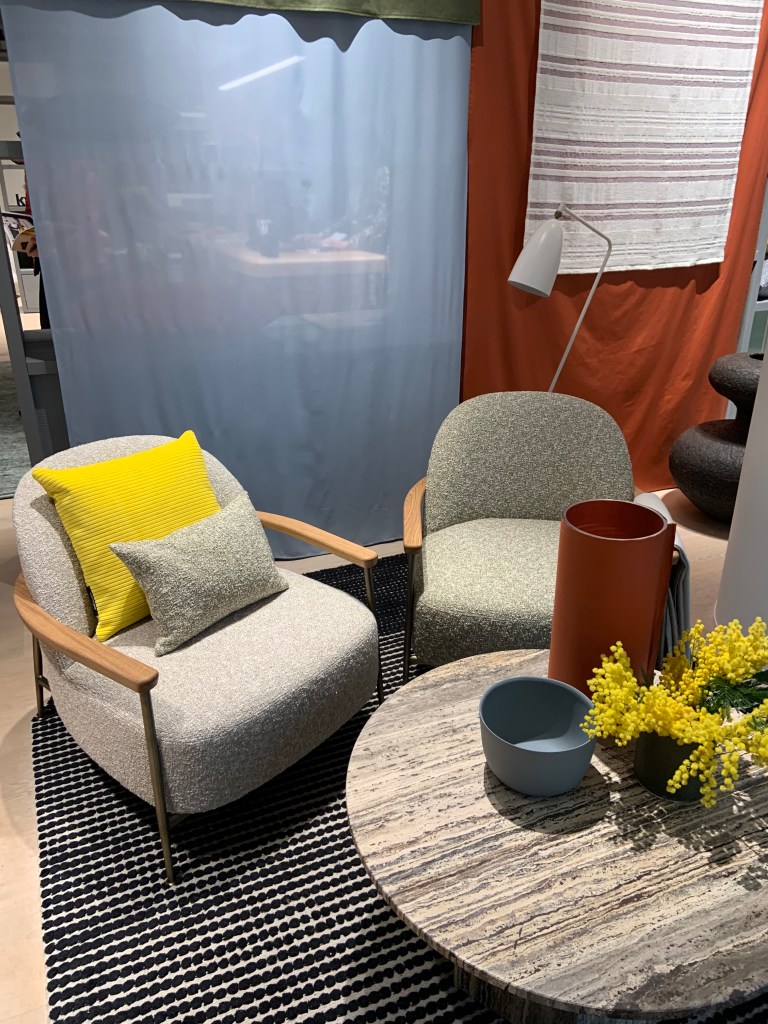
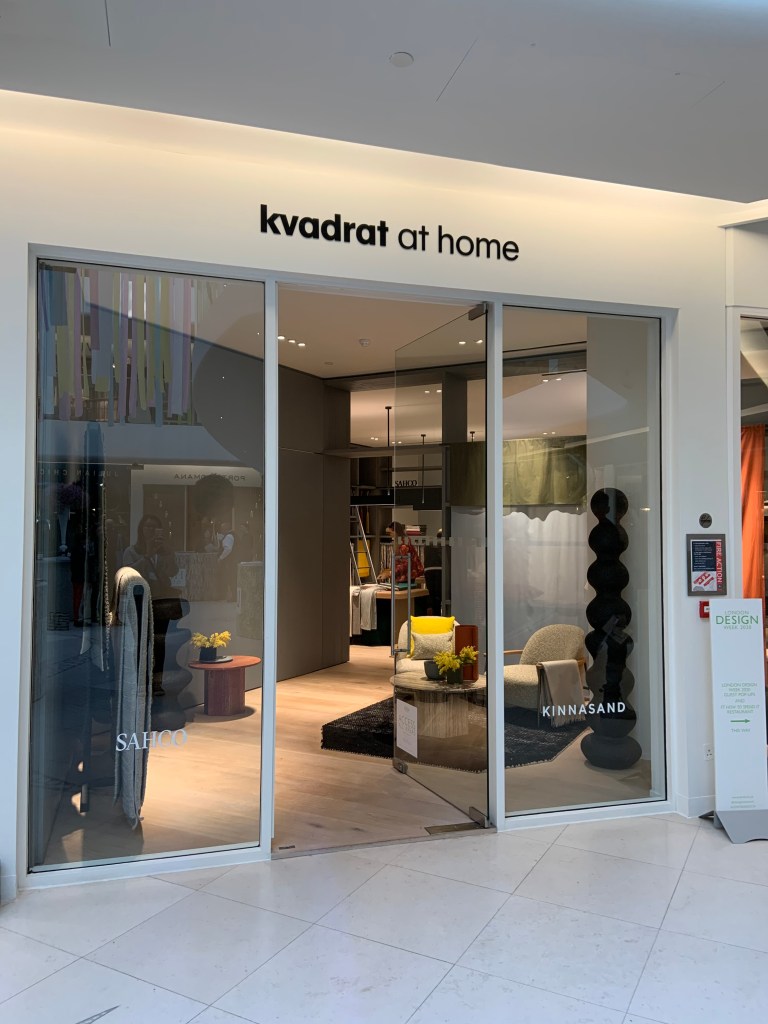
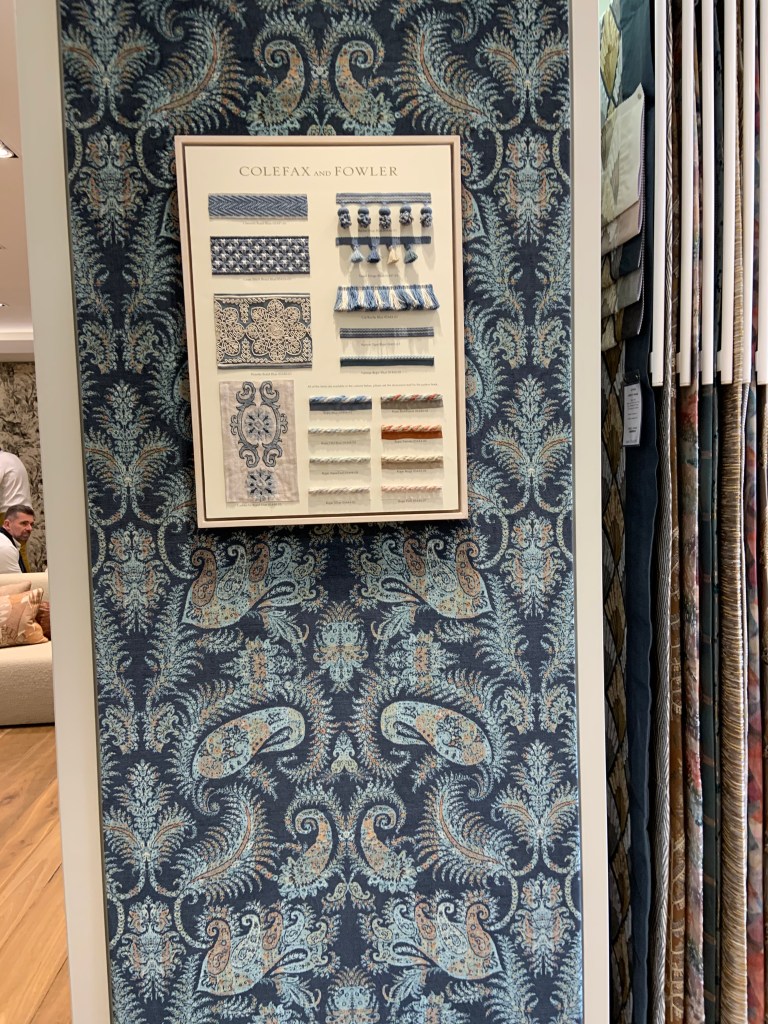
I visited London Design Week today. I spent most of the day here and haven’t even scraped the tip of the iceberg of the suppliers that are based here. It was also useful and informative to chat to exhibitors that are here only for the week. I spoke to every one of the temporary exhibitors and learnt lots about their companies and their products. I took part in a discovery tour: a group of us visited certain showrooms and we were told by owners or designers about the products they supply. I never visited Chelsea Harbour before, I found today very informative and I am planning to go back to do more research here.
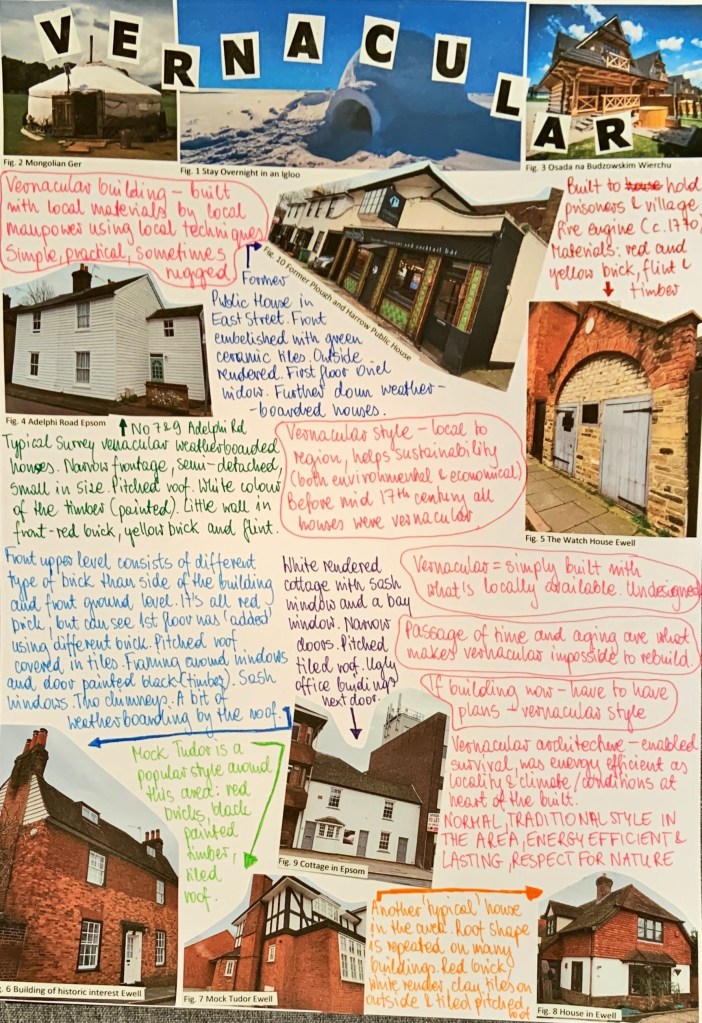
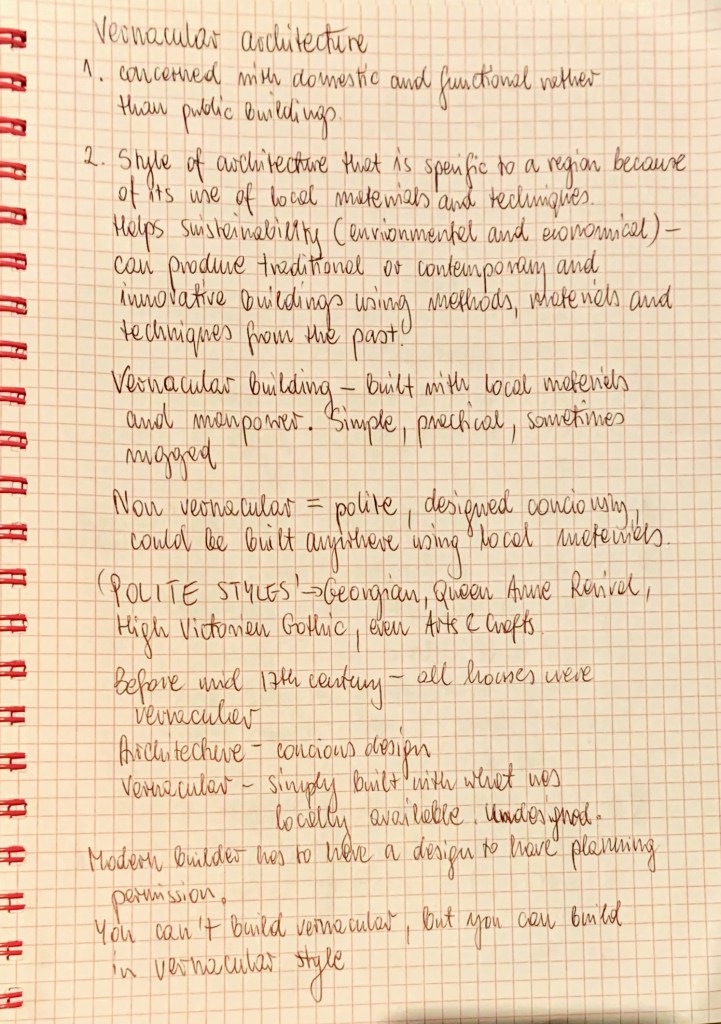
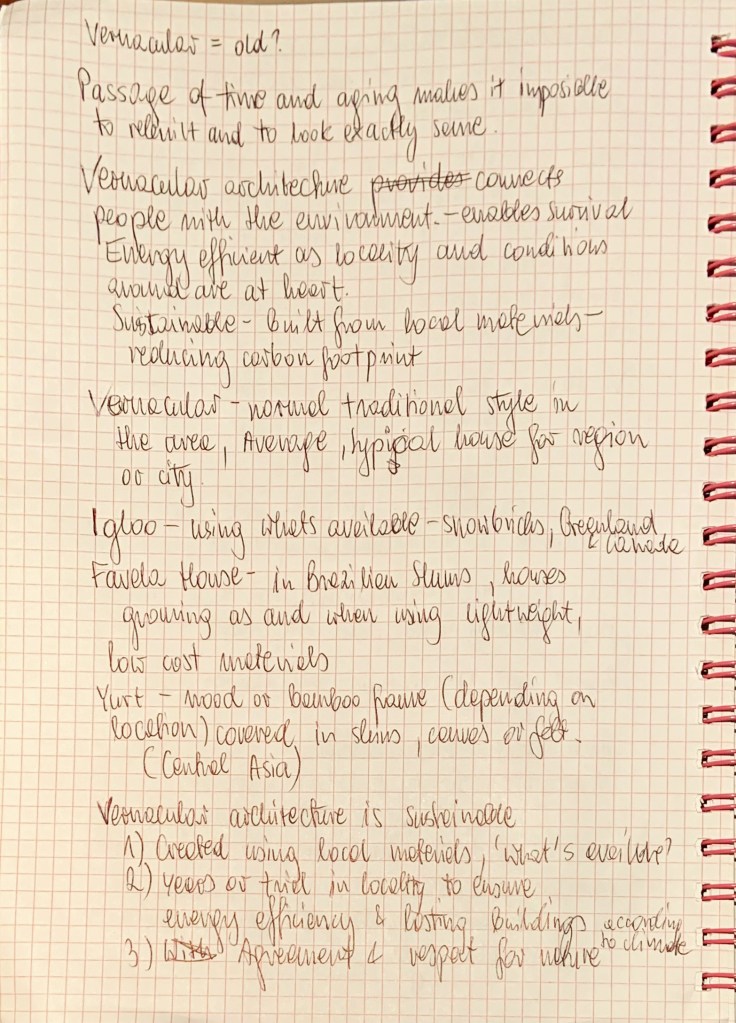
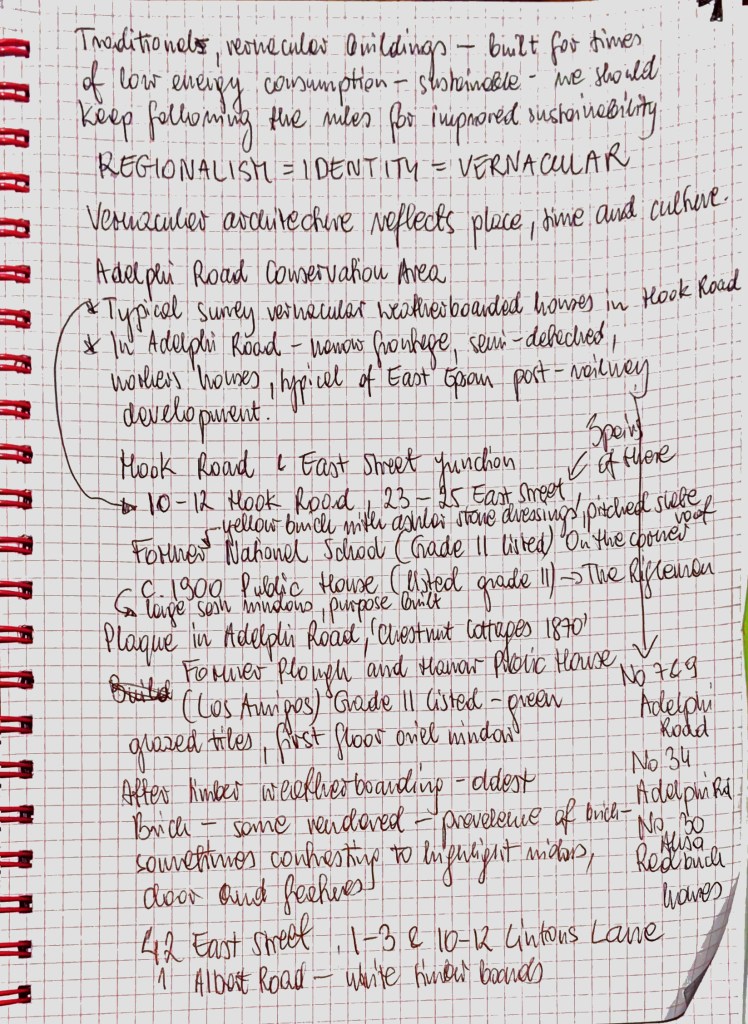
I learnt that some buildings ‘try’ to have vernacular style but don’t succeed. For example, in Epsom Area there are many houses that are weatherboarded but painted black, that is not in keeping with local vernacular that should be white. I found the task of researching properties interesting but also difficult as all houses I saw today were built after 17th century. I noticed that many newer buldings are designed to look older, to suit the area and what’s around. Also identifying materials is really difficult – for example timber weatherboarding – it’s timber but which one? Or roof tiles – could be ceramic, slate, clay… how can you tell the difference? Even harder when old and covered in moss. Still lots to learn…
Exercise 3.1 General Site Analysis (Peckham Library)
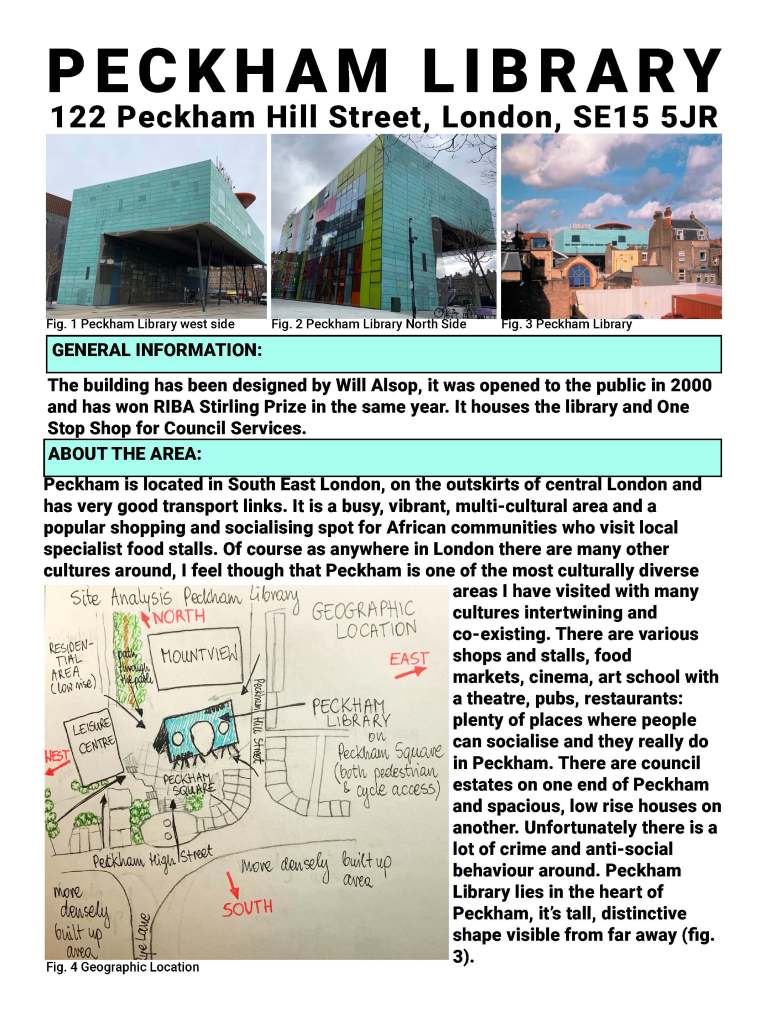
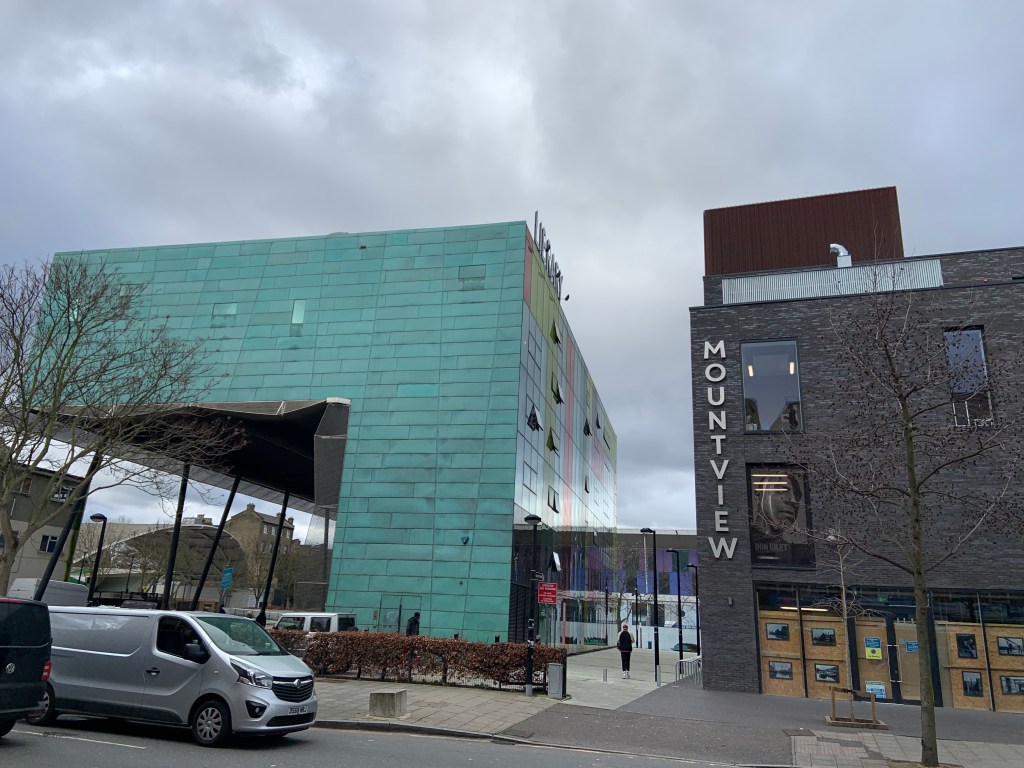
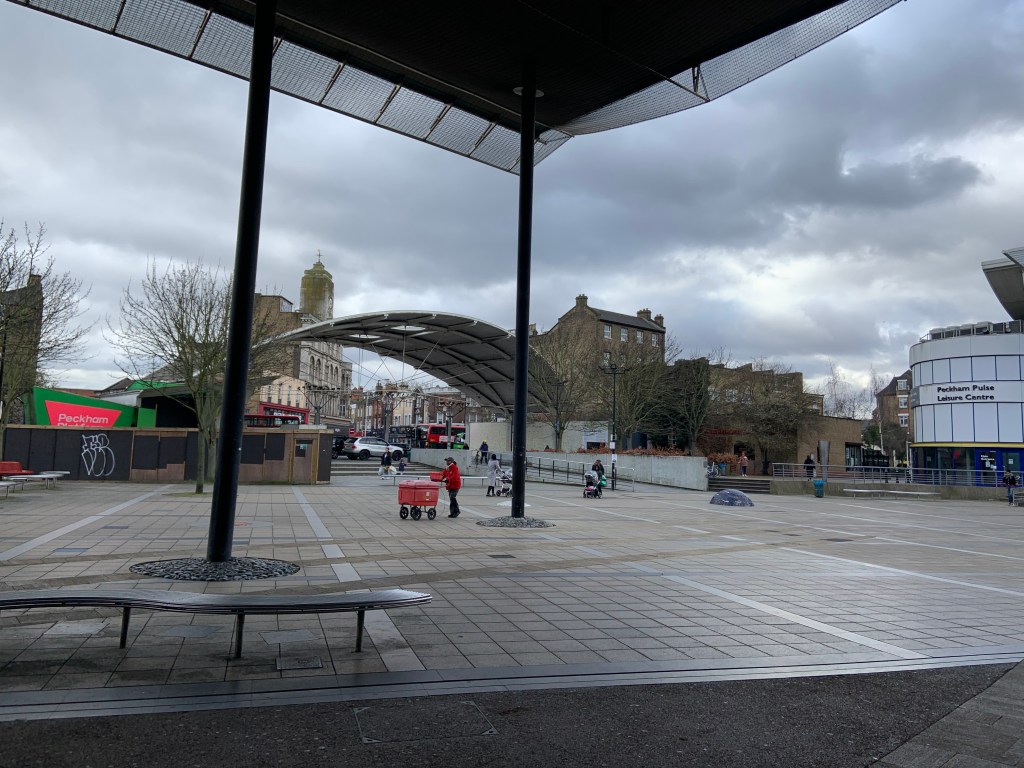
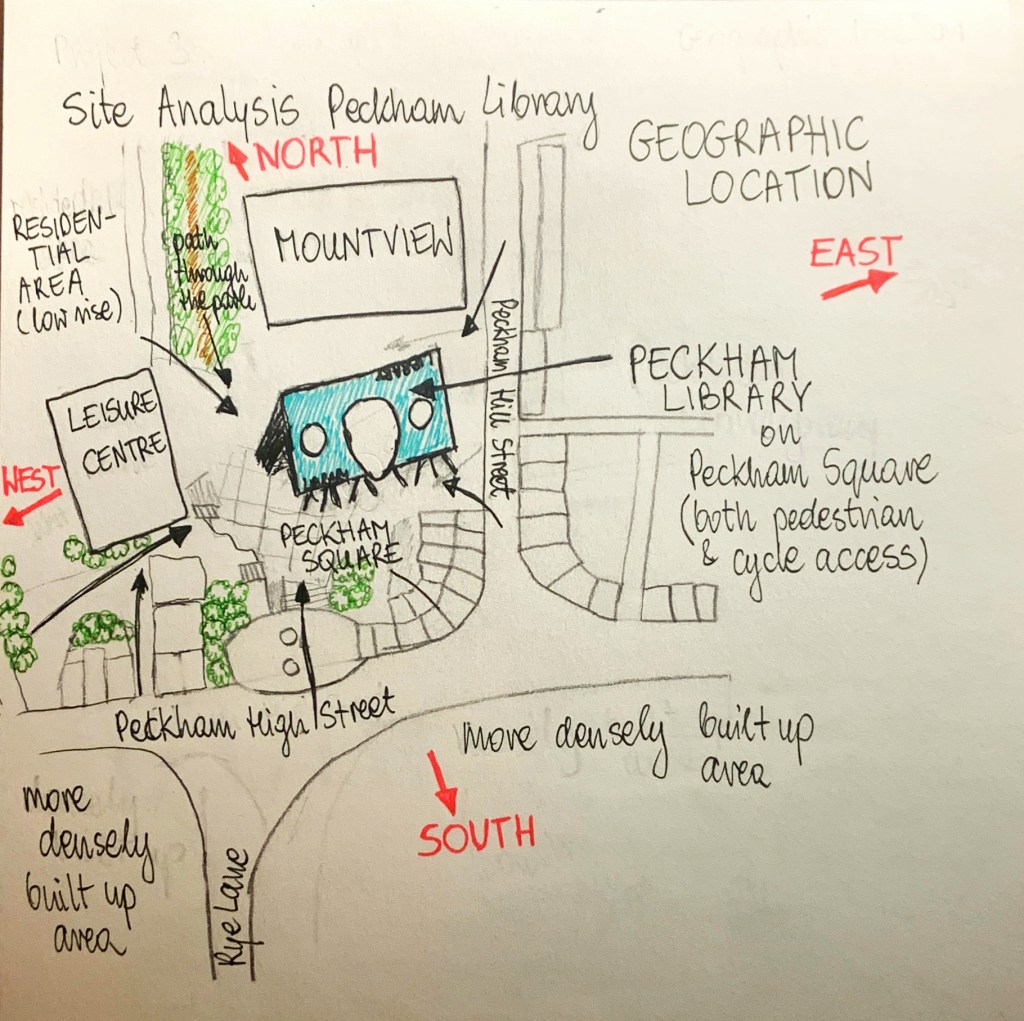
The buildings main function is library. It also has one stop shop on ground floor providing local residents with council services. It is located on Peckham Square in South East London. It has excellent pedestrian and cycle access. The square can be accessed from all directions. The library is conveniently located very near transport links, there are plenty of bus stops in immediate vicinity (The closest one outside Mountview building).
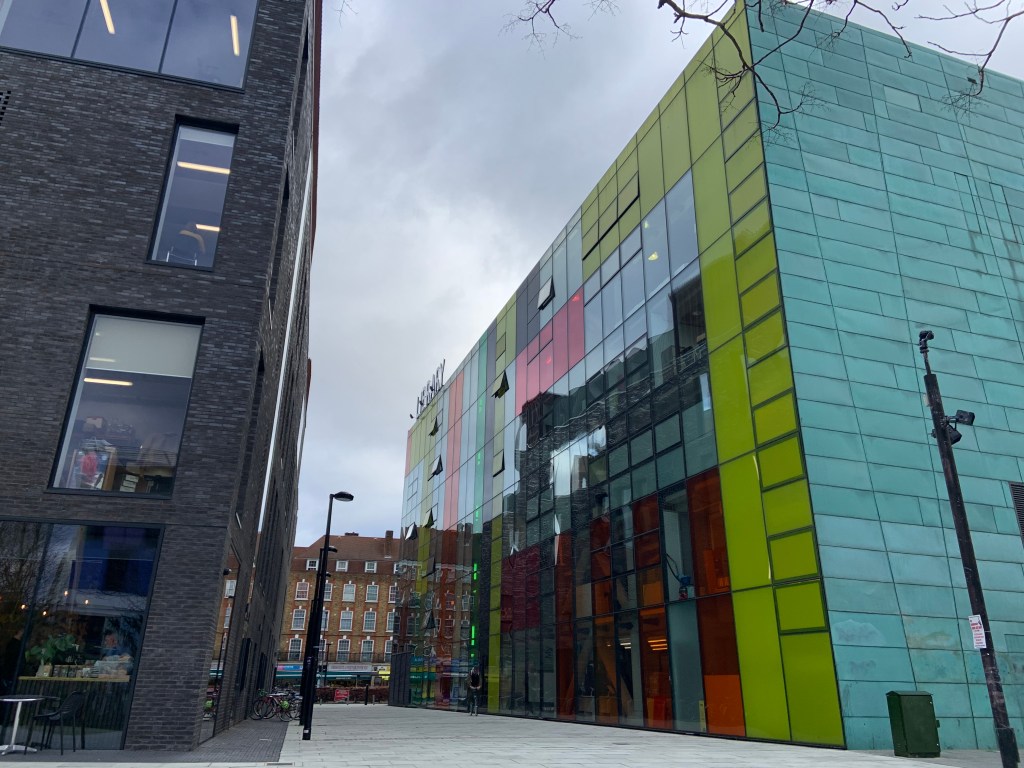
The library is adjacent on the northside to the Mountview building, the building stands very close to the library, no more than 20 meters. Mountview has been built in recent years and thankfully it doesn’t cast a shadow on the library, it’s the library that casts a shadow on the Mountview building. I can imagine prior to Mountview’s construction there was quite a view through library’s colourful windows at the back of the building. Mountview is a multi-use building, containing drama school, theater, restaurants, leisure and cultural activities.
Fig. 1 Colourful Back of Peckham Library
Fig. 2 View from Peckham Hill Street
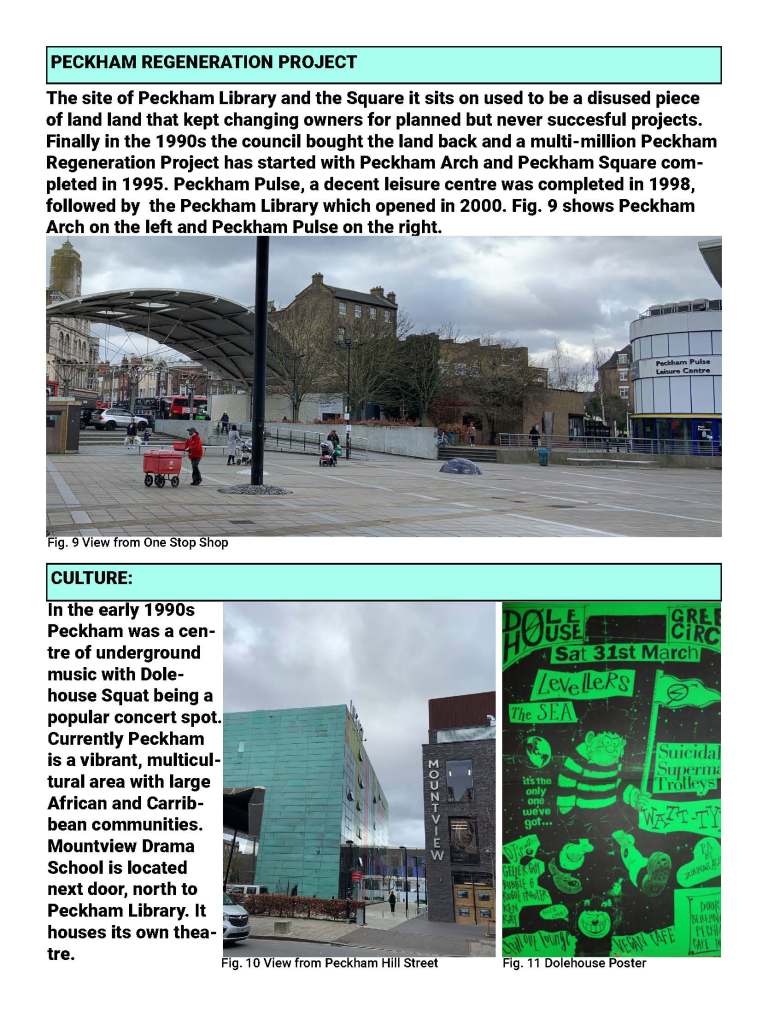
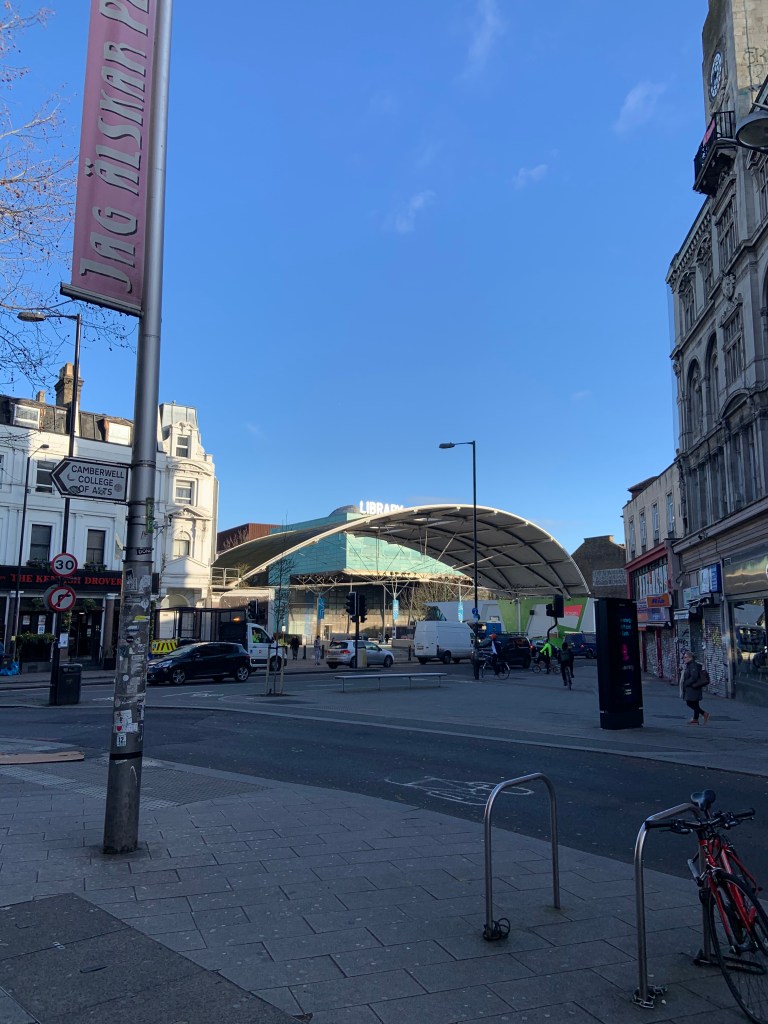
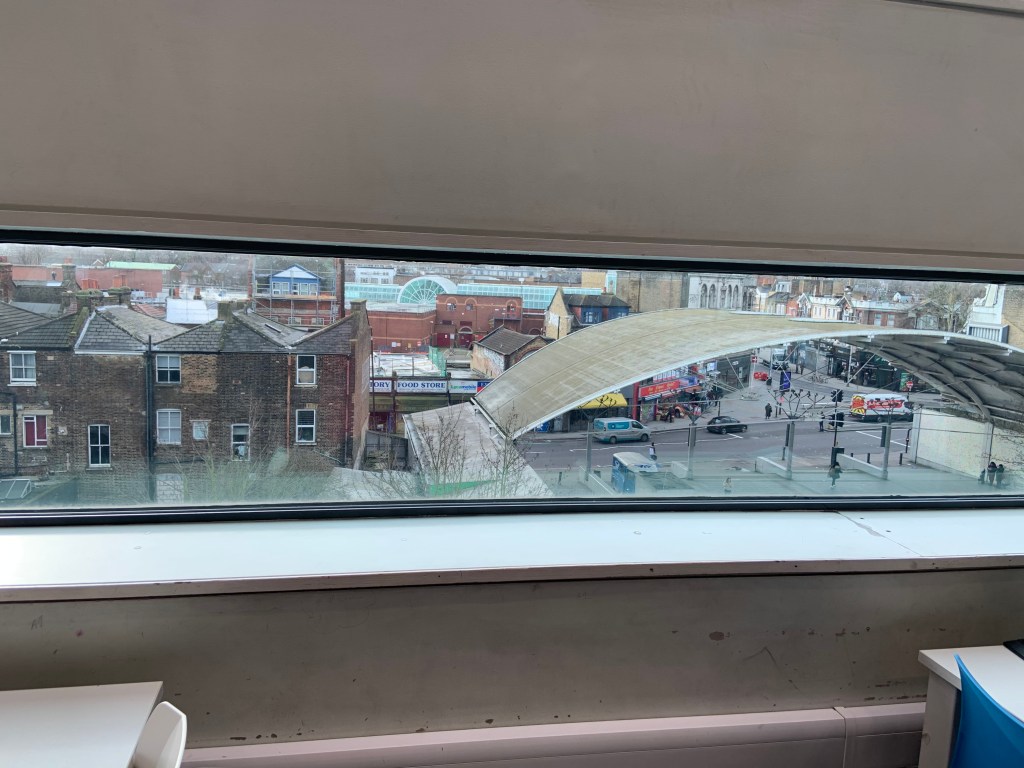
In front of Peckham Library there is Peckham Arch.
Fig. 3 View from Rye Lane
Fig. 4 Peckham Arch From Library Window
Fig. 5 View from One Stop Shop Entrance
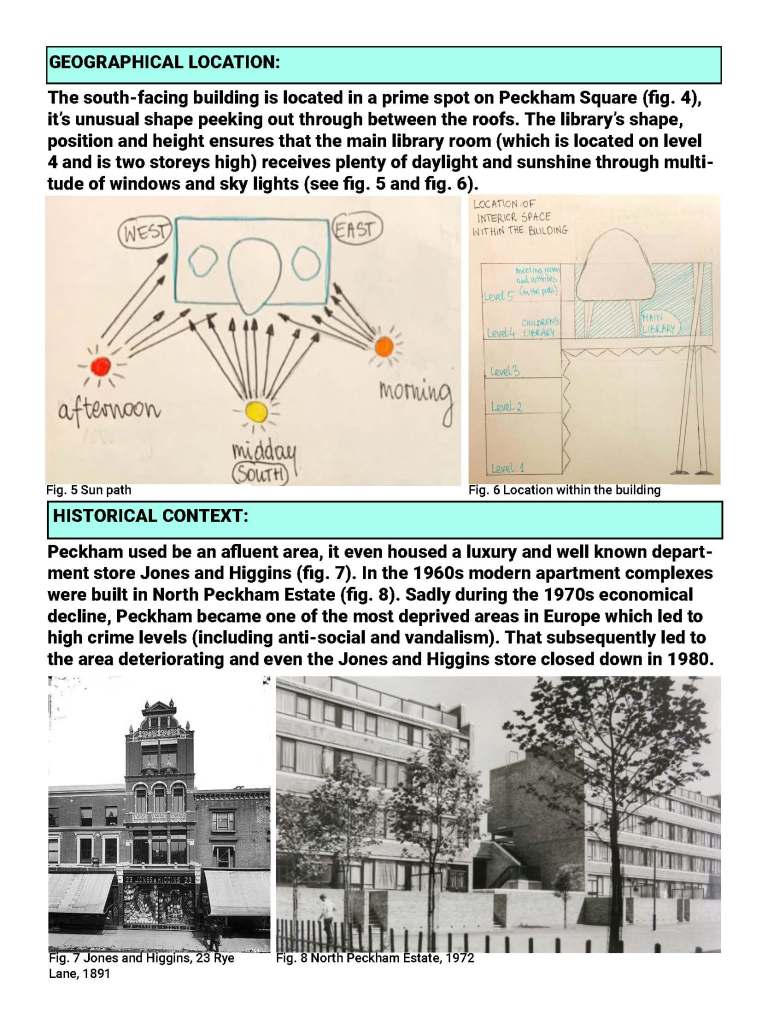
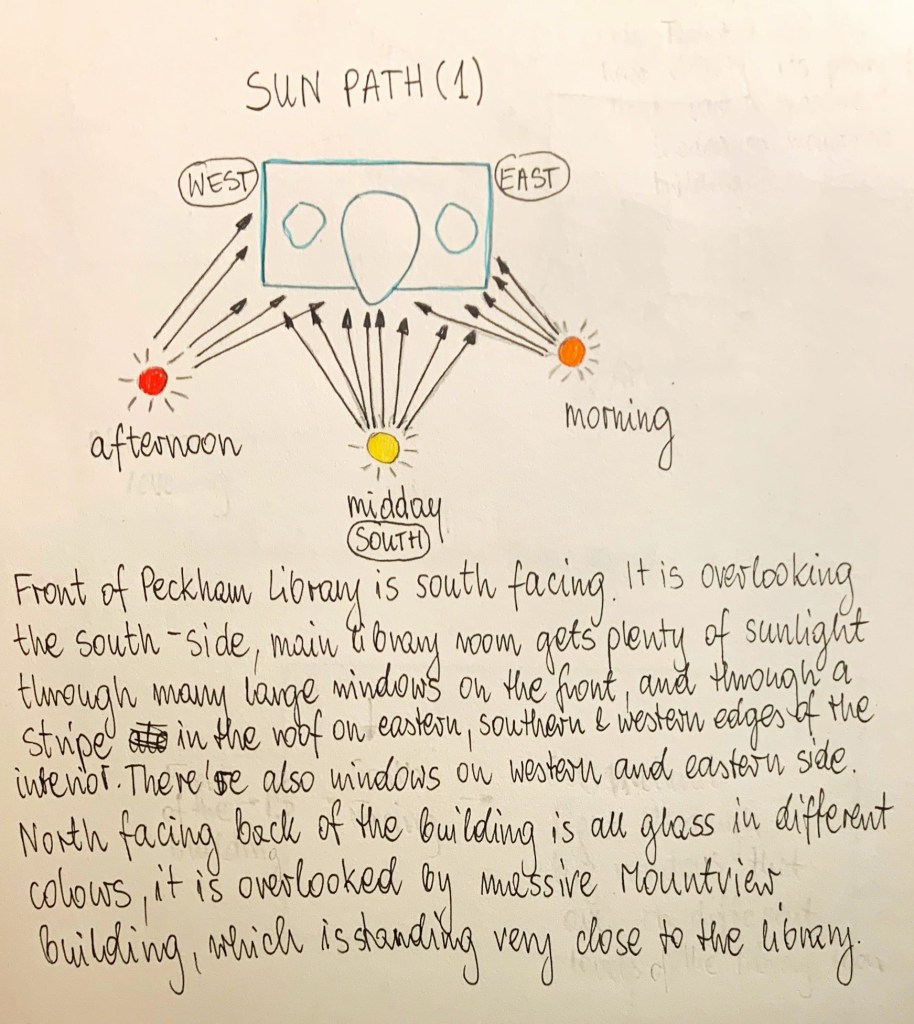
Sun Path (1)
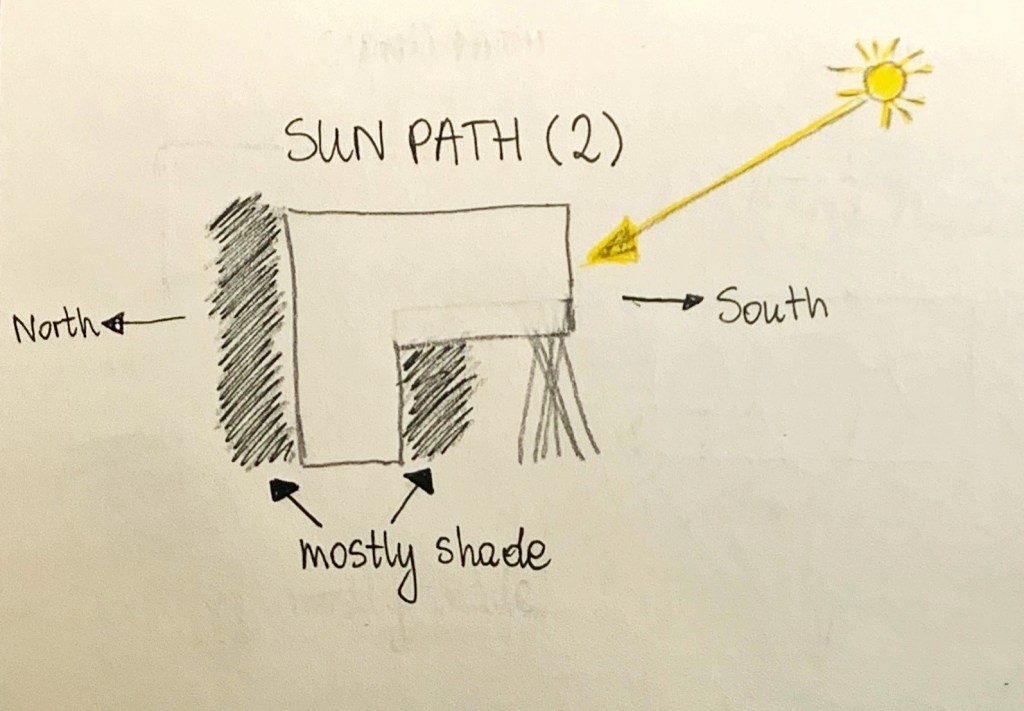
Sun Path (2)
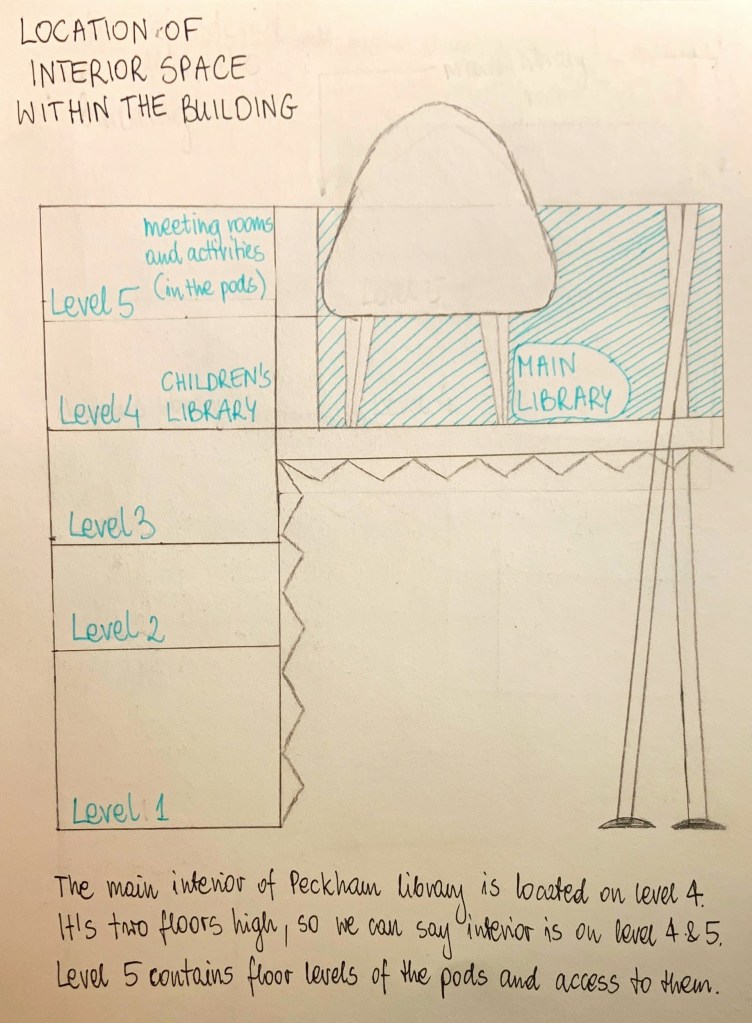
Location within the building
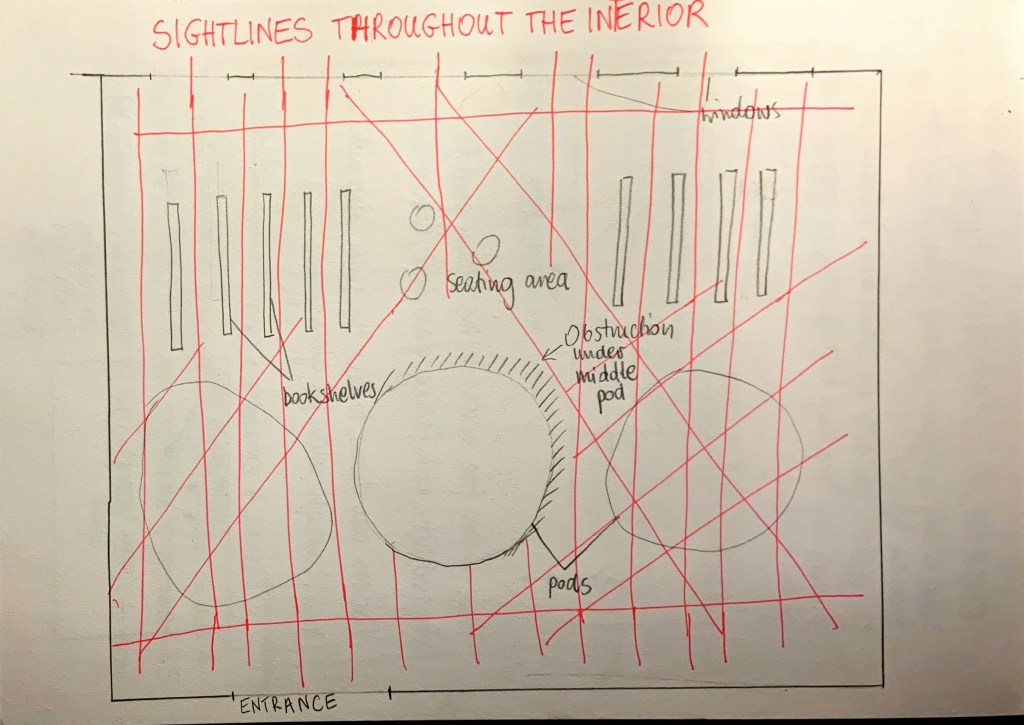
Sightlines throughout the interior
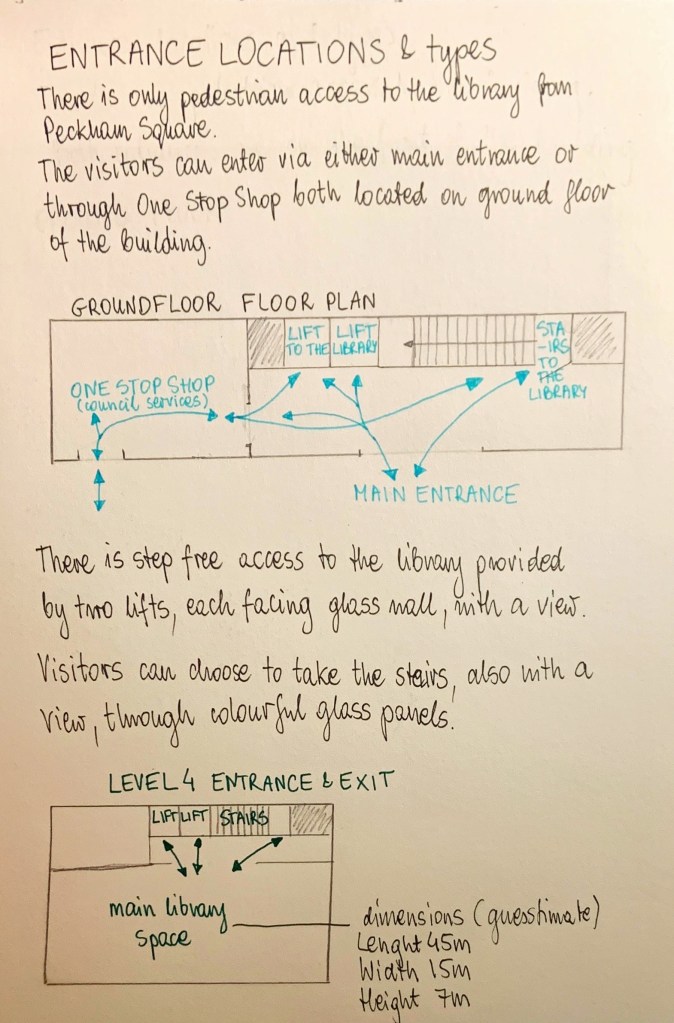
Entrance locations
Reflection on the task:
I found this task interesting, especially investigating and drawing the library’s position in relation to the four cardinal directions. I normally never think where south or north is and I understand this is crucial information when designing the space, whether it is a whole building or just one of the interiors. I think the building is positioned in a great relation to the sun path, soaking the light in, reducing the need for artificial lighting. I am disappointed that the Mountview building stands where it does as it ruins the view through the back of library, that view must have been Will Alsop’s idea to encourage public take stairs and enjoy the city’s panorama while being healthier and more eco-friendly.
List of illustrations:
Fig. 1 Shuttleworth, A (2020) Colourful Back of Peckham Library [Photograph] In possession of: the author: Epsom
Fig. 2 Shuttleworth, A (2020) View from Peckham Hill Street [Photograph] In possession of: the author: Epsom
Fig. 3 Shuttleworth, A (2020) View from Rye Lane [Photograph] In possession of: the author: Epsom
Fig. 4 Shuttleworth, A (2020) Peckham Arch From Library Window [Photograph] In possession of: the author: Epsom
Fig. 5 Shuttleworth, A (2020) View from One Stop Shop Entrance [Photograph] In possession of: the author: Epsom
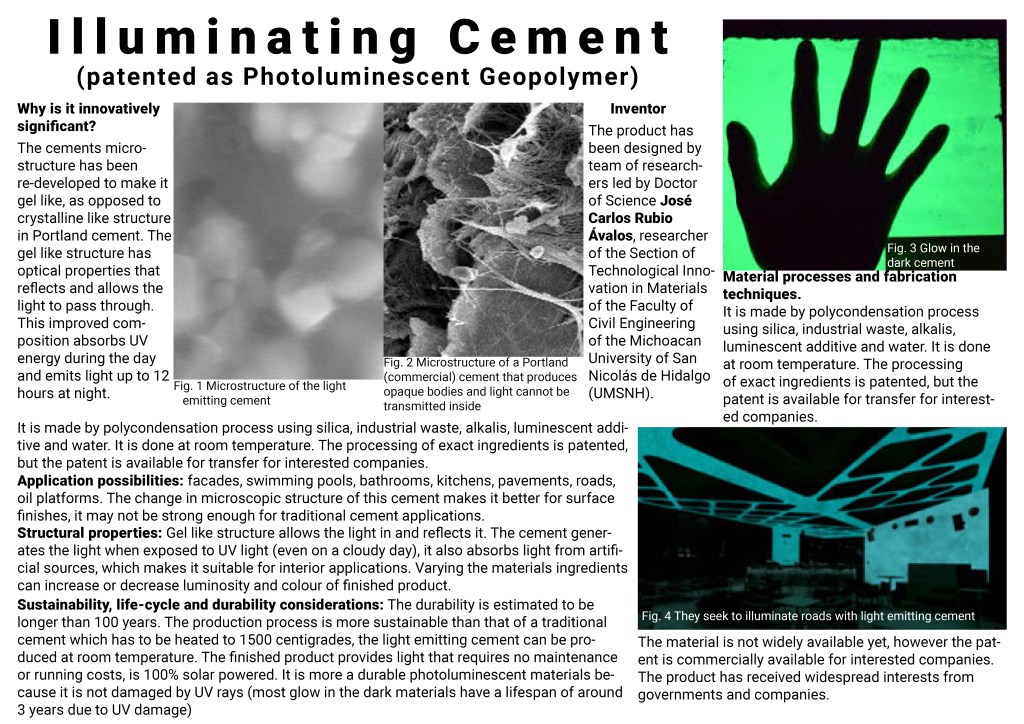
During this exercise I researched quite a few up and coming materials. I noticed that main drive with them was sustainability. I was aware prior to starting this course that construction industry is the biggest pollutant, so I’m pleased to see the efforts to improve. I learnt a shocking fact during my research of illuminating cement – cement is second after water most used product on earth. And I learnt that cement’s production is bad for environment due to energy consumed and the harmful substances released in the process.
I quite enjoyed getting to grips with InDesign software, it was my first go at it, and I can see it’s a brilliant program for creative work.
Return to the site that you visited in Part 1 and find as many examples of the materials you learned about in Exercise 2.1. Document them through sketches, photographs, notes, and/or any other means you feel is suitable – you do not need to find them all!
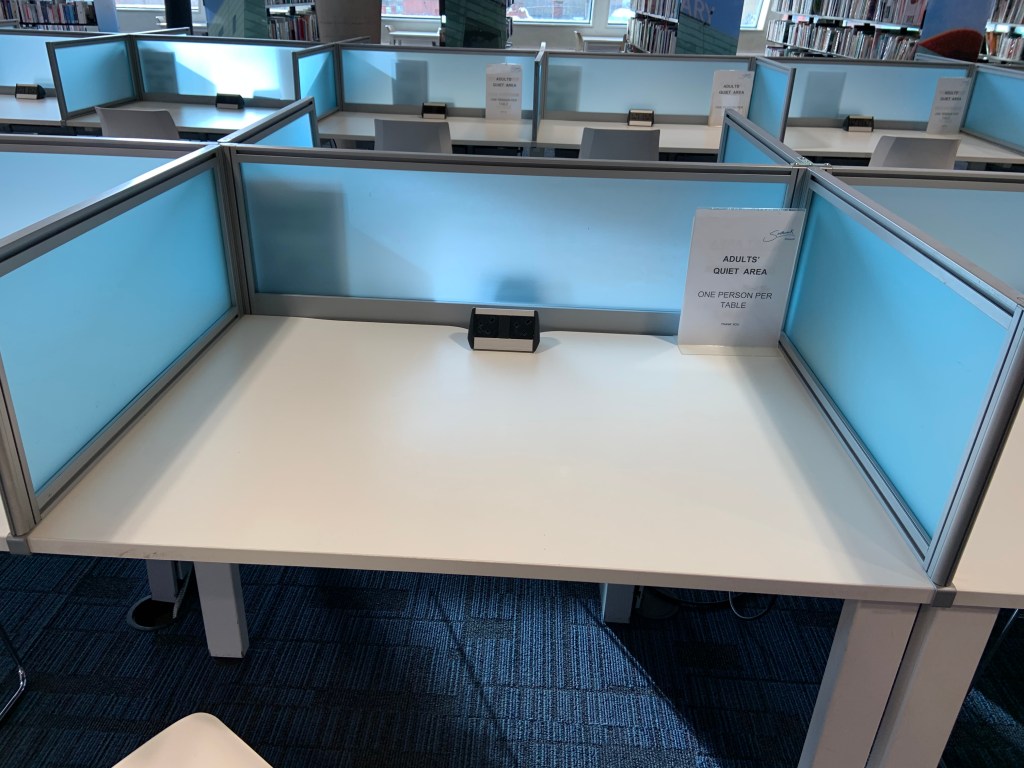
Fig. 1 Laminate Desk
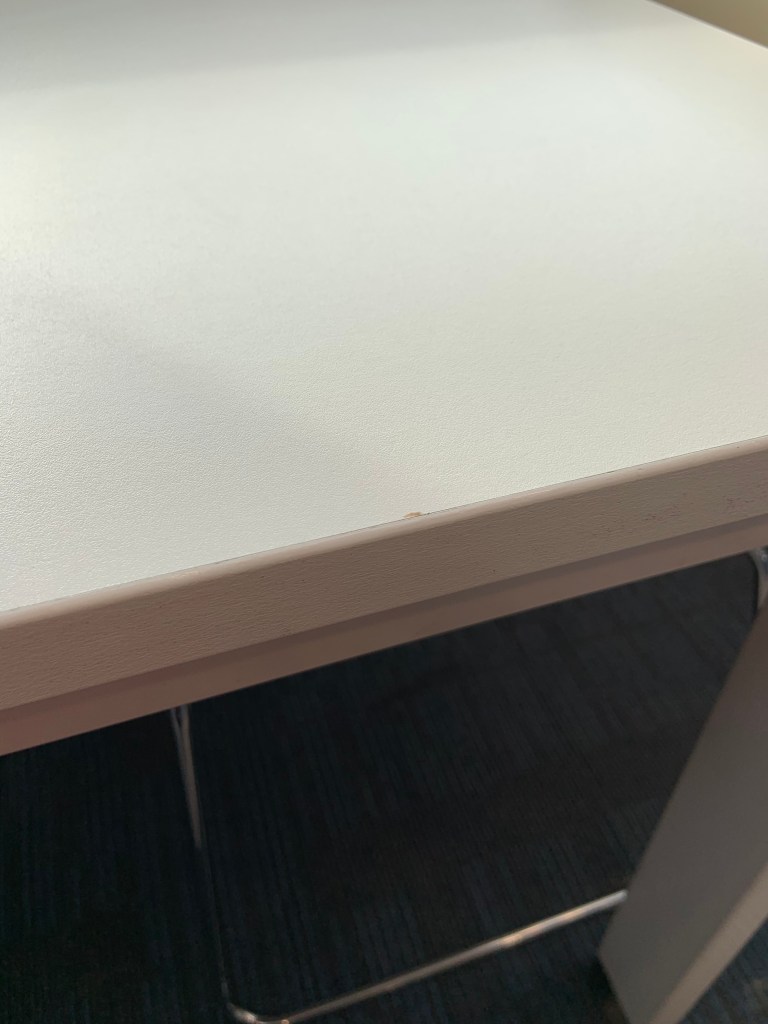
Fig. 2 Damaged laminate desktop
Fig. 2 A bit of white laminate has chipped away, we can see why fixing laminate would be difficult as chips are irregular and exposed surface underneath them is uneven. Grainy texture and laminate edges are visible in the photo above.
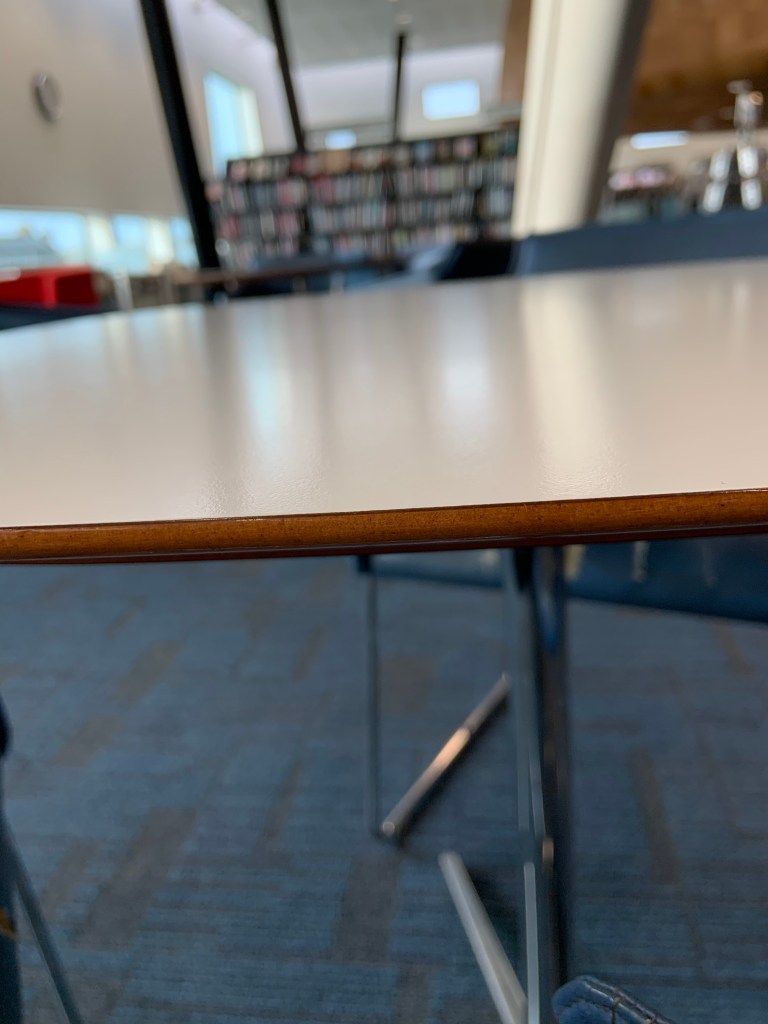
Fig. 3 Laminate table
Fig. 3 – we can see the grainy texture of the white surface, and the ‘wooden’ bit beneath. I think top laminate is more scratch resistant, hence it was chosen as top layer on this table.
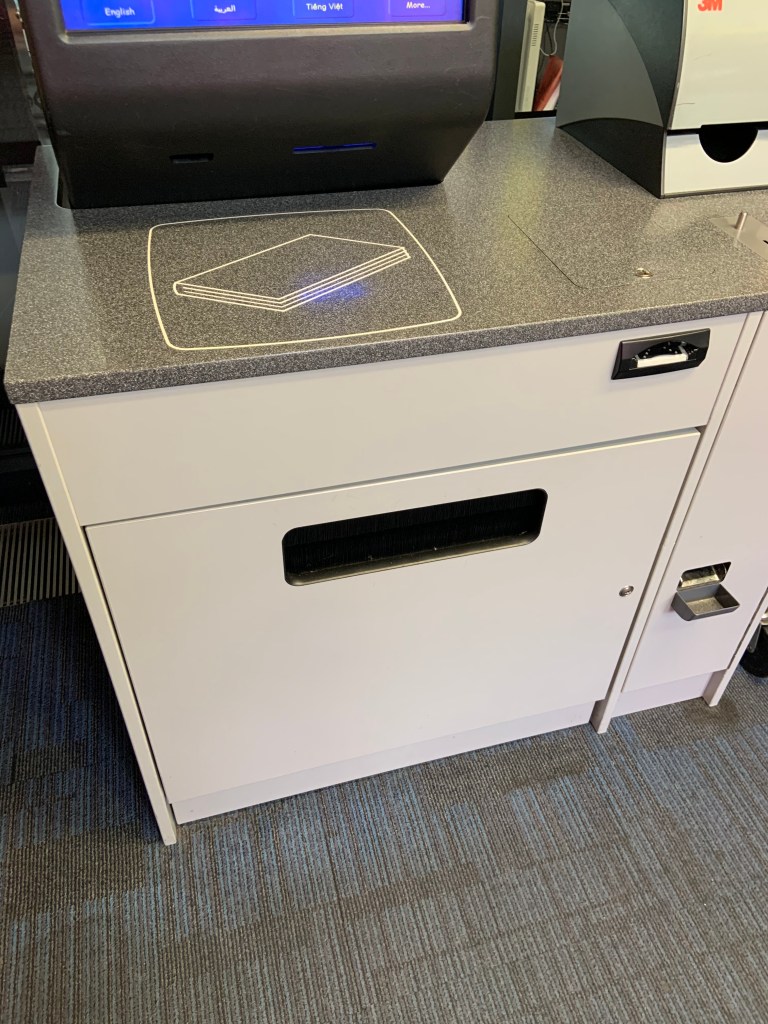
Fig. 4 Laminate Cabinet
Fig. 4 Laminate cabinet with what seemed to be a natural stone worktop, could but could also be HiMacs. Very smooth, with rounded edges and cold to touch. On top of worktop there’s a sticker (I’m guessing it’s a self-adhesive polymeric film)
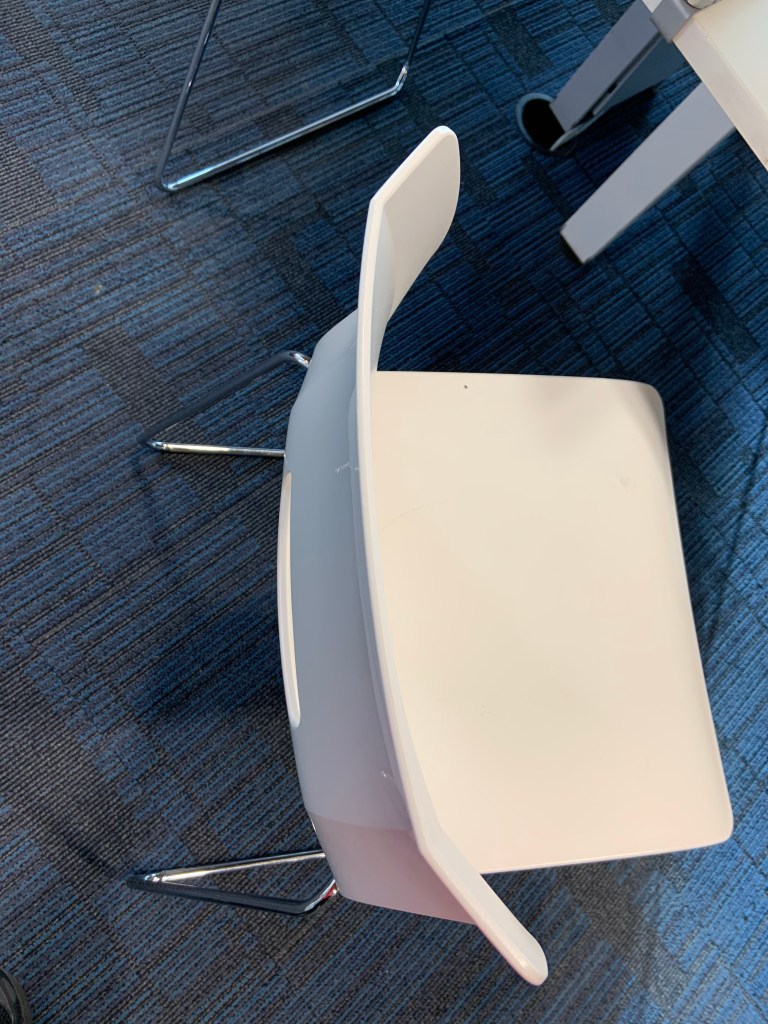
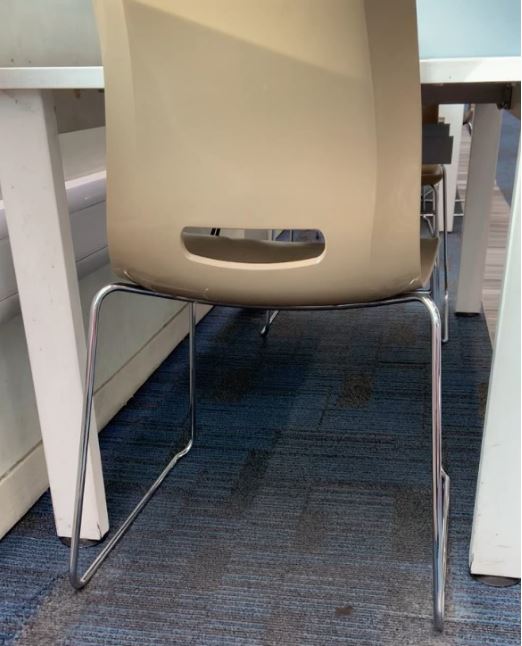
Fig. 5 HiMacs Chair
Fig. 6 HiMacs Chair on stainless steel legs
Fig. 7 HiMacs Display Stand
Fig. 8 HiMacs Display Stand Top
Fig. 5 – Fig. 8 Show shiny, resilient surface. The chair and top of display stand – we can see that the material has been bent.
Fig. 9 Fabricated Metal
Fig. 10 Metal Cabinet
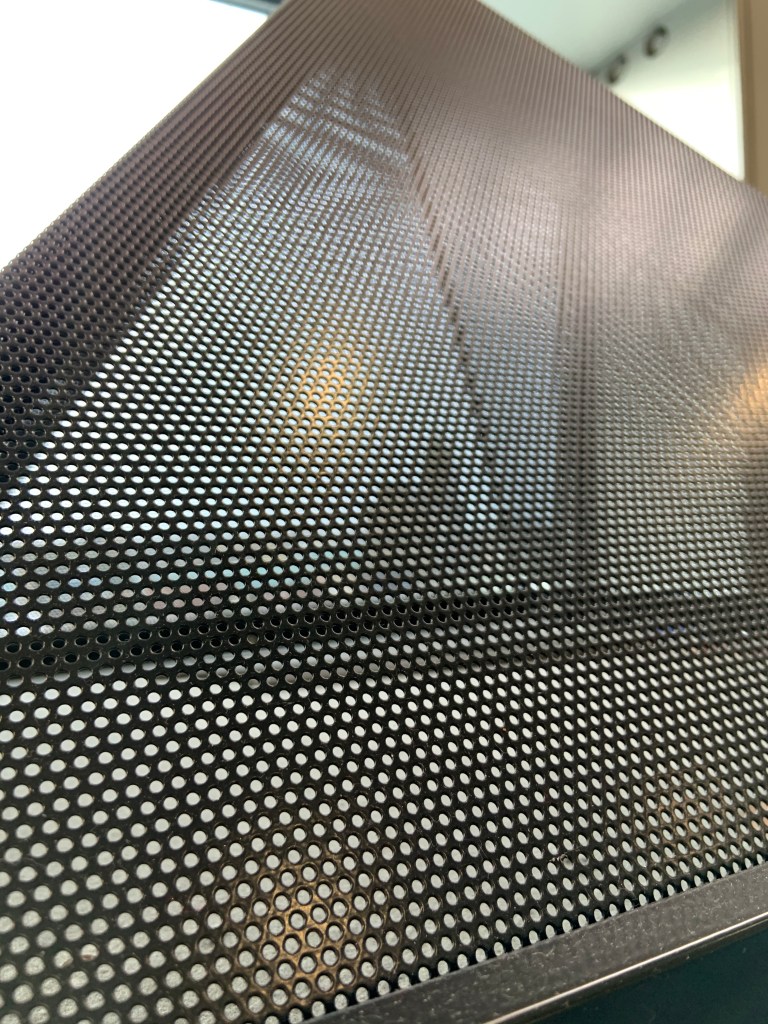
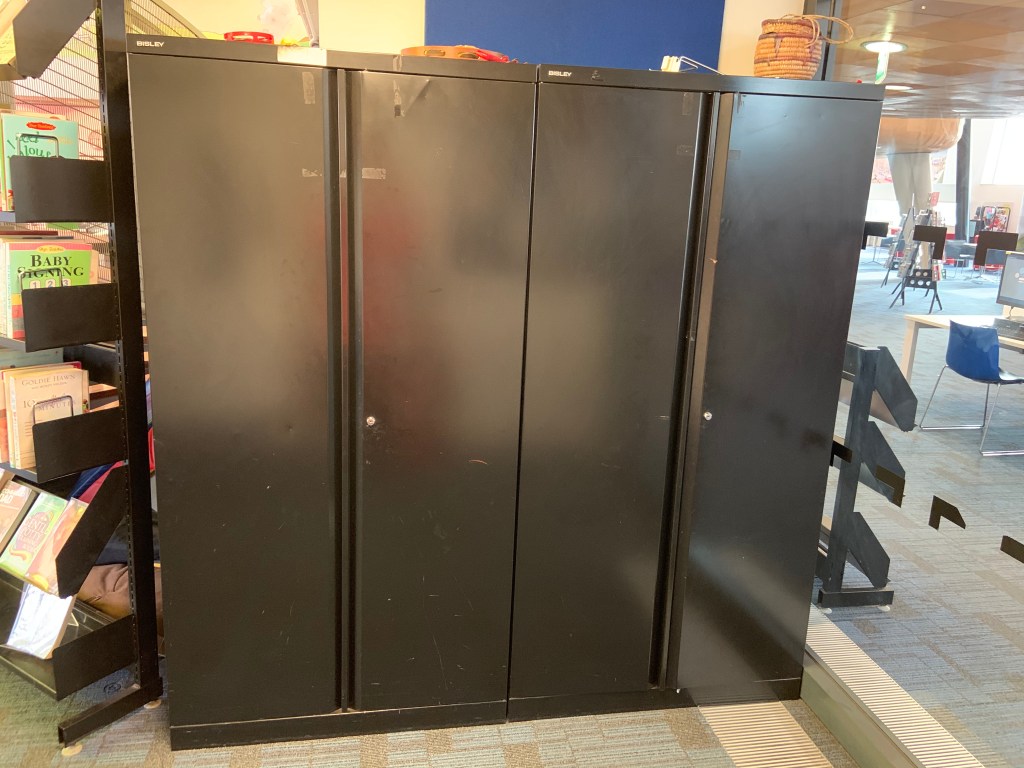
Fig. 9 – Fig. 10 Interior elements made from powder coated metal.
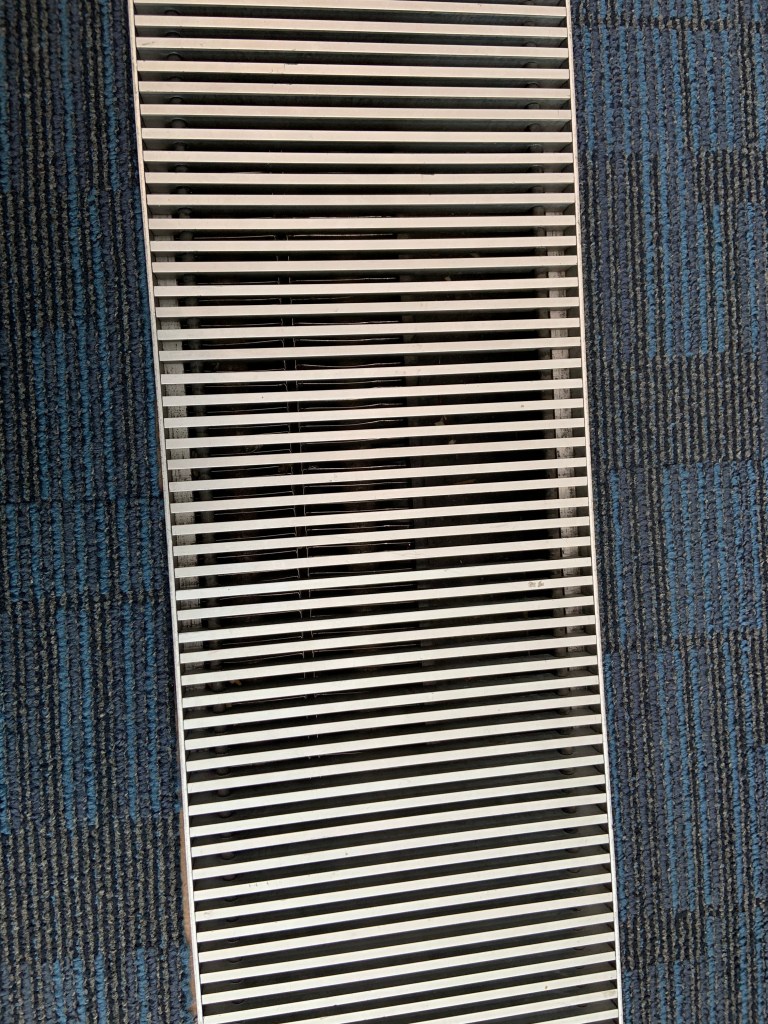
Fig. 11 Metal radiator cover
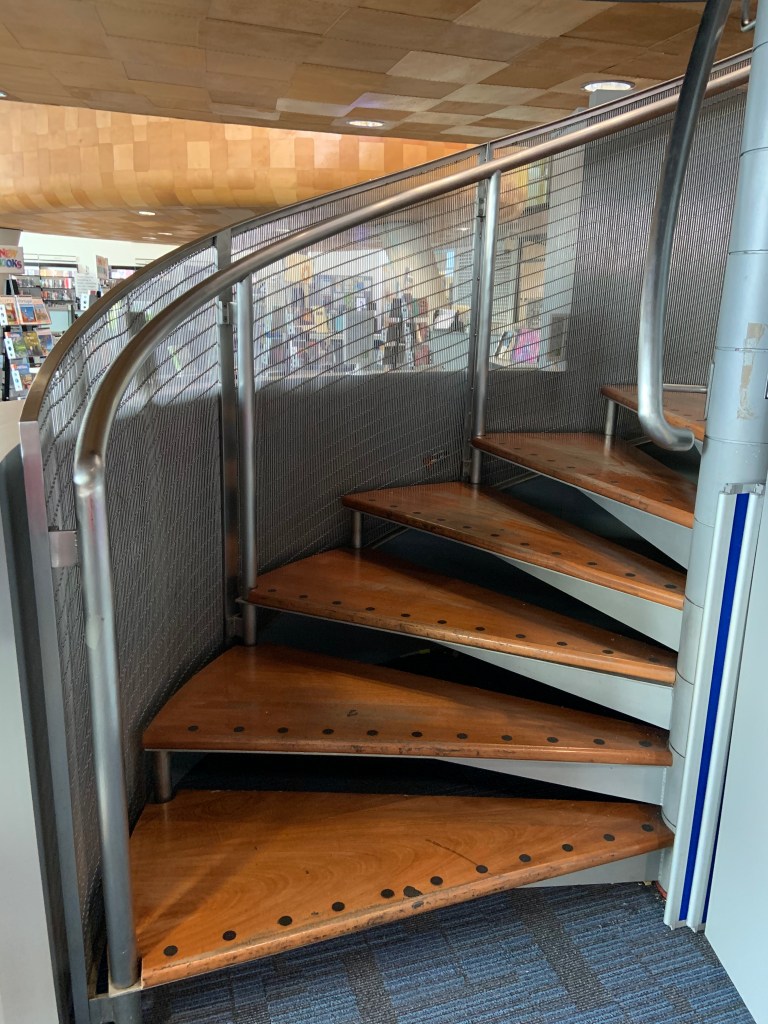
Fig.12 Wood and steel staircase
Solid wood steps are attached to powder coated steel understeps and structure, the bannister has stainless steel handrail and mesh wire elements.
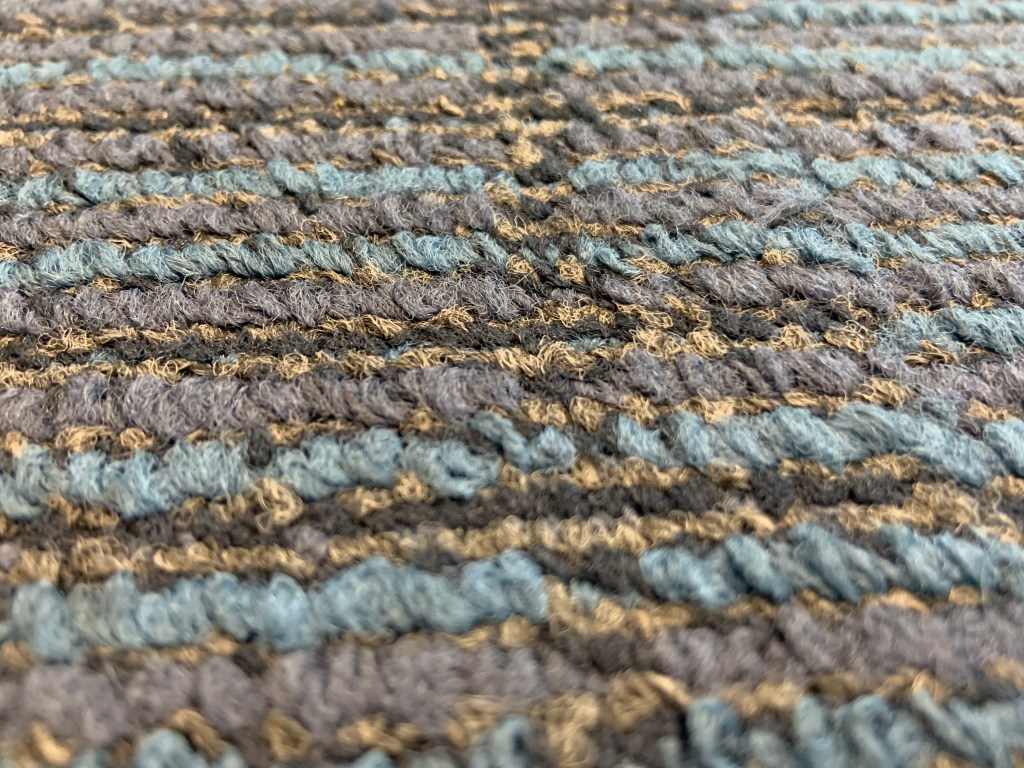
Fig. 13 Needlefelt carpet tiles
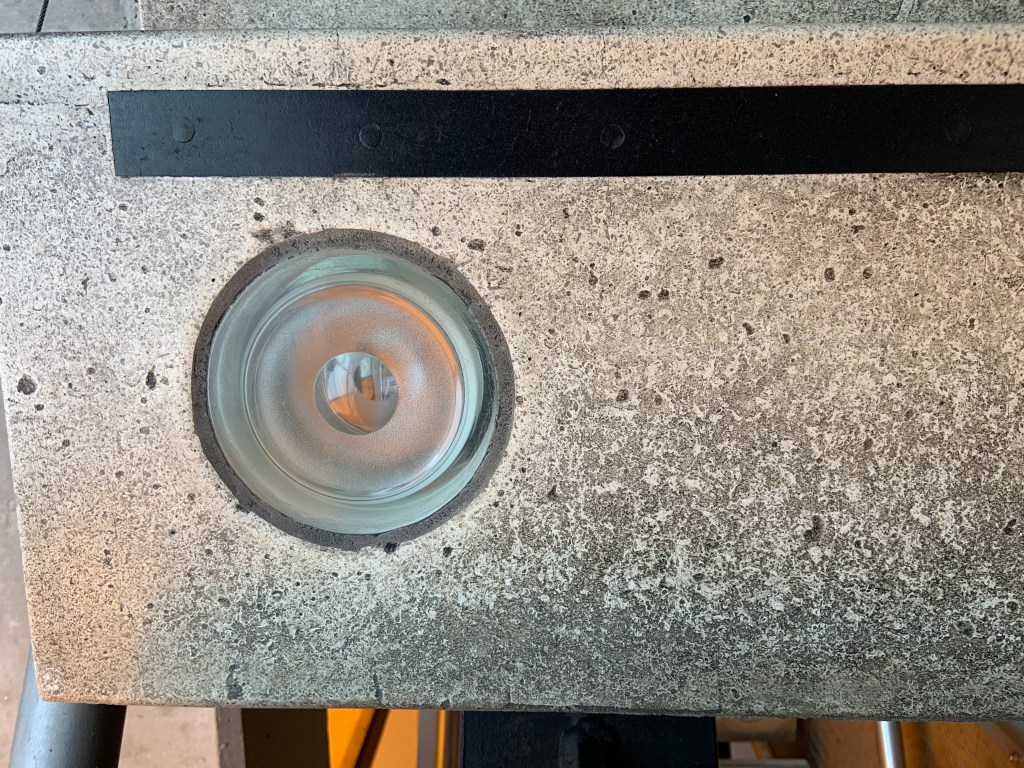
Fig. 14 Concrete, glass, rubber
In the image above we can see a concrete step, with a glass insert and non-slip rubber strip.
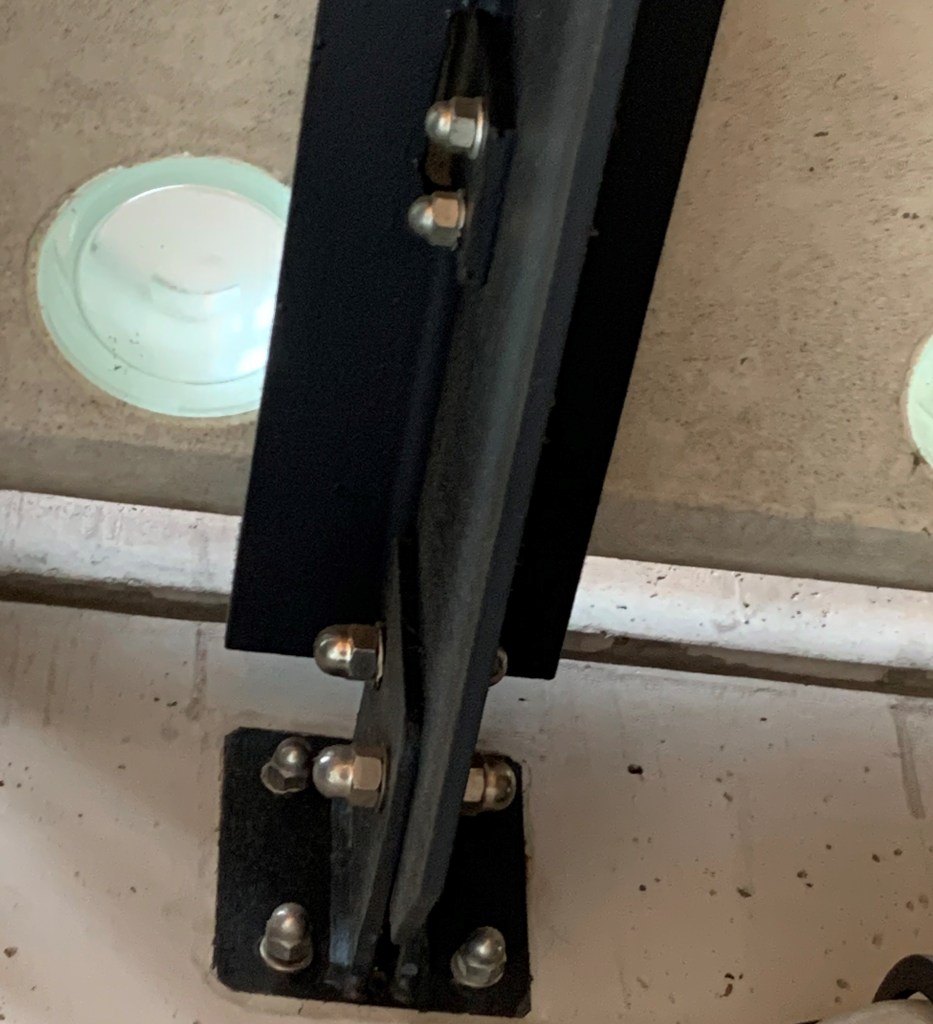
Fig. 15 Concrete, glass and steel
In the image above we can see the powder coated steel support of concrete steps, with unpainted steel bolts. Glass insert is also visible in step above.
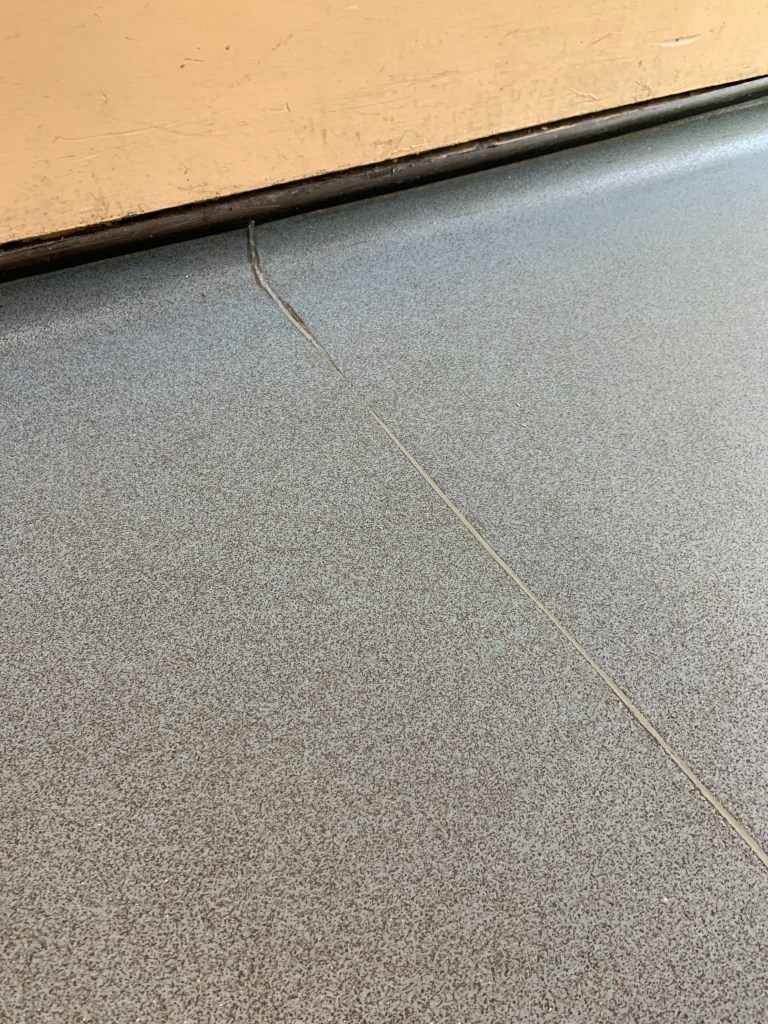
Fig. 16 Vinyl floor covering
Vinyl floor covering looks soft, rubbery and flexible.
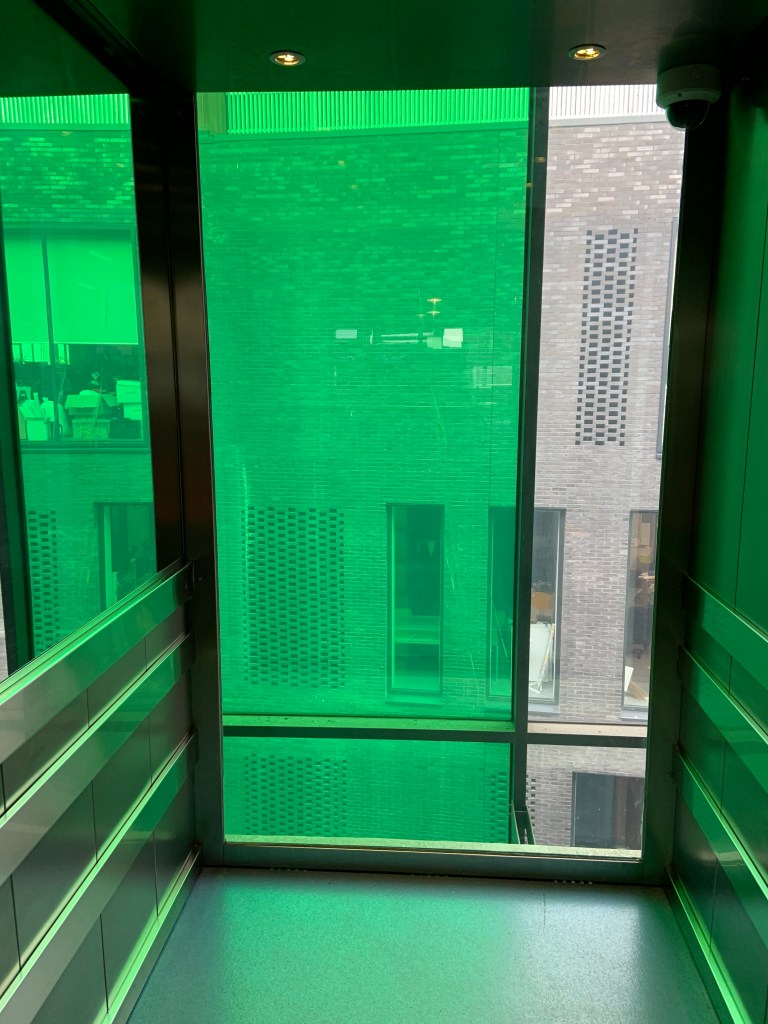
Fig. 17 Green tinted glass
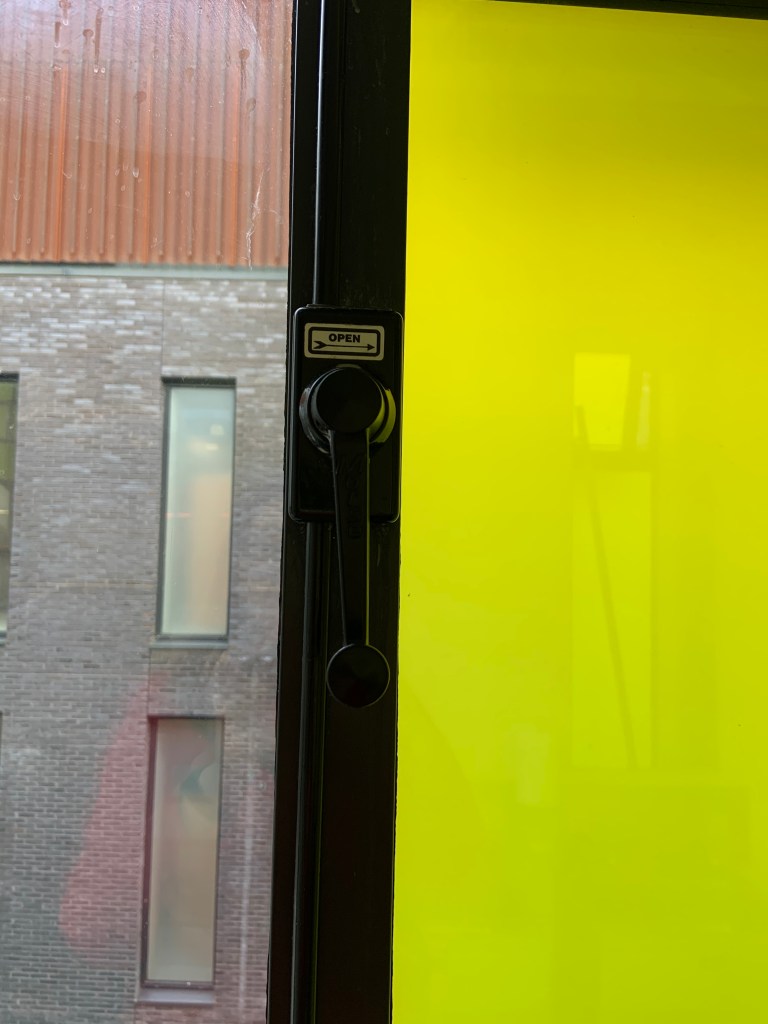
Fig. 18 Yellow tinted glass
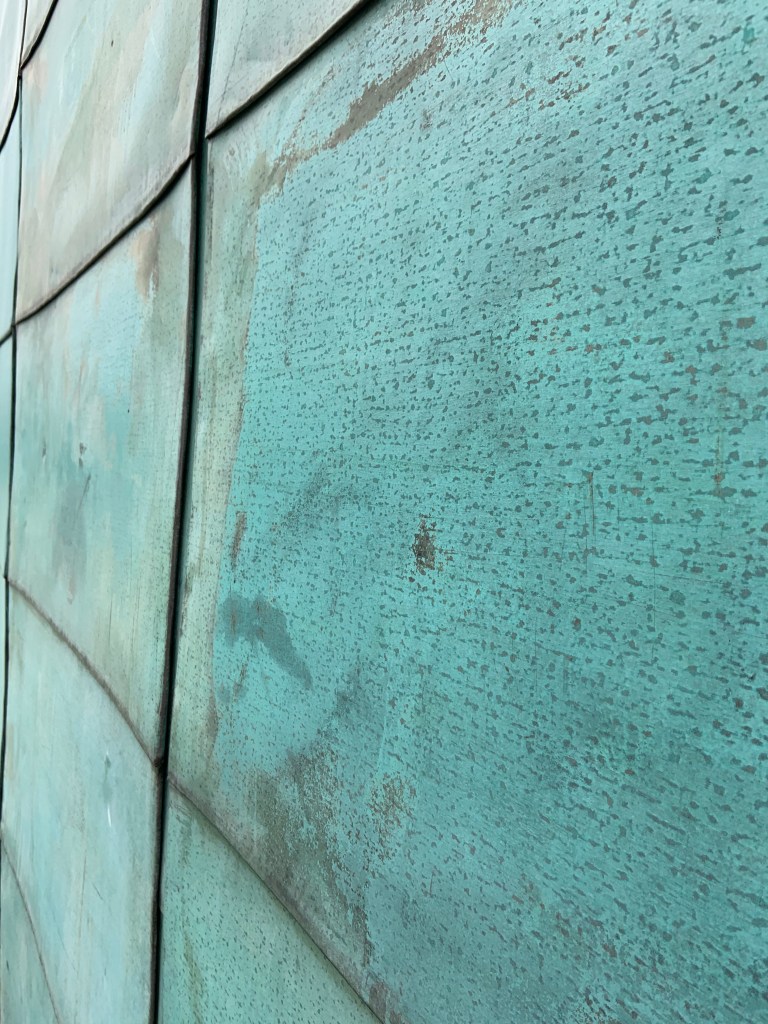
Fig. 19 Weathered copper cladding
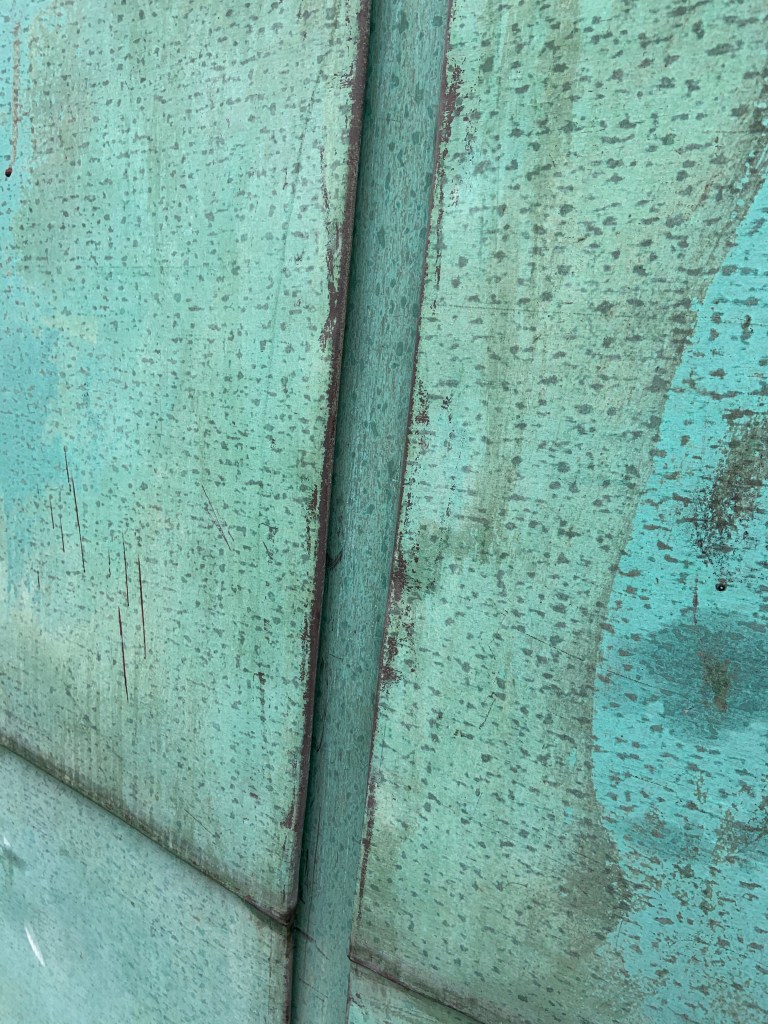
Fig. 20 Weathered copper close up
I couldn’t find any weathered steel inside but outside of Peckham library is clad in weathered copper.
Reflection on the task:
Some materials are hard to distinguish, for example himacs from laminate (countertop in Fig. 4). I thinks it’s a himacs countertop only because I couldn’t see the laminate strip edges. But am I right? Being a materials detective is a difficult task and I still need to learn loads about them. Especially about different steels and metals.
List of Illustrations:
Fig. 1 Shuttleworth, A. (2020) Laminate Desk [Photograph] In possession of the author: Epsom.
Fig. 2 Shuttleworth, A. (2020) Damaged laminate desktop [Photograph] In possession of the author: Epsom.
Fig. 3 Shuttleworth, A. (2020) Laminate table [Photograph] In possession of the author: Epsom.
Fig. 4 Shuttleworth, A. (2020) Laminate cabinet [Photograph] In possession of the author: Epsom.
Fig. 5 Shuttleworth, A. (2020) HiMacs Chair [Photograph] In possession of the author: Epsom.
Fig. 6 Shuttleworth, A. (2020) HiMacs Chair on stainless steel legs [Photograph] In possession of the author: Epsom.
Fig. 7 Shuttleworth, A. (2020) HiMacs Display Stand [Photograph] In possession of the author: Epsom.
Fig. 8 Shuttleworth, A. (2020) HiMacs Display Stand Top [Photograph] In possession of the author: Epsom.
Fig. 9 Shuttleworth, A. (2020) Fabricated Metal [Photograph] In possession of the author: Epsom.
Fig. 10 Shuttleworth, A. (2020) Metal Cabinet [Photograph] In possession of the author: Epsom.
Fig. 11 Shuttleworth, A. (2020) Metal radiator cover [Photograph] In possession of the author: Epsom.
Fig. 12 Shuttleworth, A. (2020) Wood and steel staircase [Photograph] In possession of the author: Epsom.
Fig. 13 Shuttleworth, A. (2020) Needlefelt carpet tiles [Photograph] In possession of the author: Epsom.
Fig. 14 Shuttleworth, A. (2020) Concrete, glass, rubber [Photograph] In possession of the author: Epsom.
Fig. 15 Shuttleworth, A. (2020) Concrete, glass and steel [Photograph] In possession of the author: Epsom.
Fig. 16 Shuttleworth, A. (2020) Vinyl floor covering [Photograph] In possession of the author: Epsom.
Fig. 17 Shuttleworth, A. (2020) Green tinted glass [Photograph] In possession of the author: Epsom.
Fig. 18 Shuttleworth, A. (2020) Yellow tinted glass [Photograph] In possession of the author: Epsom.
Fig. 19 Shuttleworth, A. (2020) Weathered copper cladding [Photograph] In possession of the author: Epsom.
Fig. 20 Shuttleworth, A. (2020) Weathered copper close up [Photograph] In possession of the author: Epsom.
CorTen is a weathered, particular mix of steels and other alloys. The steel is made and left outside for 3-10 months. The rust formed on the outside of material forms a protective layer, so this material is popular for outdoor applications (buildings and garden) as well as indoor. The rusty layer on top requires no further treatment if left outdoors but would need to be sealed for indoor applications.
Indoor applications include bathroom wall coverings, furniture fronts, kitchen splashbacks, wall coverings, popular in trendy office interiors. Sealed material is recommended for interiors due to leaching and staining.
You can buy Corten steel that is isn’t weathered yet (that would be suitable application for outdoor, cladding etc) or weathered for interior projects. It is supplied in flat sheets or panels, that can be plain or with laser cut outs. They vary in thicknesses and sizes. The thickness of unsealed Corten offered by www.buymetalonline.co.uk varies from 1.5mm (0.059’’) and every half mm to 6mm (0.23’’). The panel/ sheet sizes vary from 400mm x 200mm / approx. 16’’ x 8’’ (£71.85 per sq. m exc VAT for 1.5mm thickness, £154.81/ sq. m excluding VAT for 6mm thickness ) to 2500mm x 1250mm / approx. 100’’ x 50’’ (£58.48/ sq. m excluding VAT for 1.5mm thickness, £304.92 / sq. m excluding VAT for 6mm thickness).
Sealed options are available from specialist suppliers who don’t advertise their prices online.
Fixing method is attaching to a flat surface with screws.
Environmental impact:
Iron extraction threatens biodiversity, can cause erosion and sinkholes, harmful substances are released to the environment
During production process sulphur oxides, nitrogen oxides, and carbon monoxide pollute the atmosphere. Metal and steel industries are the biggest CO2 pollutants and highest energy users (due to high costs of upgrading to be more sustainable)
It is believed that water run can harm aquatic life
Structural properties: it is classed as self-protecting steel; it is weather resistant.
2. Formica – trademark name – equivalent from other makers is laminate
Production process – – special papers (and sometime thin sheet of metal for some commercial applications) are soaked in synthetic resin, then heated and pressed. The result is thin, hard and durable surface material (around 1.5mm, 1/16’’ thick) that is coloured, painted and finally cemented to plywood or other backing. There are many designs: wood imitations, stone imitations, just plain and others. Can be shiny or matt.
Interior design applications – flooring, kitchen worktops, bathroom worktop and cladding, doors, commercial kitchens, furniture. Used in education, boat interiors, hospital interiors, hospitality. Wide range of designs and uses.
Fixing methods – Kitchen worktops: put on top of cabinets and screw it down from below and to the wall if cabinets are not secured. Attached to the walls using adhesives.
Supplied sizes (metric and imperial). Sizes will vary depending on the project and product used. E.g. Doors will have different sizes from kitchen worktops and wall claddings, and these will be much larger that laminate floor individual planks.
Cost per square metre – the price varies depending on spec and finish. Laminate wall coverings. I looked at a few and prices per square metre were £12.78, £27.42, £58.67. Laminate flooring £7 – £33 / sq. m. (That’s just what I saw in my initial research, I’m sure there’re more expensive ones) Laminate worktops from as little £33 / sq. m.
Environmental impact: Wood fibers and paper are sustainable, resin isn’t. High energy consumption during production process. It cannot be easily fixed if damaged so that affects durability. Disposed at landfill, takes long time to decompose.
Cleaning and maintenance – easy to clean, acid, heat and alkaline (found in home) resistant
Finishing/ treating/ specific handling: matching edge strips should be glued on to cut, exposed edges
3. HiMacs worktops, furniture etc
• Production process – minerals and pigments are blended with acrylic and create hard, durable and resistant surface that’s thermoformable, smooth, non-porous and antibacterial. Depending on colour and thickness it can be translucent or opaque. It can be formed into any shape and create for example chairs, bars, wall cladding etc. The finished product can look like marble, concrete, granite, quartz, solid colour. It can be textured to give surfaces 3D appearance. It’s a robust material that can be worked the same way as wood. • Interior design applications – kitchen worktops and many commercial applications, bars, restaurants, hospitals, airports. Furniture, staircases, sinks, wall claddings, • Fixing methods – I’m assuming same as other worktops, claddings, sinks etc • Supplied sizes (metric and imperial) will vary depending on project needs, made to order so I’m assuming sizing is flexible. • Cost per square metre – on application only • Environmental impact – durable material, it can be repaired which prolongs its life. Resin is not eco-friendly. According to the producer the manufacturing process is eco-friendly (using aluminium production byproduct – aluminium trihydroxide as main component, that would otherwise be discarded), and the product is recyclable at the end of life cycle. • Cleaning and maintenance – easy to clean and requires no maintenance, scratches can be sanded down • Finishing/ treating/ specific handling. In the kitchens protect the surface from hot dishes straight from the stove, oven, etc. It is fairly scratch resistant but shouldn’t be used as a chopping board.
4. Bolon – woven vinyl flooring and rugs
Production process – woven vinyl backed on fibreglass reinforced vinyl
Interior design applications – floor coverings
Fixing methods – apply to flat floor surface with adhesive designed for vinyl flooring, while ensuring full contact with adhesive
Supplied sizes (metric and imperial) Flooring comes in different forms either rolls (2040mm / approx. 80.25’’ wide), tiles (50x 50cm / 19.75’’ x 19.75’’) or planks (667mm / approx. 26.25’’ wide). Thickness varies from 2.5mm to 3mm
Cost per square metre – available on application
Environmental impact – the product has 15 years warranty which shows relatively long life for carpet-like floor. Recycled material in all collections, factory with own recycling facilities and powered by renewable energy, small environmental impact and low emissions – health friendly – 99% chemical free maintenance.
Cleaning and maintenance: should be frequently hoovered, Cleaning can be done manually with water, mild cleaning agent and scrubbing brush or by using roller brush or orbot machine.
Finishing/ treating/ specific handling – furniture legs should have furniture pads to protect the floor, some types of rubber may transfer onto it and are impossible to remove.
Structural properties – structure is naturally irregular. Continuous exposure to over 30 C will cause discoloration and other changes (not suitable with underfloor heating), water resistant
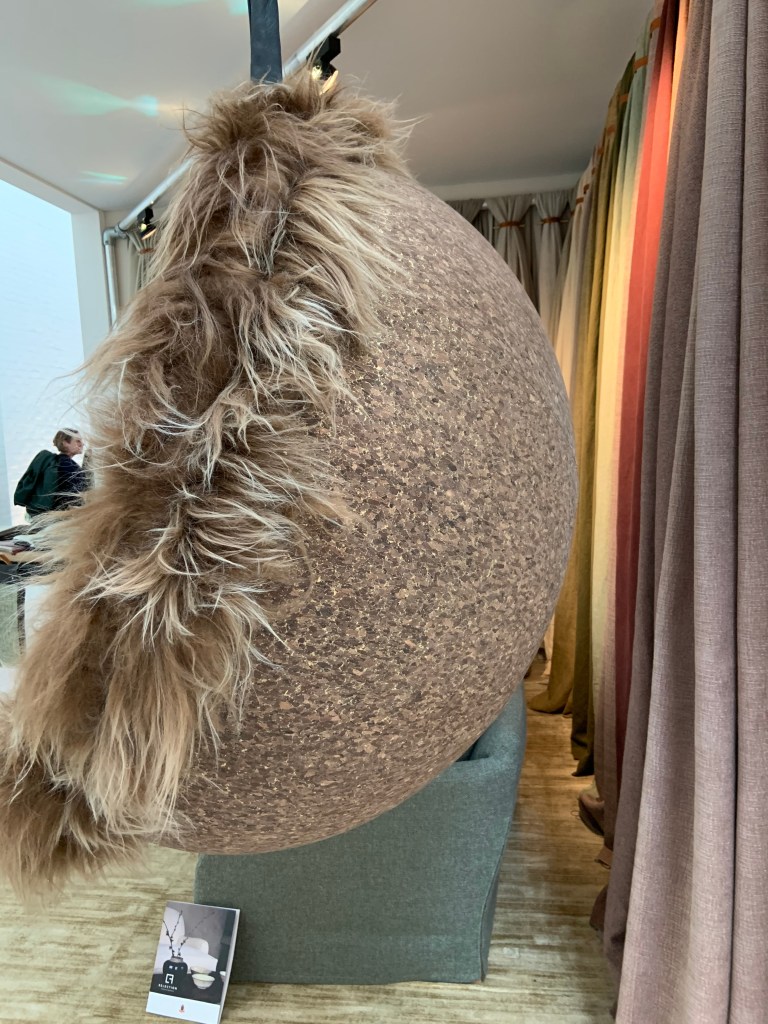
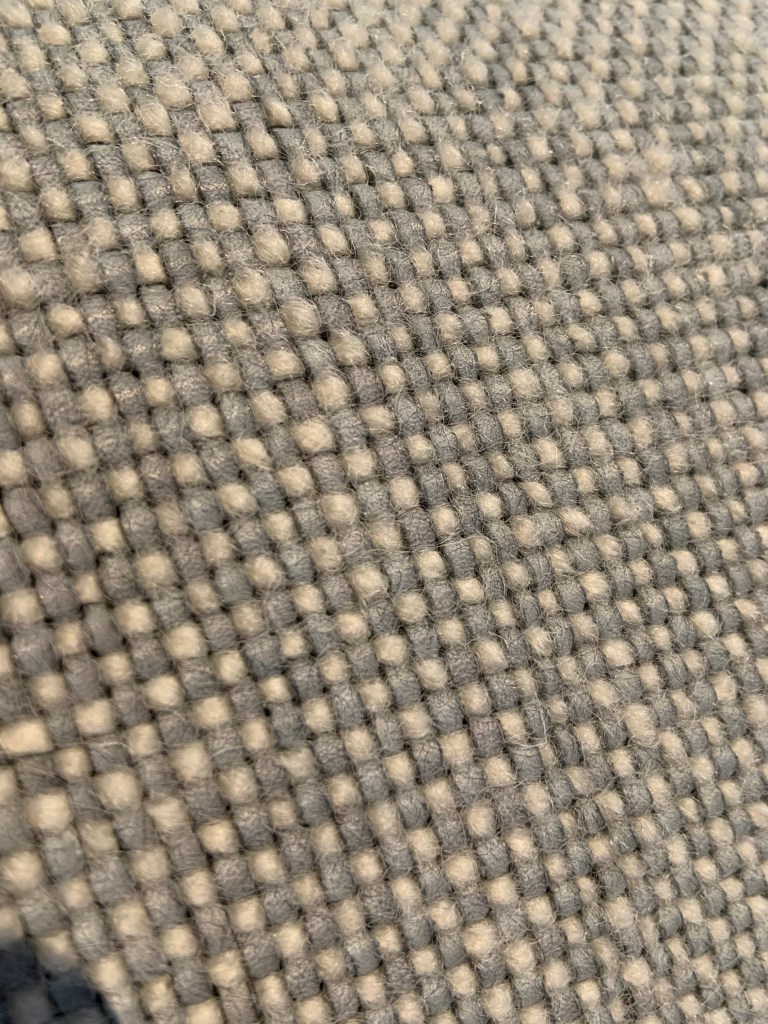
5. Kvadrat Danish design company specialising in upholstery, window coverings, rugs etc. Business branches are more specialised, Kvadrat Soft Cells – engineered acoustic panels, Kinnasand – progressive curtains. They also supply curtain hanging mechanisms and pegs and accessories such us cushions and clouds (see Fig. 2).
Fig. 2 Clouds
Production process, fabrics made from recycled PET bottles, recycled polyester, repurposed wool, pure wool, pure cotton, or high-tech, modern, durable materials
Supplied sizes (metric and imperial) Curtain fabrics 3000mm / approx. 118’’ high Upholsteries 1400mm / approx. 55’’ wide
Roller blind fabrics are supplied in rolls that are 30m long (30000mm / approx. 1181’’) and 3000mm / approx. 118’’ wide.
Cost per square metre – undisclosed
Environmental impact – sustainability at heart of the company, use recycled, re-purposed or eco friendly materials
Cleaning and maintenance – depending on the fabric
Structural properties: fire retardant and durable
6. Tektura – specialist in contract wall coverings and window films
Production process – Digital commercial quality vinyl wallpaper laminated onto woven or non-woven backing
Window films – self adhesive polymeric film
Interior design applications – walls and windows
Fixing methods – like other paste the wall wallpapers with Tekfix plus adhesive, films are self adhesive
Supplied sizes (metric and imperial) – wallpapers are printed to order, to fit any size, delivered in rolls
Window films are supplied in panels max width 1520mm (approx. 60’’)
Cost per square metre – undisclosed
Environmental impact – durable so sustainable, but at the same time non-biodegradable
Cleaning and maintenance: wipeable and washable with some resistance to knocks.
7. Havwoods UK – flooring (engineered wood, solid wood, reclaimed wood, composite decking, magnetic raised flooring), cladding boards (composite, cork)
Production process – depending on type of product above
Interior design applications – floors and walls, household and business applications, engineered wood flooring unlike solid wood can be applied on underfloor heating.
Fixing methods – mainly tongue and groove, magnetic flooring is fitted on top of raised metal platform, beneficial for businesses, easy to install and to remove to get access.
Supplied sizes (metric and imperial) – flooring usually in planks. Thickness varies from 9mm (approx. 0.35’’) to 23mm (approx. 1’’). Width varies from 65mm (approx. 2.5’’) to 480mm (approx. 19’’). Lengths vary from 213mm (approx. 18.5’’) to 3000mm (approx. 118’’)
Cost per square metre – undisclosed
Environmental impact – depending on the product, I believe composite cladding will be less kind to environment than solid wood flooring, that said trees need to be cut to make it. The most environmentally friendly option seems to be reclaimed flooring. The Havwoods website mentions that cutting out old trees makes space for new trees and supports biodiversity on ground level that otherwise would be in constant shade. Also leaving dead trees to decompose contributes to CO2 emissions so cutting mature trees and planting new ones reduces CO2 emissions. Wood is also a warm material.
Cleaning and maintenance, easy to clean, just sweep and mop. Wood flooring can be sanded down, engineered wood flooring can be sanded down too but not as many times and how many will depend on thickness of top wood layer.
Finishing/ treating/ specific handling. Wood as a product can be varnished, oil treated, UV treated, brushed, fumed, stained and oiled. It is a fairly soft material and finish can help it look good for longer. When necessary wood can be sanded down to reveal fresh layer. Engineered wood, applied on underfloor heating should not be covered with thick rugs (energy efficiency and high temperature locked in by the rug may damage the boards)
Structural properties, depending on the product. Solid wood is what it says it is. Wood is hydroscopic (absorbs moisture) so it shrinks and expands depending on conditions around it. Engineered wood is a thin layer of hardwood glued to several layers of softwood or plywood. This creates much more stable floor surface that looks identical to solid wood, once laid.
8. Forbo – Dutch company selling flooring systems (linoleum – rolls and tiles, vinyl tiles, homogenous (single layer) and heterogeneous (multi-layer) vinyl, flotex float flooring (waterproof, washable carpet tiles, planks and sheets), regular carpet tiles, needlefelt carpet, acoustic flooring, safety flooring etc. They seem to be aiming their products at commercial customers.
Production process – depending on the product, there is wide range. Linoleum is made from raw natural materials, carpet tiles are made from 50% recycled content,
Interior design applications – floors – forbo is aiming at schools, office buildings, airports, hospitals etc
Fixing methods – applied to the floor, usually with an adhesive
Supplied sizes (metric and imperial) – depending on the product, carpet tiles 500 x 500mm (approx. 19.75 x 19.75’’), flooring is also supplied in planks (with a ‘click’ system) available in 3 sizes and rolls.
Cost per square metre – undisclosed
Environmental impact – according to their website they are sustainable, and the product is long lasting
Cleaning and maintenance – washable and durable (public space applications)
Structural properties depending on the product, but generally soft, warm and hard wearing.
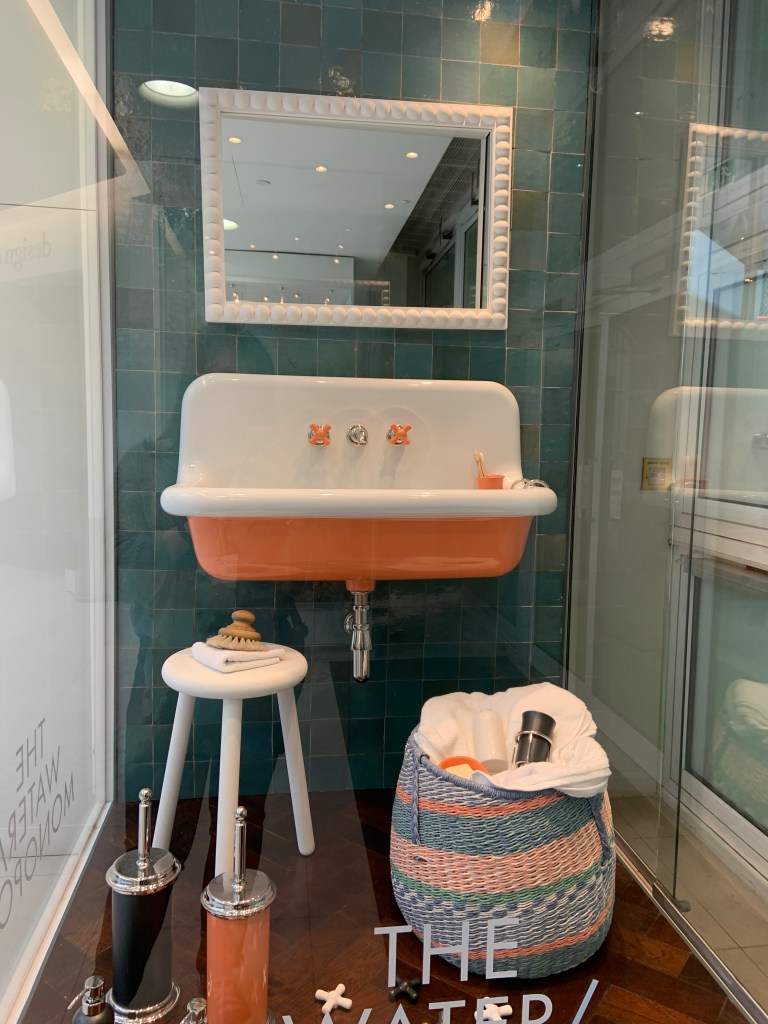
9. Kast – concrete basins, another branch of this business specialises in concrete tiles, worktops, wall cladding, furniture etc.
Production process – concrete is cast in desired sink shape, can be natural colour or with added tints, then polished and/ or patterned, and in the end sealed for protection.
Interior design applications – bathrooms, in residential and commercial premises
Fixing methods – to the wall or on top of under sink cabinet
Supplied sizes (metric and imperial) – standard handwash basin sizes, can be custom made to fit virtually any space or requirement
Cost per square metre – n/a, prices for individual items are not advertised.
Environmental impact – concrete is not environmentally friendly; its production has a massive carbon footprint.
Cleaning and maintenance – easy, as with porcelain sinks.
Finishing/ treating/ specific handling – small hairline cracks can appear due to nature of the product; these are hardly noticeable.
Structural properties – strong and durable material, can be cast to virtually any shape.
10. Moz Designs – architectural, custom fabricated metal (based in USA)
• Production process. They make metal sheets, columns, walls, dividers, and custom products such as ceilings, fixtures, exterior and art. They can be smooth, perforated, corrugated, laser cut, with powder coat or patina. • Interior design applications – as above. Their elements add interest and texture to the interiors. • Fixing methods – depending on the product and application • Supplied sizes (metric and imperial) – laser cut metal sheets standard size 4’ x 8’ (1219.2 x 2438.4mm) • Cost per square metre – unavailable • Environmental impact – metal production often emits high levels of CO2, however Moz factory is 100% solar powered and materials are domestically sourced where possible. • Cleaning and maintenance – depending on the actual metal and finish. • Finishing/ treating/ specific handling – come with attachments for easy fastening solutions. • Structural properties – metal is smooth, resilient, cold to touch and is a good heat conductor.
11. Chelsea Artisans Ltd – fusion glass designs. They supply 4 product ranges: Impact resistant diamond system panels created using annealed glass (coloured, digitally printed, satin finish, silver or tinted mirror, satin finish mirror); fusion glass kiln formed (textured, patterned, monolithic or crystalline), fusion glass surface decorations (from surface etching to deep, 3 dimensional work or patterns and graphic printed onto glass through toughening, tempering process); laminated glass (either traditional PVB or EVA or other materials can be laminated withing the glass (interlayers can be in various colours and patterns and these include opaque and transparent colour, metal mesh, fabrics, digitally printed images)
Fixing methods – depending on the supplied form (flat sheets or curved to radius) and where it’s going. Glass is a heavy material and will require secure fixing
Supplied sizes (metric and imperial) – unavailable but made to measure so I imagine any size required.
Cost per square metre – unavailable
Environmental impact – glass is fairly sustainable material made of sand
Cleaning and maintenance – easy to wipe clean, non staining.
Structural properties – cold to touch, easy to break or crack, can have sharp edges.
Reflection on the task:
I find this task really hard, mainly because it was very time consuming. I was instructed to research so many aspects of each materials and find out prices and available dimensions both in inches and millimetres. I find the imperial system not so accurate, I prefer to work in metric. I spent much more than recommended 2-3 hours since so many materials and detailed aspects were asked.
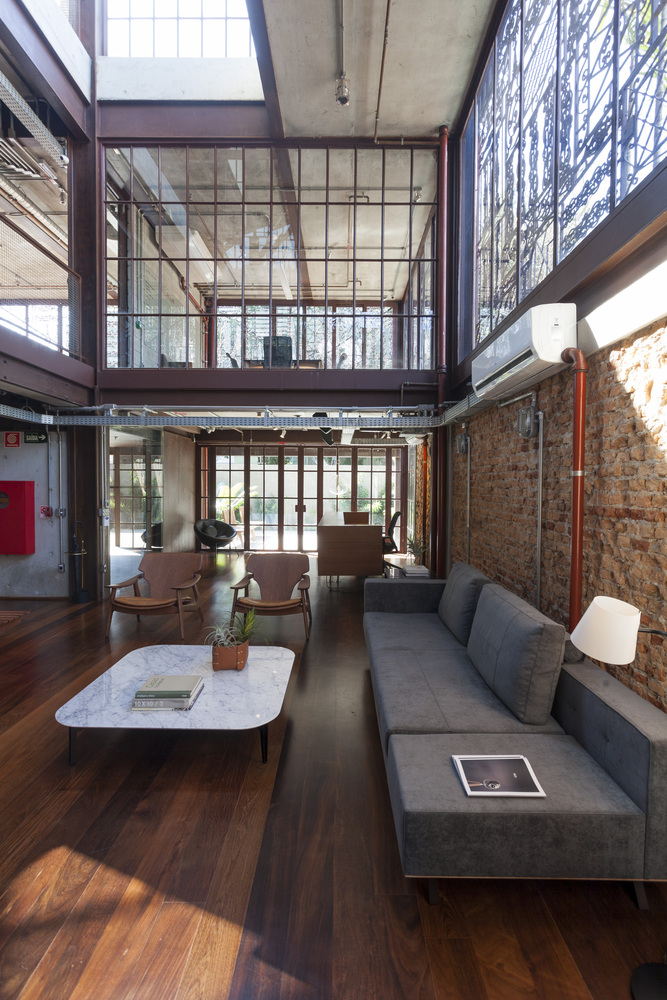
Materials used are wooden floors, exposed brick walls, exposed concrete ceiling and walls, cables are run in pipes that are showcased, exposed pipe going down from air conditioning unit, exposed steel industrial trunking (that runs to air conditioning unit), exposed steel construction beams (look rusty), steel window frames, internal glass partitions. Wooden floors.
All installations are on show, the trunkings, the pipes, the walls and ceiling are bare showing the exact materials they’re made off.
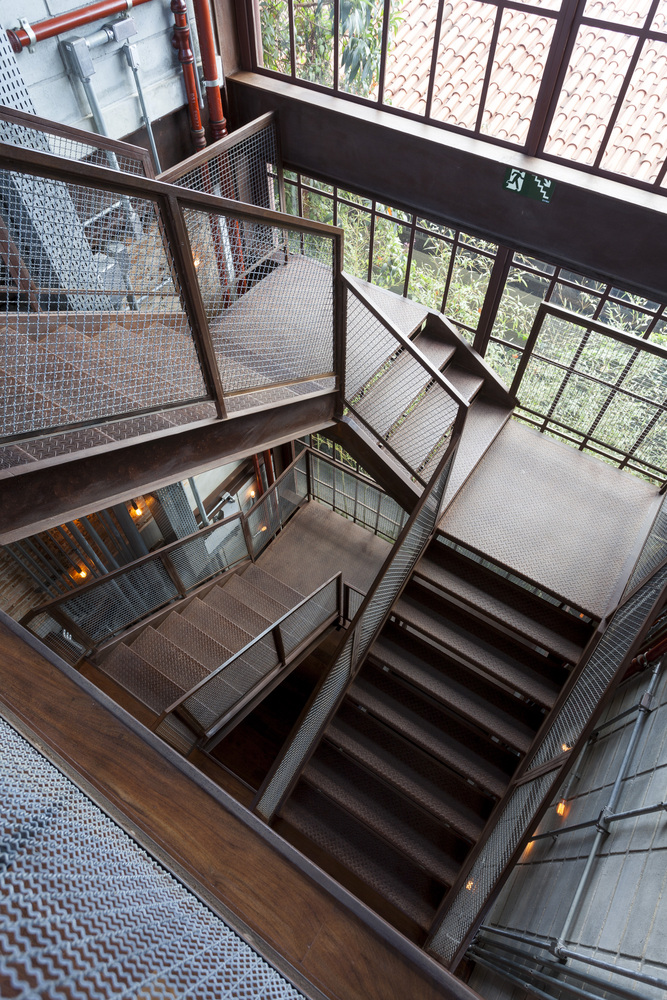
Fig. 2 Gallery of AKQA Agency / Estúdio Penha – 1
Materials used are construction steel for steps and landings; steel profiles; balustrades are made of steel profiles and what seems to be wire mesh panels; the walls are left bare, showing off the concrete material; the trunkings are made of metal pipes, all connectors are on show. Red pipes seem to be that colour because of some sort of foam insulation on them – it looks soft. Steel elements look rusty, left untreated. There’s a bit of wood on the edge of top landing. Windows are framed in metal.
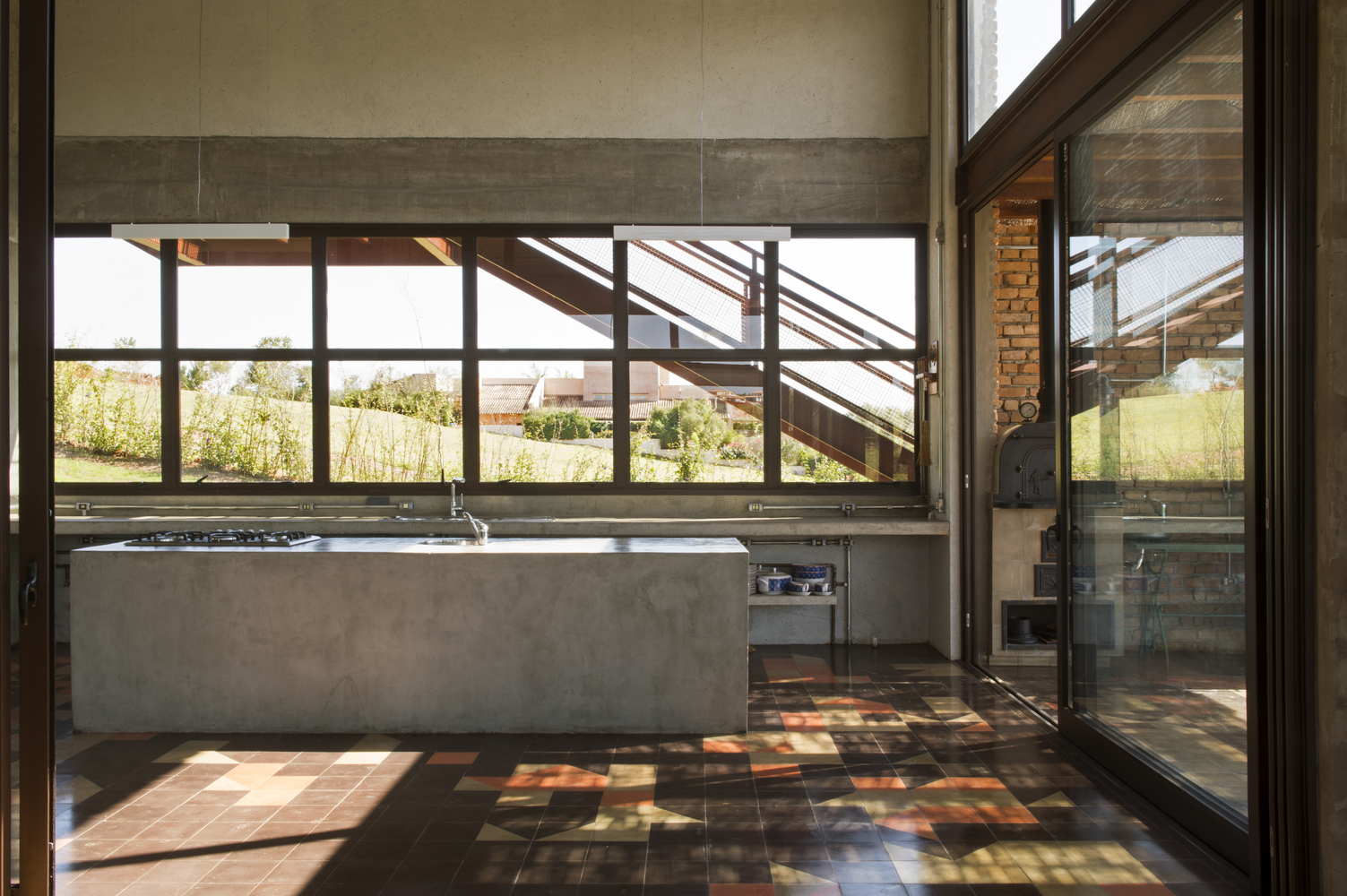
Fig. 3 Gallery of Quinta da Baroneza House / Estúdio Penha – 3
Bare walls – brick and concrete, terracotta on the floor – looks hard and smooth, concrete work top and kitchen island. Exposed pipes under the counter. Metal window frames, large windows.
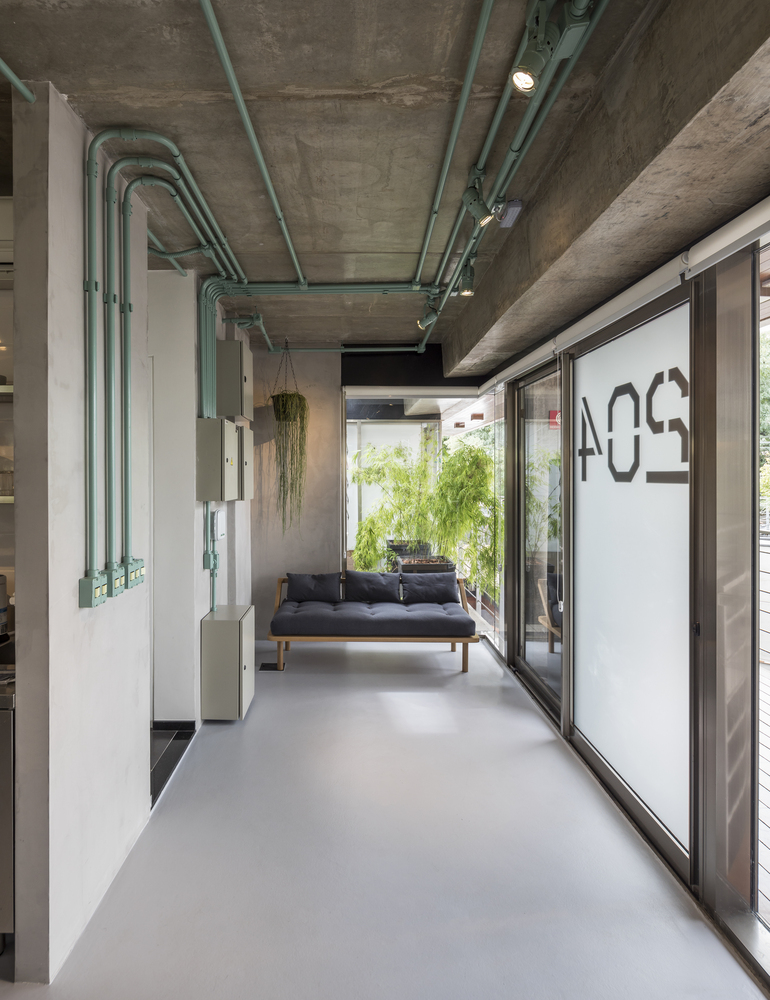
Fig. 4 Gallery of Rizoma / Estúdio Penha – 1
Concrete walls and ceilings. We can clearly see the concrete blocks/ tiles that the ceiling is composed of. Electrical installation is run on top of the walls in pipe-like trunkings. Metal window frames, large windows.
Steel profiles and concrete they are attached to are exposed and painted fluorescent green, their surface is looking rough. The walls are exposed, grey coloured brick. Ceiling is constructed of metal construction sheets and is exposed in places. We can see silver metal and red pipes. Floor is concrete. In the right corner there is a thick wooden post, I suppose it’s a construction element. Support elements (towards the middle of the wall) and parts of the ceiling are painted black.
Fig. 6 Gallery of Verum Iguatemi Office / SP62 Arquitetura – 1
Example 3: Constantin Brancusi (1876-1957) – Romanian sculptor, painter and photographer.
Fig. 7 Head
Head sculpture is carved out of oak, we can clearly see the wood grain, knags and cracks, it looks warm, smooth, polished and at the same time the surface is ribbed, the material imperfections are on show.
Fig. 8 Maiastra
Maiastra is a sculpture of bronze on limestone base. The bronze surface looks cold and shiny. We can see some imperfections on the surfaces, I’m guessing those appeared during casting process. The straight edges don’t look sharp, but still appear hard. The shape is very slightly irregular, we can recognise it by the way the light bounces of it. The bronze part looks strong and heavy. The limestone base looks rough, we can see where pieces of stone chipped away during sculpting process. The sculpture is irregular, looks sharp, hard, rough, cold and brittle. The base also looks heavy, but not as dense as bronze part.
Example 4: Dame Barbara Hepworth (1903 – 1975) – British sculptor
Fig. 9 Sculpture with profiles
Sculpture with profiles is carved out of alabaster with alabaster base. It looks soft and heavy, it has a waxy shine. We can see the mineral structure all over but best where the light seems to be seeping through the base on the left-hand side. There are natural imperfections visible all over, but the shape looks smooth and polished apart from few blemishes and few carved out shapes. The edges are gently rounded, and base edges are straight but look very slightly jagged.
Fig. 10 Pierced Hemisphere II
The above artwork is made of Hoptonwood stone on Portland stone base. The sculpture surface looks very rough and grainy. The surface imperfections are clearly visible, the colour is uneven. The edge of inner circle is rounded and smoother than slightly jagged, more defined outer edge. Somehow the top part looks denser and heavier than bottom part. The base has straight(ish), very slightly jagged edges and yellowish ‘veins’ are clearly visible. The top surface of the base looks uneven, as if the artist worked with agreement with the material, respecting its natural properties.
Example 5: John Skeaping (1901-1980) – English sculptor
Fig. 11 Buffalo
Buffalo is sculpted of lapis-lazuli stone on marble base. The surface of top part is cracked in many places, but it looks as if it was slightly polished around. The colour varies naturally from very light cream, through greys and brows to dark blue. The nose colours make it look dirty and surface there looks rough. The edges are rounded and polished, but the artwork is not shiny. It looks fragile. The base looks shiny and cold, has slight imperfections on the top surface, the edges look smooth, rounded, and I believe they are straight despite the play of light making them to appear slightly curved.
Fig. 12 Fish
The above sculpture is made of Ironstone on serpentine base. The upper part has a rusty colour, looks soft, almost wooden. The chip on the lower lip shows softness and brittleness of the material. There are a couple of cracks on the head. The colour varies, shows natural structure of the stone. It seems that the general shape of the fish and the rounded edges show properties of the stone and how artist worked with them to create this form. It looks dense and heavy with small indented spots. The base looks very smooth, polished, straight and shiny (despite no shine visible). It looks easy to cut straight; the edges are perfect lines with rounded corners, the top is flat. It looks cold and hard. We can clearly see the mineral structure of this serpentine stone.
Reflection on the task:
It was quite difficult to find architectural practice that has truth to materials written in their ethos. Perhaps because the final designs usually depend on what the clients want, and some people just like plaster and paint on the walls, or simply cost restrictions force them to choose cheaper and less ‘true’ materials.
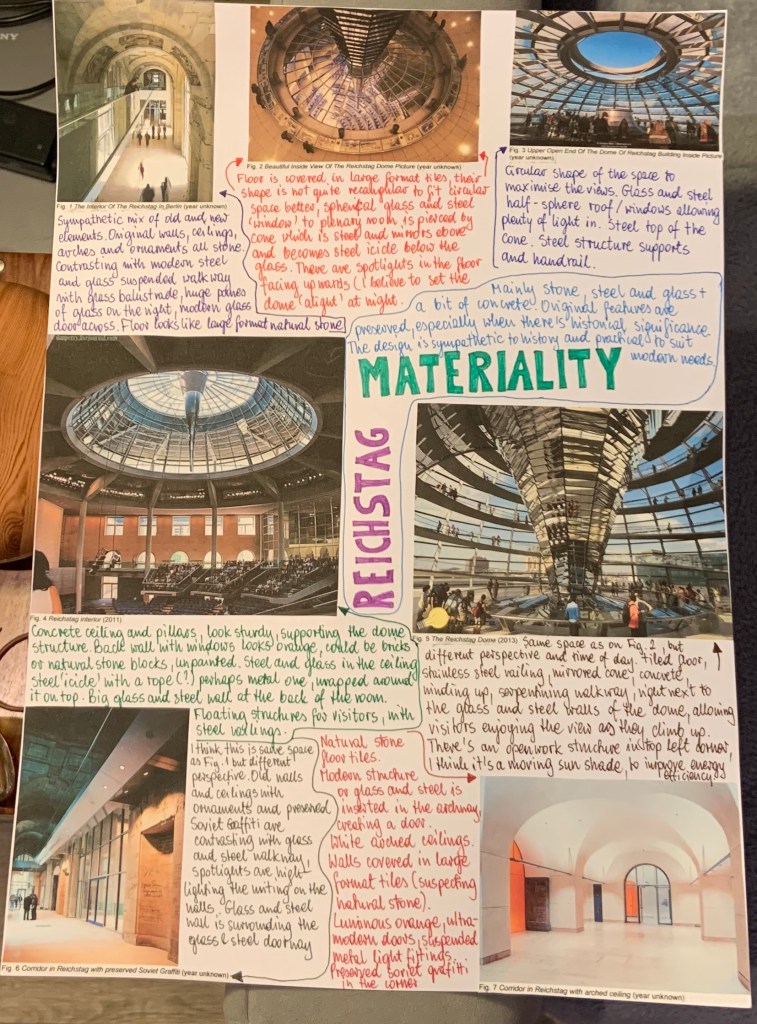
Look a bit closer at your chosen precedent design. Using secondary research alongside a carefully selected set of images that highlight the interior of your chosen precedent, annotate the images with information regarding the materials as best you can. Consider things such as: • What materials have been used? • Are they local? • What is the relationship between the existing building materials and those of the new design intervention? Are they sympathetic/juxtaposed…? • What do you notice about the materials? • Focus on the materials and the way they interact with each other. • What do the physical junctions between the existing building and the new structure/ elements look like? • Do they relate to other precedent research points that you have discovered so far? • What are the main design tactics used by the architect/designer? • What are the reasons for all these things?
The practice’s website provides wealth of information about their ethos and lists the designers / architects involved in each project. Sustainability is at heart of their designs, with energy efficiency and improvement of lives being top priority. The practice has been founded in London, but it is huge with offices abroad, it employs many architects, designers, model makers etc. Their portfolio is massive and I handpicked a few designs of each designer involved in The Reichstag project based on the buildings I thought looked interesting to me. It is also worth mentioning that none of the designs mentioned in my blog are created by a single person, it is all team effort. I imagine only top people within the designs are mentioned but the teams are bigger than listed since all the projects are so huge and complex. The similarities of the individual designs I picked are round/ rounded designs, very often with cupola or dome, and mostly in glass; sustainability; a lot of glass allowing inside to mix with outside; end user and clients needs at heart of the designs. Where a building is a historic building the practice’s designs have the history in mind and are sympathetic to the building history while dramatically modernising it to match sustainability and user’s comfort and wellbeing (by comfort I mean how the space is used, perceived so it matches current times users’ needs).
People involved in The Reichstag project at Fosters + Partners were Stefan Behling, Neil Vandersteen, Toby Blunt and Ulrich Hamman. I gathered some info on each designer and their work.
Articles I found online about the building design and works by Foster + Partners only list Foster as architect. I’m sure he was involved to some extent in each of these designs, despite his own practice’s website not including his name specifically on any of the specific designs. I will however use his name as it’s used in articles I found, even though each design and process must have been a team work effort.
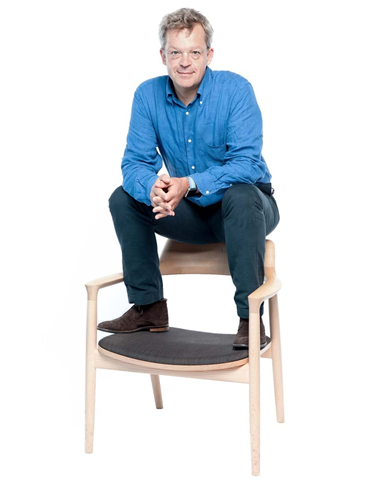
Norman Foster Founder and Executive Chairman Design Board Chairman Architect – Dip.Arch & Cert. TP, M.Arch (not directly involved in this project, according to his practices website, however I find it important to explore him as I imagine he sets direction for the whole office of designers that work for him).
He founded the practice in 1967 and his philosophy is (in broad terms) sustainability, belief that our surroundings affect our life, and better quality surroundings result in better quality life. He is passionate about innovation. I imagine that due to his drive to excellence, he has a high standard and high expectations and as a reult the practice is well known and successful under his leadership.
Stephan Behling – Senior Executive Partner Head of Studio Dipl.-Ing Arch, ARB, RIBA, joined the practice 1987
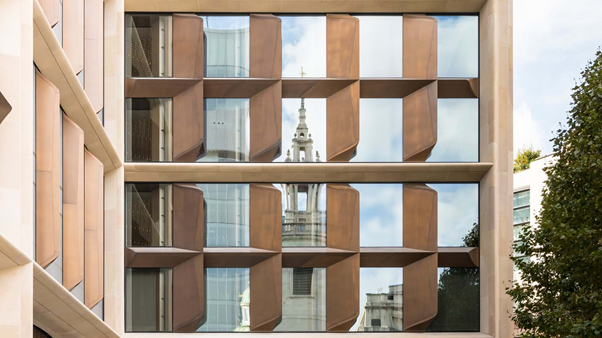
Stefan’s philosophy is sustainability and integrated design, he pioneered many new technologies in energy efficiency and resource management. Examples of these include his current projects: the 12,000 capacity Apple Park, Apple’s global headquarters in Cupertino and many of the new Apple flagship stores around the world since 2012. Completed projects include UK’s most sustainable office building: Bloomberg European HQ in London. He is an experienced architect with established career, the portfolio of his work is vast.
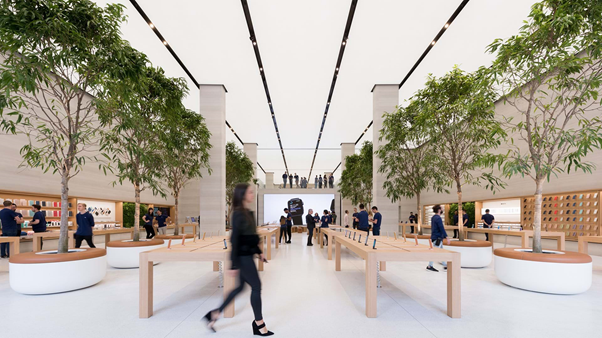
Apple Regent Street in London shows modern, sustainable design that is sympathetic to the historic building. It features high ceilings (7.2m); longest luminous ceiling panels that emit dispersed natural light. Ficus trees planters double as seating benches. The store opens to the street, creating effect of town square.
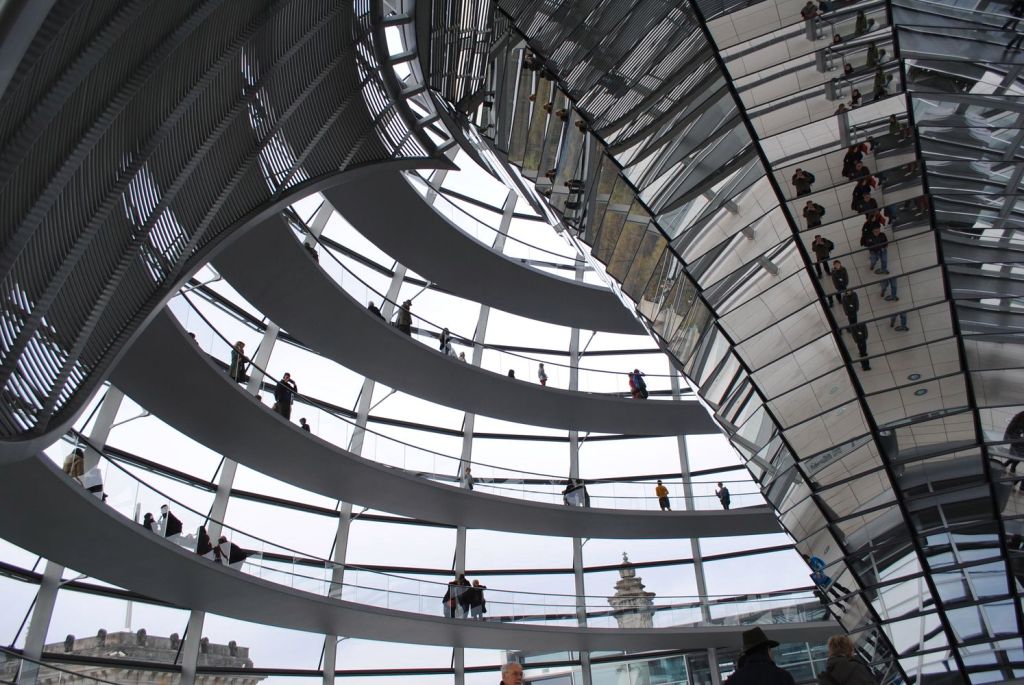
Bloomberg European HQ in London is currently the most energy efficient office building in the world. I saw it once passing by, I remember I was impressed by the striking design of the facade. There is a vortex like design in the photo above. I noticed a vortex design in the dome of The Reichstag building.
Neil Vandersteen – Senior Partners Head of Modelshop Industrial Modelmaking
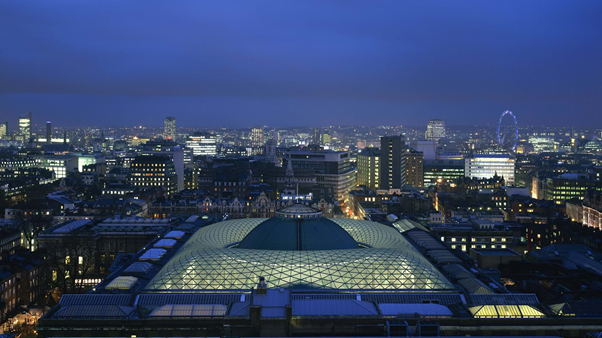
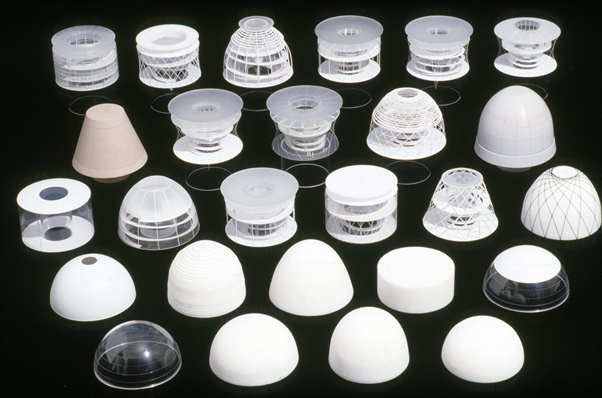
Neil Vandersteen joined Foster + Partners in 1989. He modernised the practice’s Modelshop so it’s one of the most advanced internal modelmaking facilities in architectural practice. He worked on a few projects within the company The Reichstag, 30 St Mary Axe, Great Court at The British Museum and Hong Kong International Airport.
‘The Gherkin’ was London’s first ecological tall building. It comes as no surprise since sustainability is mentioned on the profiles of so many designers on practices website. It has a circular base and the building’s shape reduces wind deflections at ground level, creating more comfortable environment there.
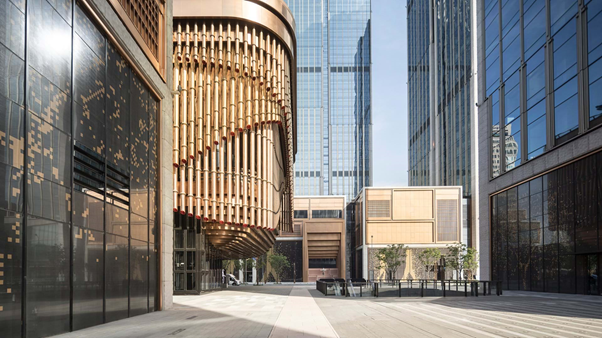
Toby Blunt Joined Foster + Partners in 1995. His award winning projects show his interest in sustainable materials, innovative technologies and building techniques. He was involved amongst other projects in Canary Wharf Underground Station in London, Bund Finance Center in Shanghai and The Reichstag in Berlin.
Bund Finance Center is a mixed use, 420 000 square meters development of 8 buildings containing offices, hotels, cultural centre and retail centre, all luxurious / premium and all surrounding a public piazza.
Ulrich Hamann – Partner Architect Dipl. Ing. Architect
Ulrich Hamann joined the practice in 1994 and in the beginning was involved in projects based in Germany (The Reichstag, Free University and Lenbachhaus). He worked as a cladding and envelope expert on Apple Park in Cupertino and is currently in charge of multiple Apple store projects throughout North America. Sustainable design is his particular interest.
• What was the designers concept for this particular building interior?
• Why do they use these methods?
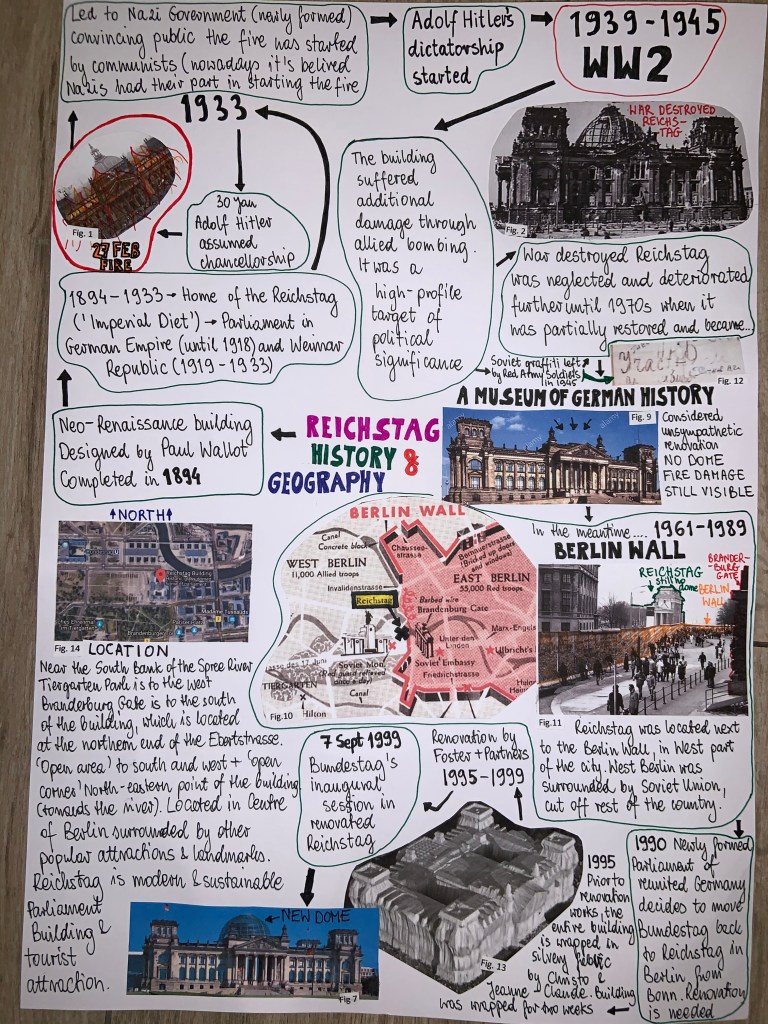
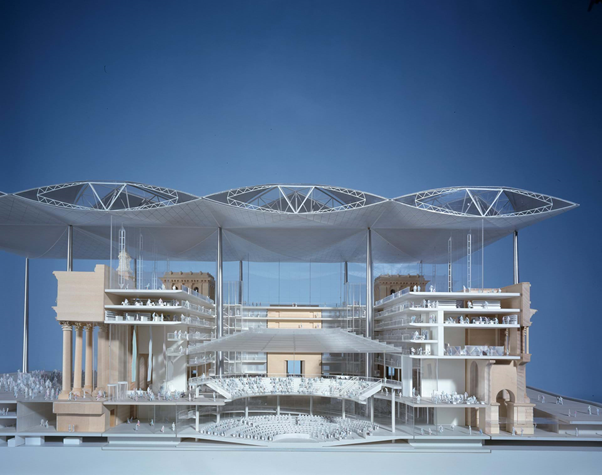
Initial design didn’t include the glass cupola, instead had a cushion like steel and glass canopy over the building. However the project cost reduction was requested (without providing the actual budget) so the practice submitted a few different proposals with varying sizes and budgets and one of these has been selected for construction.
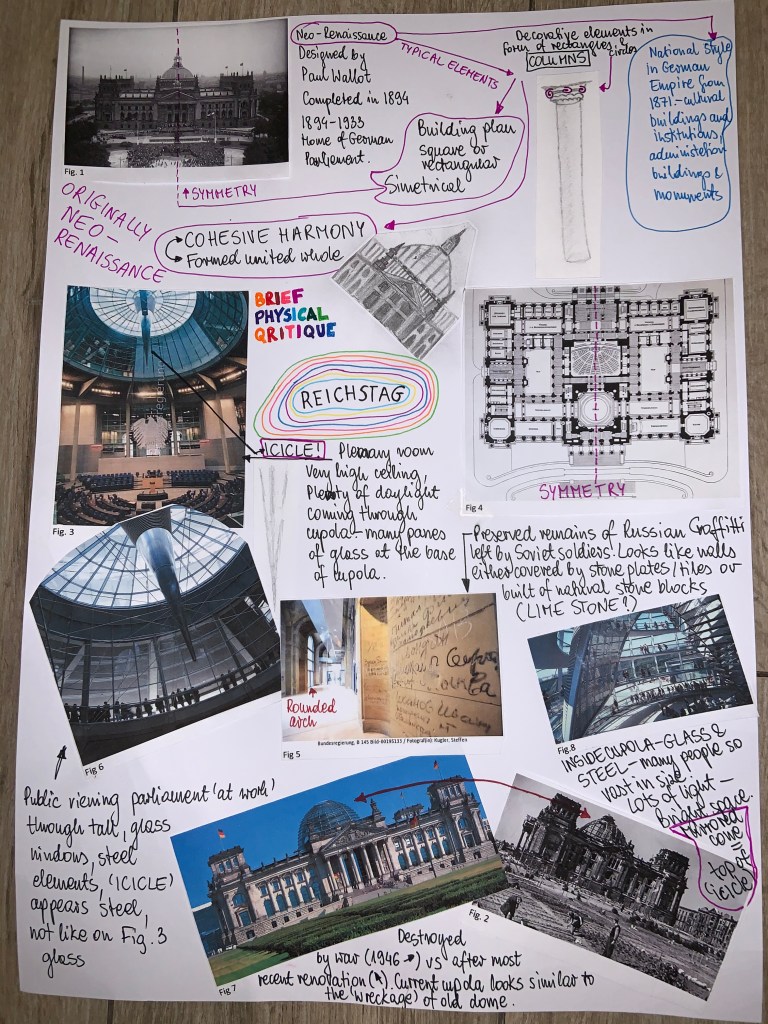
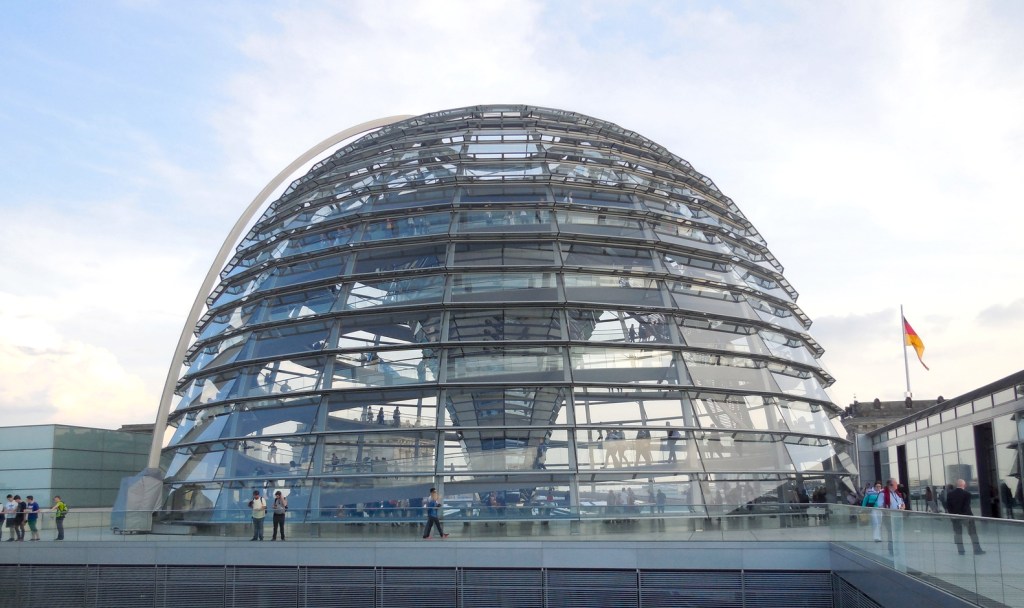
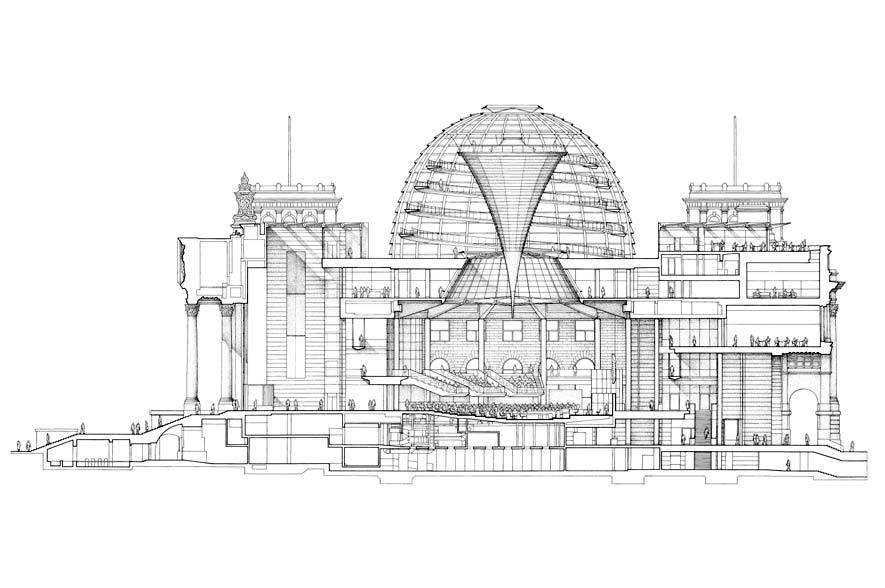
The winning design didn’t initially include the glass dome. Certain MPs demanded reconstruction of original dome. Foster was against this idea, but soon he considered glass cupola to replace original dome.
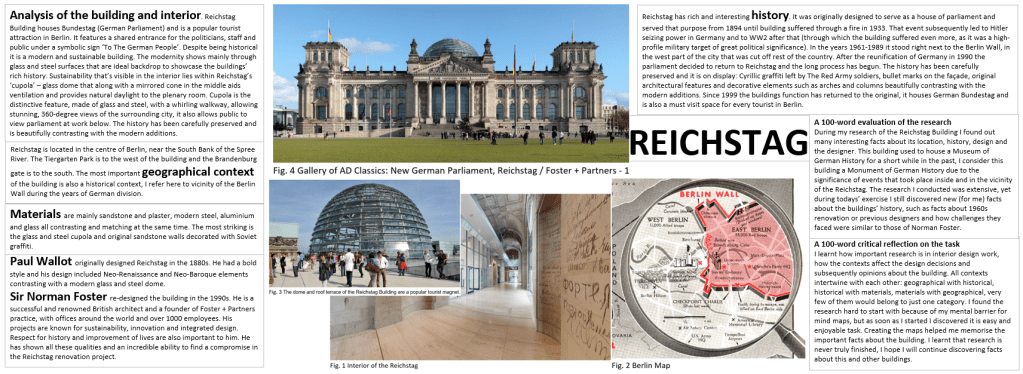
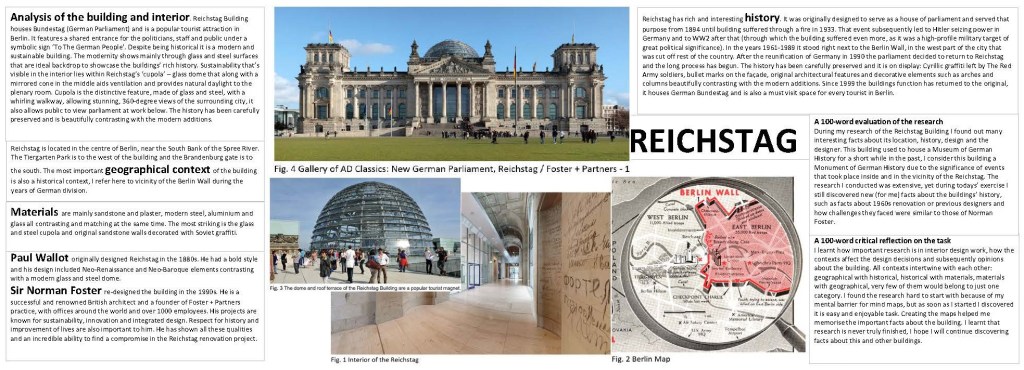
Reichstag houses German Parliament and each design decision had political significance and decisions were subject to political debates. The design process must have been difficult and lengthy since many people had opinions on what it should be done. It was a demanding client with often contradicting demands and final design shows Fosters ability to find a compromise.
Fosters concepts included:
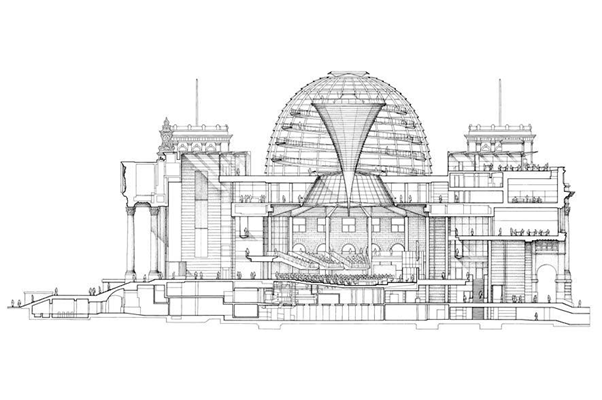
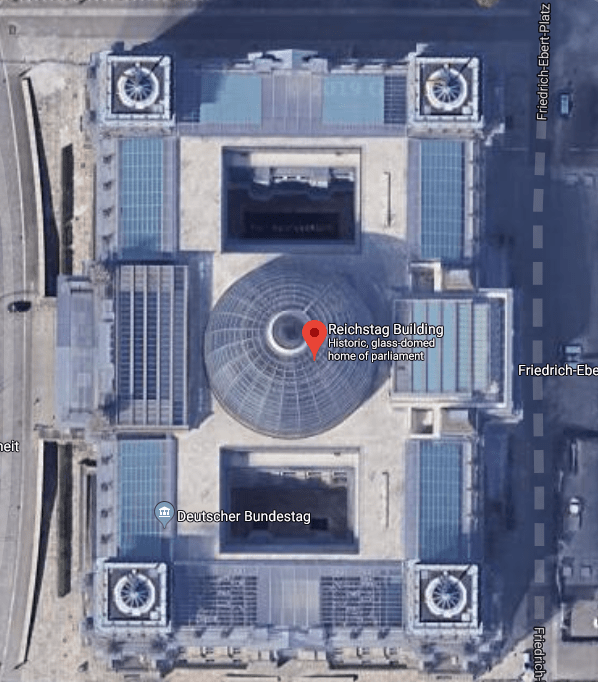
Cupola – publicly accessible space, providing visual connection the the parliament at work below. Cupola’s design aided the sustainability of the building by providing light to parliament chamber and venting hot air outside thanks to the mirrored cone the in the centre
Design consolidated parliament into a singular building
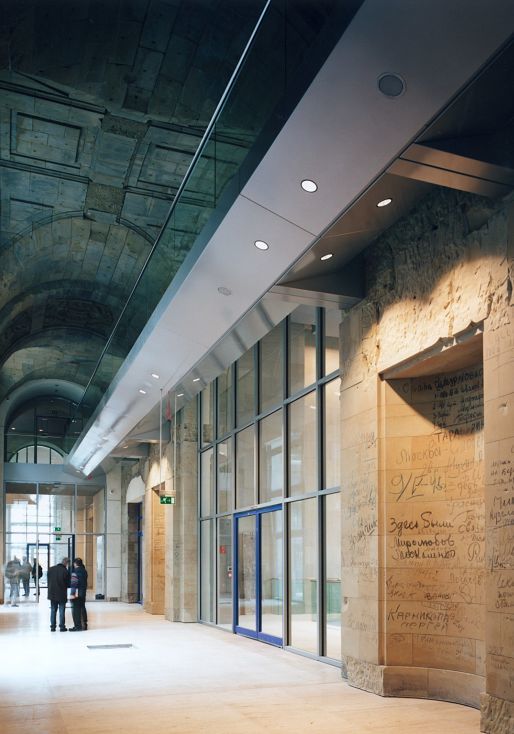
Preserved the history of the building such as Russian Cyrillic graffiti left by Soviet Soldiers at the end of WW2, or the bullet marks on the façade.
Symbolism of the politicians and the public entering through the same entrance under the sign ‘To the German People’ – the parliament building is not only for politicians, Parliament serves the people, the building should also be for the people.
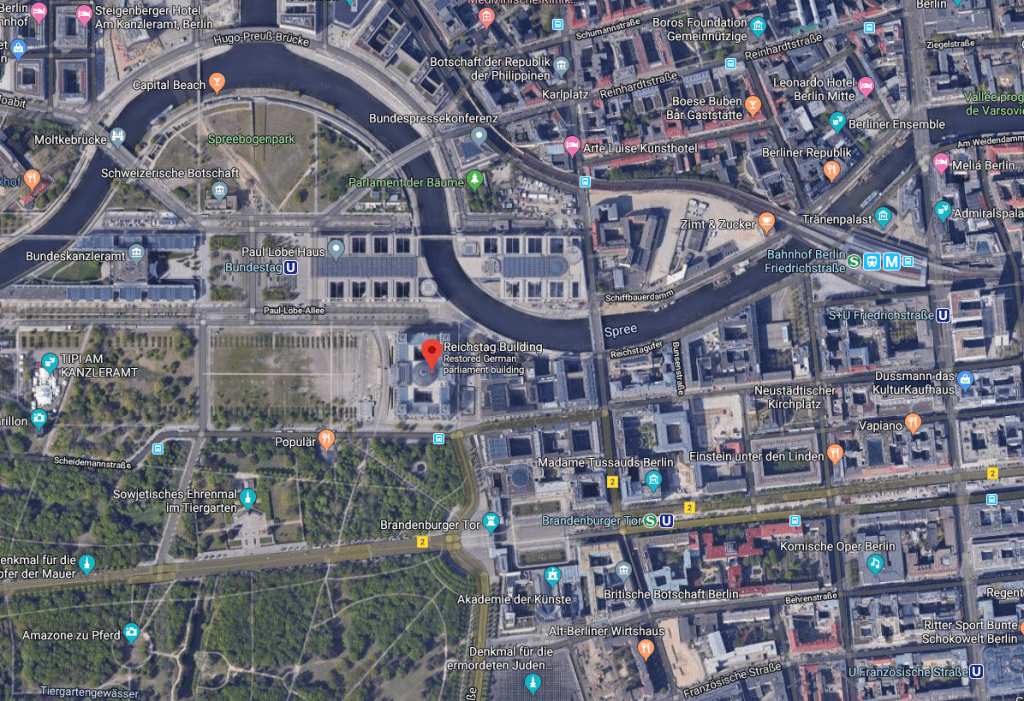
Reichstag Building, Platz der Republik 1, 10557 Berlin, Germany
Reichstag building was originally completed in 1894. It houses German Parliament and it is located in Berlin. The building was damaged during World War 2 and suffered through bad rebuilding during its history.
Fosters and Partners won the competition and renovation began in 1995.