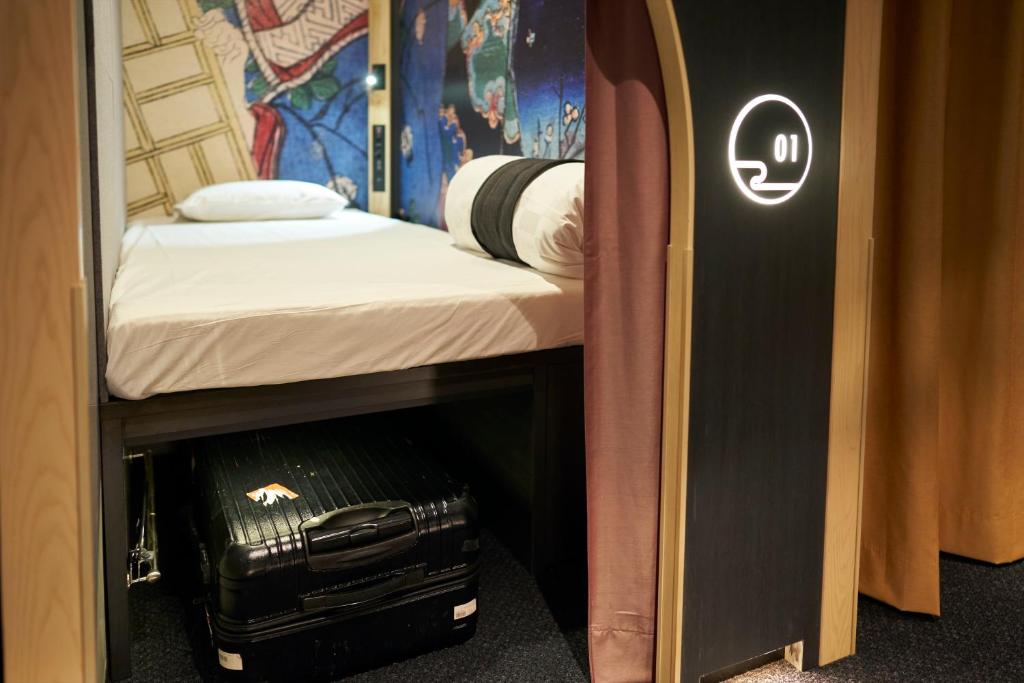
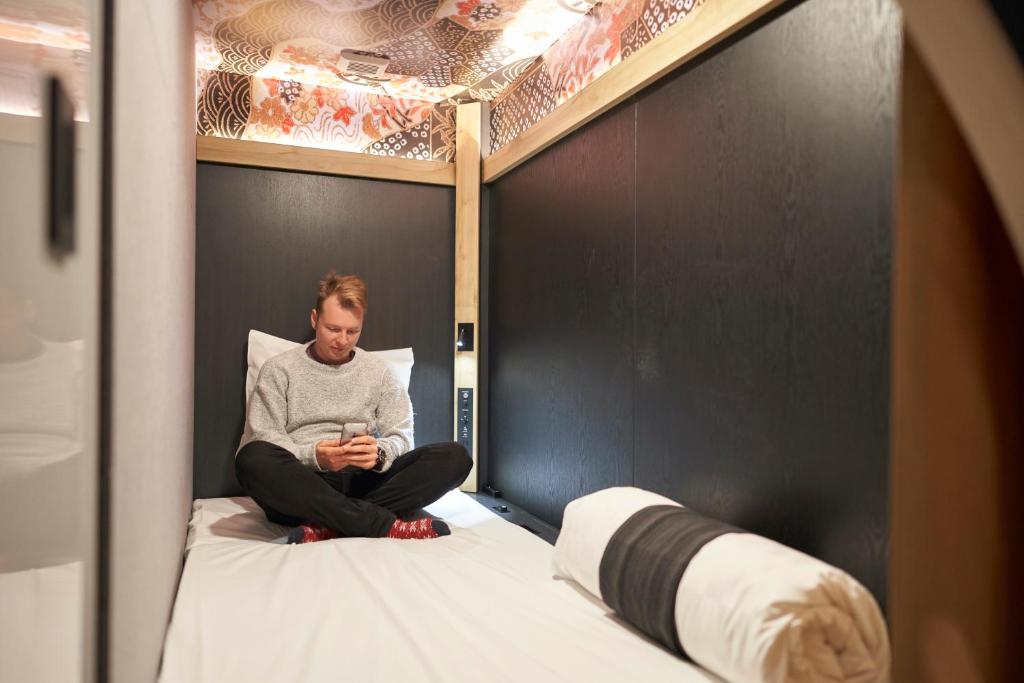
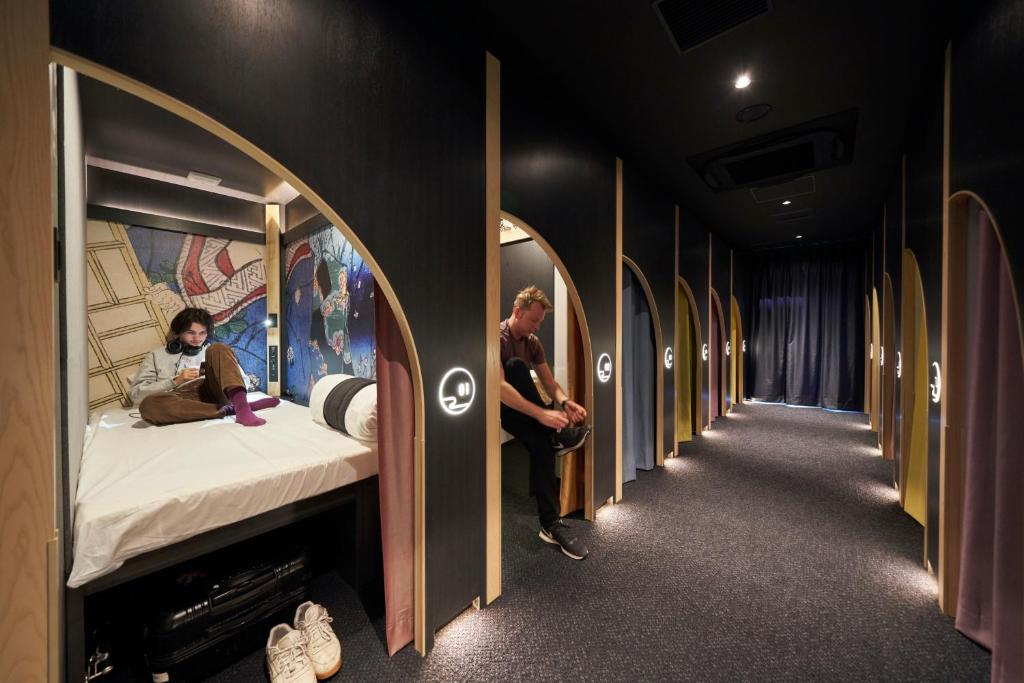
There are several communal living set ups withing the UK. There must be much more all over the world. Funny, I was never aware of such organisations. I always thought communal living had to do with flat sharing, squatting or a sect of some sort.
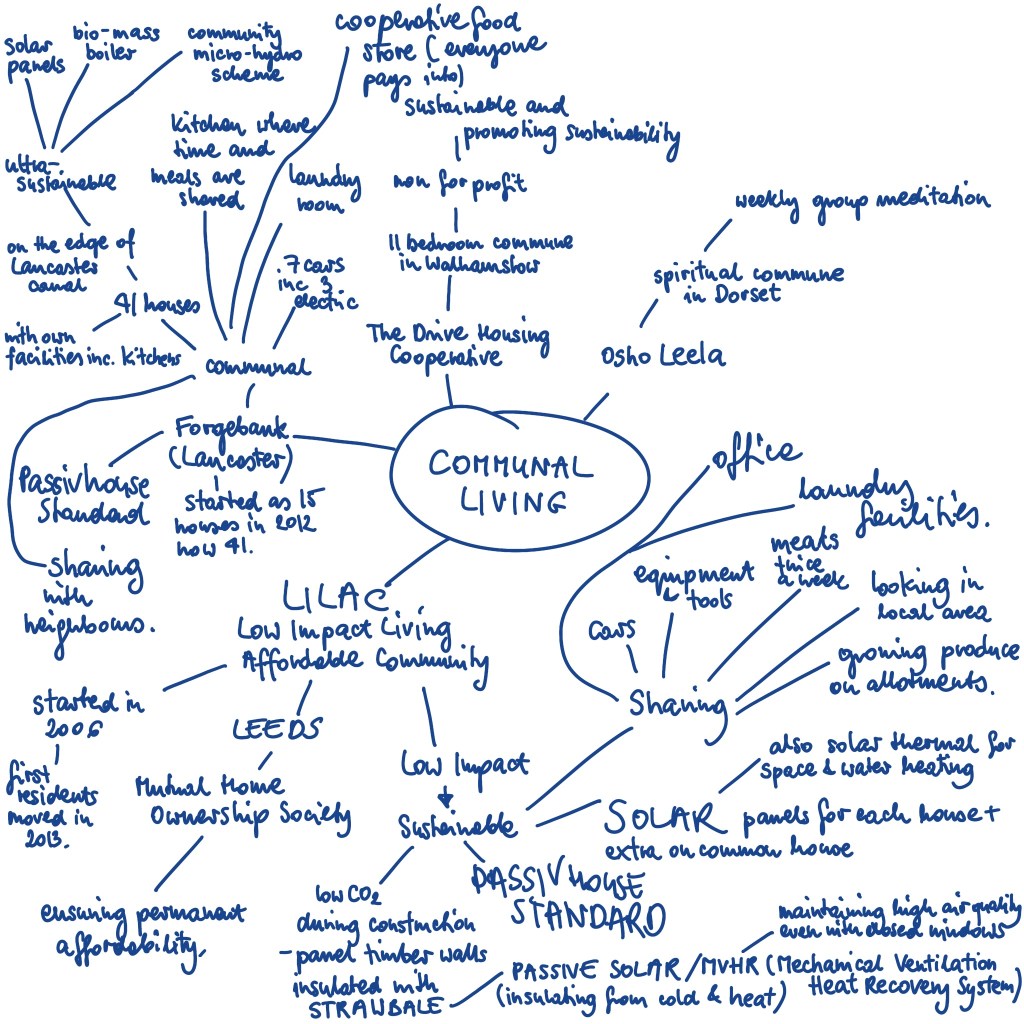
Osho Leela is a spiritual commune in Dorset. New members are accepted based on what skills they can bring into the community. There are weekly group meditation sessions, which may include some shouting to get rid of negative emotions and help dissolve conflicts between the residents. Visitors can come and stay for a nominal fee. The residents don’t pay but instead help out with the upkeep etc.
Forgebank in Lancaster started as a community of 15 houses in 2012 but now consists of 41. It is a sustainable development for people who want to leave sustainably. The houses are powered by solar power, bio-mass boiler, and micro-hydro scheme (installed in the nearby Lancaster canal). This all aided by community sharing of laundry facilities, cars (there are 7, of which 3 are electric), cooperative food store (into which the residents pay in). All homes have own kitchen but in addition to that there is a big communal kitchen where meals and time are shared amongst the residents. The community has achieved Passivhouse standard – which means low carbon footprint through build and subsequent exploitation of development.
LILAC in West Leeds stand for Low Impact Living Affordable Community. It started in 2006 and first residents moved in 2013. It is a mutual home ownership society ensuring permanent affordability of housing. It is Low Impact because it is sustainable in many ways. They achieved low carbon footprint during construction by using panel timber walls insulated with straw bale. There is a passive solar / MVHR (Mechanical Ventilation Heat Recovery) system in place, which helps to maintain high air quality without the need to open the windows (and thus lose the heat / waste the energy). There are solar panels for each house, plus extra for the common house, also solar thermal system installed for air and water heating. Additionally, the community is sustainable through sharing of cars, equipment, tools, laundry facilities, office space. They also share meals twice a week, growing own produce on allotments (I’m sure this gets shared too) and shopping locally.
It sounds like a great way of living. To share instead of waste… Kind to our planet too. Many areas suffer with anonymity, no community feel. This in turn results in mental health issues etc. Perhaps community living could be an answer too. Keep thinking through this task of Holmes Road Studios where a small community living with gardening activities improving that community help people out of homelessness.
References:
Bibliography
Bearne, S. (2018) ‘Totally together: could communal living suit you?’, The guardian, The Guardian, 3rd February [Online]. Available at https://www.theguardian.com/money/2018/feb/03/communal-living-communes-cohousing (Accessed 30 December 2022).
Facebook.com (n.d.) Facebook [Online]. Available at https://www.facebook.com/thedrivecoop/ (Accessed 30 December 2022).
Lilac.coop (n.d.) LILAC [Online]. Available at http://www.lilac.coop/ (Accessed 30 December 2022).
Org.uk (n.d.) Home [Online]. Available at https://www.passivhaustrust.org.uk/ (Accessed 30 December 2022a).
Org.uk (n.d.) Diggers and dreamers – intentional community in Britain [Online]. Available at https://diggersanddreamers.org.uk/ (Accessed 30 December 2022b).
Org.uk (n.d.) Lancaster Cohousing [Online]. Available at http://www.lancastercohousing.org.uk/ (Accessed 30 December 2022c).
Suzanne Bearne (n.d.) Evening standard: Is co-living the New Way for millennial Londoners to flatshare? — [Online]. Available at https://www.suzannebearne.com/new-page-42 (Accessed 30 December 2022).
Thedrive.coop (n.d.) The drive housing co-operative [Online]. Available at https://thedrive.coop/ (Accessed 30 December 2022).







 Aggie's interior design journey