Choose one manifesto from the core text, 100 Artists’ Manifestos: From the Futurists to the Stuckists, that interests you, and that you would like to research and explore further. Find out all you can about the person or group that wrote that manifesto, the era that they were living in and what other factors (global, social, local, cultural) may have influenced their thinking. Present your findings as a series of bullet points that give the reader a core understanding of the main points of the manifesto you have chosen, and also an understanding of when/why/how it was written. As your work is just simply bullet points you need to make every word count – try to not be ‘fluffy’ or ‘flowery’ with your language and use really precise/concise words that say exactly what you mean.
Robert Venturi (1925-2018)
- an American architect
- often referred to as a father of postmodernism in architecture (according to O. Wainwright at: Robert Venturi: the bad-taste architect who took a sledgehammer to modernism | Architecture | The Guardian).
- Living in post WW2 world with modernist, brutalist architecture prevailing has influenced his outlook on need for new architecture trends.
- He seems to have been an original, fun-loving guy, if judging by his signature which included a quick sketch of the elevation of the house that he designed for his mother.
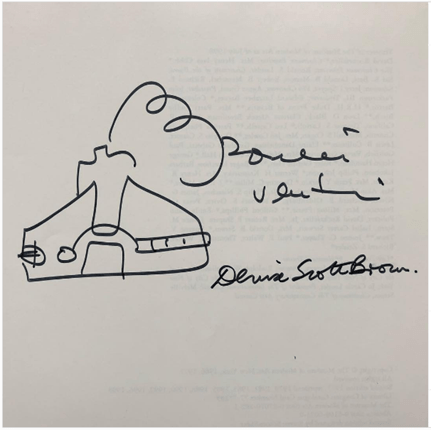
Fig. 1 He even signed his name in a fun way 💔 RIP Bob Venturi.
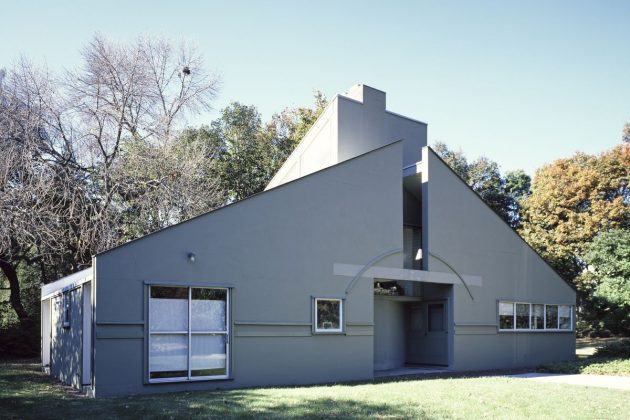
Fig. 2 Vanna Venturi House in Chestnut Hill, Philadelphia, Pennsylvania.
Non-Straightforward Architecture: A Gentle Manifesto (1966) by Robert Venturi
- ‘More is not less’
- Architecture of complexity and contradiction
- Yes, to complexity and contradiction
- No, to incoherence and arbitrariness (autocracy or being based on personal whim)
- No, picturesqueness and expressionism
- Yes, to richness and ambiguity bringing similar experience as felt with art
- Increasing dimension and scale of projects makes design work more difficult
- Yes, to vitality and validity
- Orthodox Modern Architecture is intimidating
- Hybrid over pure
- Compromising over clean
- Distorted over straightforward
- Yes, to both – and
- No, to either – or
- Ambiguous over articulated
- Perverse and impersonal
- Boring and interesting
- Conventional over designed
- Accommodating over excluding
- Redundant over simple
- Equivocal (with more than one meaning) over direct and clear
- Messy vitality over obvious unity
- Richness over clarity of meaning
- Pro ‘non sequitu’ (A conclusion that does not logically follow from previous argument)
- For both implicit and explicit function
- Black and white and grey over just black and white
- Architecture should engage on many levels, should be readable and workable in many ways simultaneously
- The truth of architecture must be in its totality
- Architecture must embody the difficult unity of inclusion
- Architecture must reject the easy unity of exclusion.
List of illustrations:
Fig. 1 Wainwright, O (2018) He even signed his name in a fun way 💔 RIP Bob Venturi. [Photograph of a signature of R. Venturi’s] At: https://www.instagram.com/p/Bn8Oakhgd5d/?taken-by=ollywainwright (Accessed 30/10/2022)
Fig. 2 Unknown (n.d.) Fig. 2 Vanna Venturi House in Chestnut Hill, Philadelphia, Pennsylvania. [Photograph] At: https://www.architectureartdesigns.com/wp-content/uploads/2019/03/Vanna_Venturi_House_in_Chestnut_Hill__Philadelphia__Pennsylvania_LCCN2011631388.0-630×420.jpg (Accessed 30/10/2022)
References:
Bernstein, F. (2018) Robert Venturi, Architect Who Rejected Modernism, Dies at 93. In: The New York Times 19/09/2018. At: https://www.nytimes.com/2018/09/19/obituaries/robert-venturi-dead.html (Accessed 30/10/2022)
Danchev, A. (2011). 100 Artists’ Manifestos. London: Penguin
Wainwright, O. (2018) Robert Venturi: the bad-taste architect who took a sledgehammer to modernism. In: The Guardian 20/09/2018. At: https://www.theguardian.com/artanddesign/2018/sep/20/robert-venturi-the-bad-taste-architect-who-took-a-sledgehammer-to-modernism (Accessed 30/10/2022)
 Aggie's interior design journey
