The aim of this exercise is to begin to understand the emotional attachment a person may have to particular spaces, and why. To explore the difference between a house and a home; to look at the theoretical concept of ‘home’.
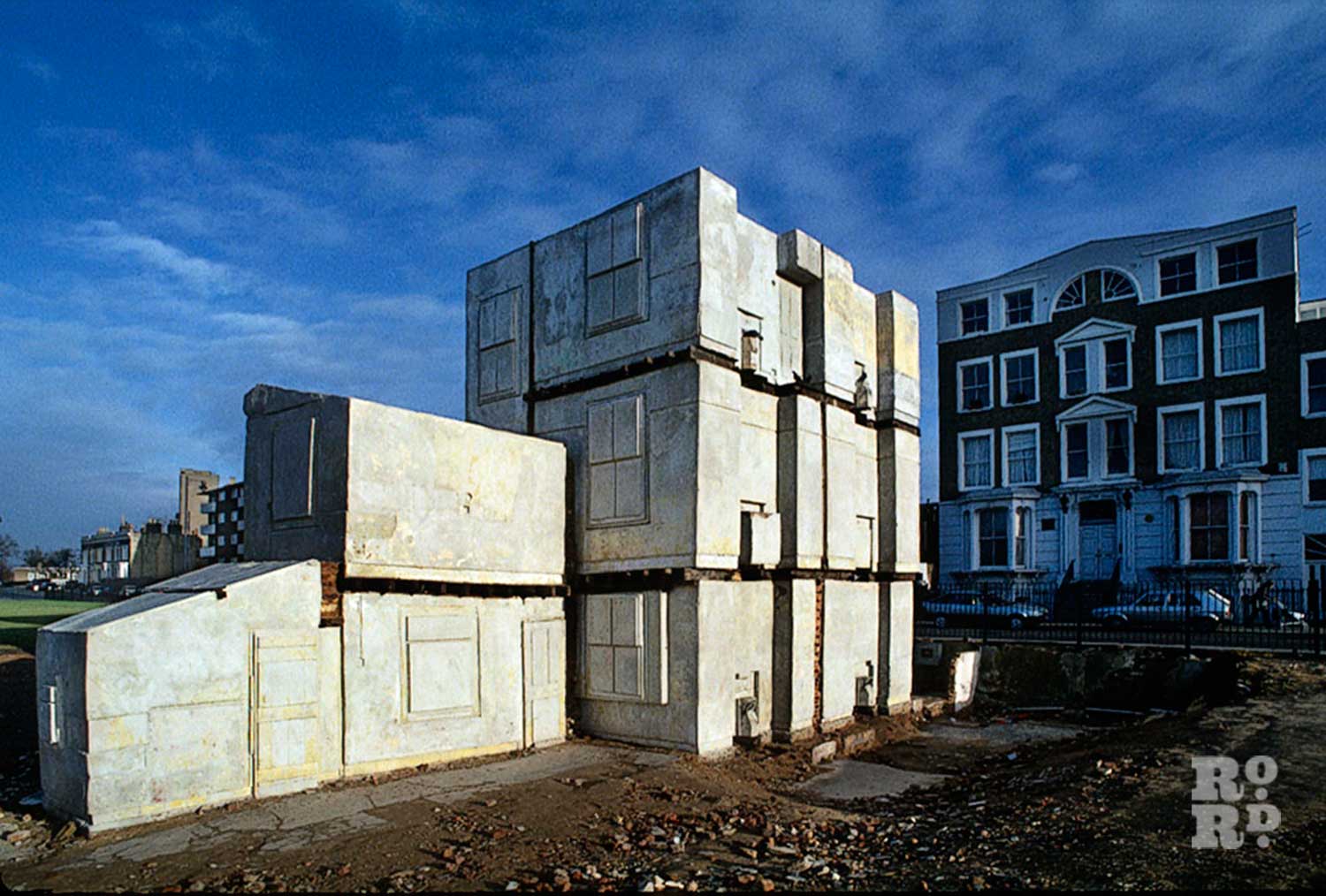
Method: Find out as much as you can about the artist Rachel Whiteread and the 1993 work House. Use the information given above to begin your search and find out about how and why the piece came to be sited in its particular location, 193 Grove Road, Bow, London.
The previous occupant of the building used to create the work House was a man called Sydney Gale; there was much local opposition to Rachel Whiteread’s project at the time and it was considered to be controversial for a number of reasons. The project caused a flurry of comment in both local and national press. Reflect on why you think this may have been so controversial at the time; was it controversial locally, nationally? Was it controversial in all social or cultural circles – or was it enjoyed or appreciated more positively by some?
Rachel Whiteread is a British artist born in 1963 in London. She is currently living and working in London.
She became famous for her sculpture ‘Ghost’ that was on display in Tate Modern in 1990 and her sculpture ‘House’ which was on display on Grove Road in Bow in late 1993 / early 1994.
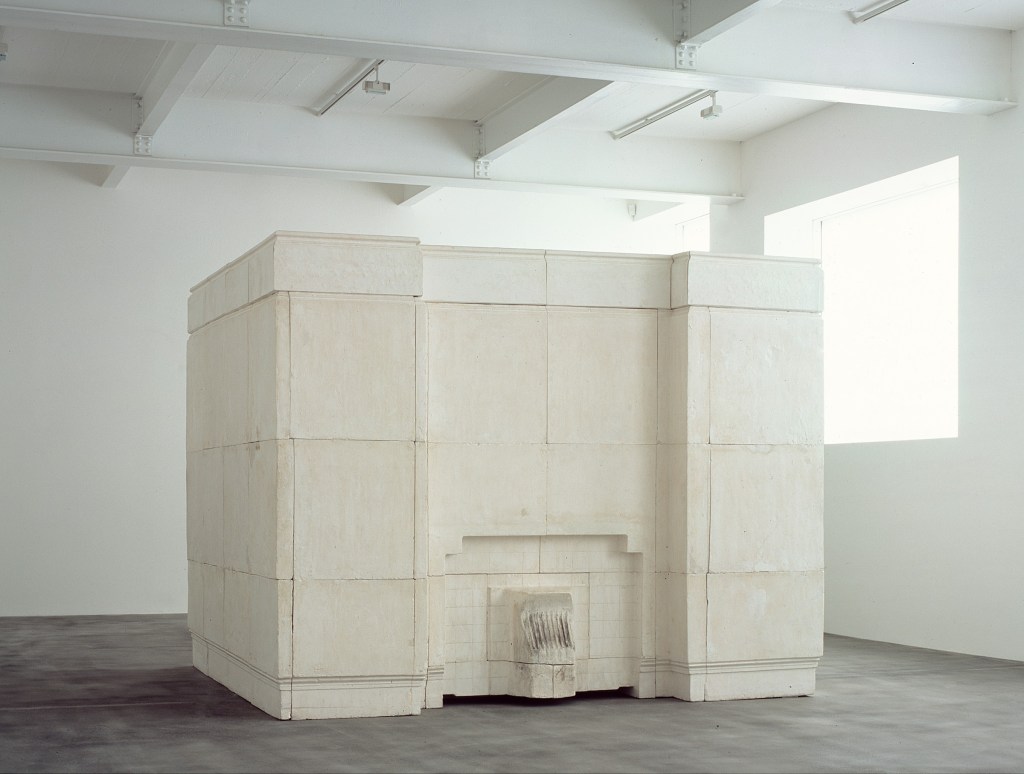
Both these works were casts of interior spaces. Ghost was a plaster cast of a living room; the artist said that it was similar to a living room from a house she lived in as child, and it was bringing memories of her childhood.
House was a concrete cast of an entire Victorian terraced house that was destined to be demolished by the council. Ms Whiteread selected it as it was not surrounded or attached to other houses, therefore could be viewed from all angles.
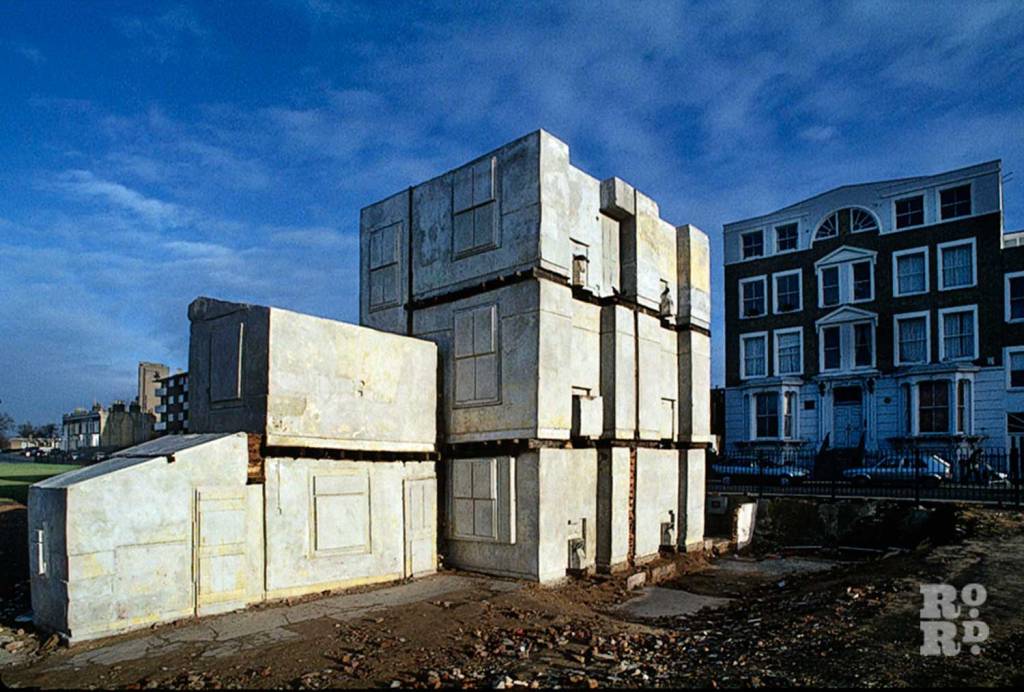
The house was previously occupied by Mr Sydney Gale, who battled the council against evicting him from his home. He finally lost and was relocated to a property nearby. The council could then go on and demolish the last standing house of the former terrace and proceed with its plans of finishing the green space that was supposed to benefit the residents of the nearby high-rise blocks of flats.
The row of houses has been partially damaged during WW2, in fact the first bomb that landed in London during the conflict fell in the local area.
The area was at the time predominantly working class; the project, especially £50’000 funding it received, angered many.
The project seemed to be controversial in all circles, social and cultural. There were fans and haters everywhere.
Perhaps because it was a first of a kind sculpture like this in Britain, created out of someone’s home. Someone’s that did not want to leave. At the same time, it was a brilliant novelty; filling a building with cement and subsequently creating a cast that was revealed after the surrounding building was taken away, brick by brick. It accentuated the void of the home, the space previously occupied by life of the occupants – being on show.
It showed the house inside out – the interior standing proudly, not covered by a façade and walls, roofless. The private space exposed, the boundaries gone.
The project has been so controversial that Rachel Whiteread received prizes from opposite ends of the spectrum: a prestigious Turner prize and the ‘worst artist of the year’ by K Foundation.
The council decided to tear the house earlier than initially agreed, yet even that vote was a very close one – only one vote difference.
The project was discussed in parliament and more than 100’000 people viewed it in the period it was standing.
Despite the movement to save the cast from demolition Ms Whiteread did not wish to relocate the house, as she said it was specific to its location. The house was demolished after mere 10 weeks of its completion.
The artist created other works that consisted of casted objects and spaces.
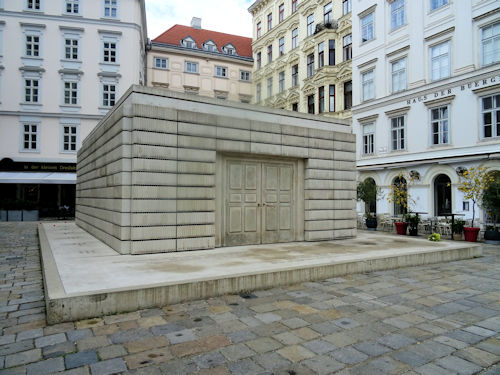
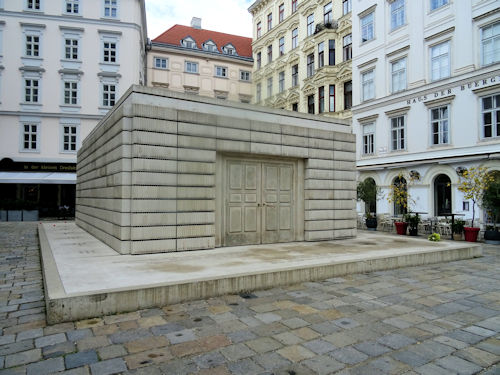
In 2000 in Vienna her Holocaust Memorial has been unveiled, a cement cast of a library room.
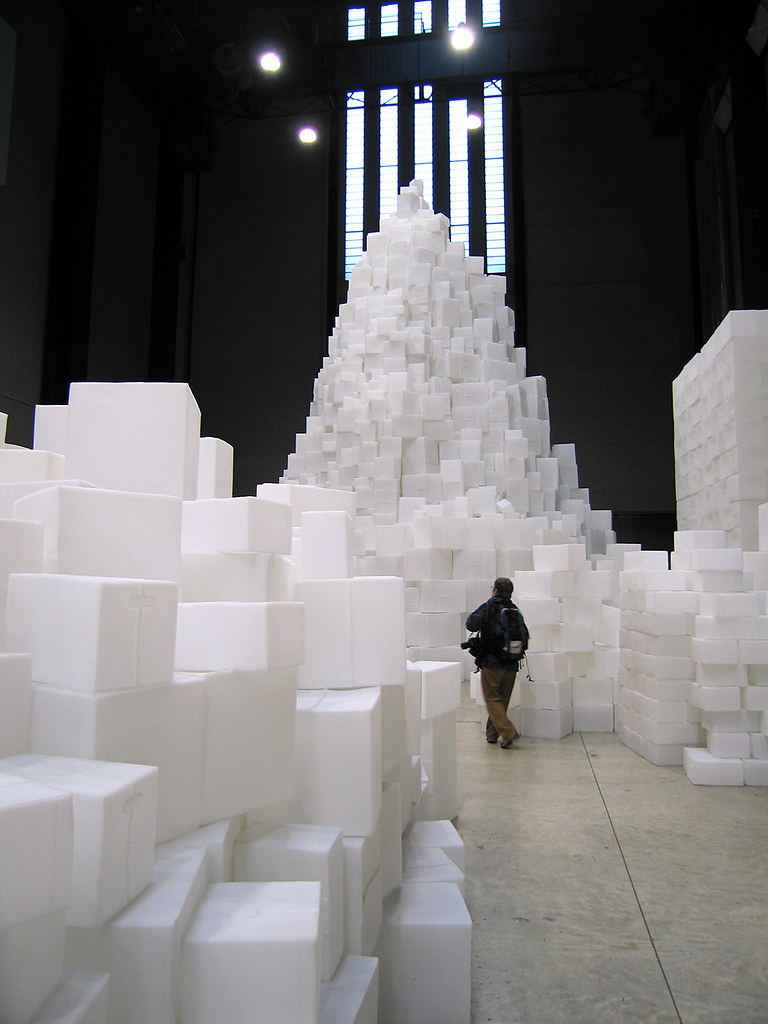
She also made ‘Embankment’, which was an installation of 14000 polyethylene boxes in 2005, it was displayed in Tate Modern.
As an artist she seems to be attracted to the invisible, encased by the boundaries. She wants to bring the inside out, for all to see. Her work is inspired by intimacy of the closed spaces and human form.
List of illustrations:
Fig. 1 Whiteread, R. (1990) Ghost, plaster with steel frame, 269 × 355.5 × 317.5 cm. [Photograph] At: https://publicdelivery.org/wp-content/uploads/2019/06/Rachel-Whiteread-Ghost-1990-plaster-with-steel-frame-269-%C3%97-355.5-%C3%97-317.5-cm-106-%C3%97-140-%C3%97-125-in.jpg (Accessed 16/06/2022)
Fig. 2 Hoffman, D. (1993) Rachel Whiteread’s house view of Grove Road. [Photograph] At: https://romanroadlondon.com/wp-content/uploads/2019/09/Rachel-Whiteread-house-credit-David-Hoffman.jpg (Accessed 16/06/2022)
Fig. 3 Brownlow, M. (2022) Holocaust Memorial. [Photograph] At: https://www.visitingvienna.com/wp-content/uploads/2022/02/holocaustmemorial.jpg (Accessed 16/06/2022)
Fig. 4 Watz, M (2006) London – Rachel Whiteread – Embankment 03. [Photograph] At: https://live.staticflickr.com/42/110028472_b5e3e5da38_b.jpg (Accessed 16/06/2022)
References:
Artangel (2022) House. At: https://www.artangel.org.uk/project/house/ (Accessed 14/06/2022)
Frieze (2020) Rachel Doesn’t Live Here Anymore. At: https://www.frieze.com/article/rachel-doesnt-live-here-anymore (Accessed 15/06/2022)
Searle, A (2000) Austere, silent and nameless – Whiteread’s concrete tribute to victims of Nazism. At: https://www.theguardian.com/culture/2000/oct/26/artsfeatures6 (Accessed 15/06/2022)
Public Delivery (2022) Rachel Whiteread’s 14,000 white cubes at Tate – Embankment. At: https://publicdelivery.org/rachel-whiteread-embankment/ (Accessed 15/06/2022)
Public Delivery (2022) Why did Rachel Whiteread’s House earn her the title Worst Artist? At: https://publicdelivery.org/rachel-whiteread-house/ (Accessed 15/06/2022)
Thacker, S. (2015) Rachel Whiteread’s House: why was this Bow landmark demolished? At: https://romanroadlondon.com/rachel-whitereads-house-bows-legacy/ (Accessed 15/06/2022)
Warde-Aldam, D. (2013) Ghost House. At: https://www.apollo-magazine.com/house/ (Accessed 15/06/2022)
 Aggie's interior design journey